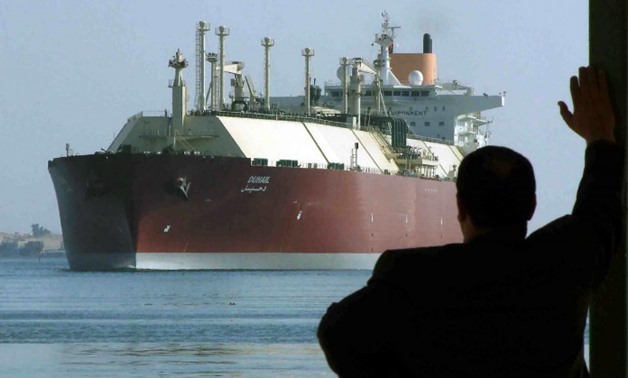
World’s biggest LNG tanker crosses Suez Canal - Reuters




CAIRO — 21 April 2026: Proving to be an investment haven despite global and regional challenges, Egypt has secured the third-place ranking in the Middle East and North Africa (MENA) for investment openness, according to a recent report by Fitch Solutions titled "Analysis of Egypt's Openness to Investment.”
The study, highlighted by the Cabinet’s Information and Decision Support Center (IDSC), places Cairo 27th globally out of 202 markets, signaling a major shift in the nation’s appeal to foreign capital.
For its part, the International Monetary Fund (IMF) projects that Egypt’s shift toward a more flexible exchange rate will secure a steady flow of foreign currency and attract significant Foreign Direct Investment (FDI) over the short to medium term.
The report identifies several engines driving this momentum: a dynamic economy, a strategic geographic bridge between continents, competitive labor costs, and a massive domestic market.
Egypt has established a roadmap to attract $60 billion in FDI between 2026 and 2030. While the entire African continent typically attracts roughly the same amount annually, Fitch deems Egypt's goal "attainable," given its consistent baseline of $9 billion to $11 billion in annual inflows outside of exceptional mega-projects.
Egypt, showing economic resilience and remarkable speedy recovery in the past decade, holds the largest FDI stock in North Africa, trailing only Saudi Arabia and the UAE in the broader region.
The "Golden" Gateway: Incentives and Zones
The centerpiece of Egypt’s investment strategy is the "Golden License," introduced in May 2022. This unified permit allows investors to bypass traditional bureaucracy, granting approval for land acquisition, construction, and operation within just 20 working days.
A robust legal framework supports this efficiency. The 2017 Investment Law (No. 72), recently bolstered by the 2023 amendments (Law No. 160), provides:
Tax Exemptions: Deductions up to 80% of paid-up capital for seven years.
Specialized Areas: Free Zones and Investment Zones offer customs-free imports/exports and protection against nationalization.
Technological Zones: Specific support for data centers and software development, including tax holidays on essential equipment.
Special Economic Zones (SEZs): Most notably the Suez Canal Economic Zone (SCZONE) and the Golden Triangle in the Eastern Desert. These zones offer "one-stop-shop" regulatory services and reduced foreign ownership restrictions.
Operational Ease: The "One-Stop-Shop" system simplifies administrative burdens and guarantees fair treatment between local and foreign investors.
Cost Offsets: 50% deductions for projects in underdeveloped regions and 30% for labor-intensive or SME-focused ventures.
Fiscal Freedoms: The right to repatriate all profits, and the ability to secure international financing without restriction.
Land & Residency: Options for free or discounted land and residency permits for the duration of the investment project.
Strategic Sectors and Green Transition
Egypt is leveraging its natural and coastal assets to diversify its portfolio. Real estate now contributes 20% to the GDP, with the North Coast rapidly transforming into a primary destination for Gulf-based construction and tourism investment.
Simultaneously, the government has accelerated its green agenda. By 2030, all new public investments are mandated to be "green," and the target for renewable energy generation (42% of the total mix) has been moved forward five years from 2035 to 2030. Key priorities include green hydrogen, seawater desalination, and sustainable transport.
Egypt: Major stop in China’s Belt and Road, Gulf’s external investments
The "Belt and Road Initiative" remains a vital pillar, with China planning to invest nearly $400 billion across member states. Egypt is a focal point of this interest, particularly regarding the Suez Canal Economic Zone (SCZONE) and maritime infrastructure.
Regionally, the UAE emerged as the top source of FDI in 2024/2025, followed by the US, UK, Italy, Saudi Arabia, and Kuwait. While the UK holds the largest total investment stock—led by energy giants BP and Shell—the influx of capital from Gulf markets continues to provide essential liquidity and momentum.

Be Social



Comments
Leave a Comment