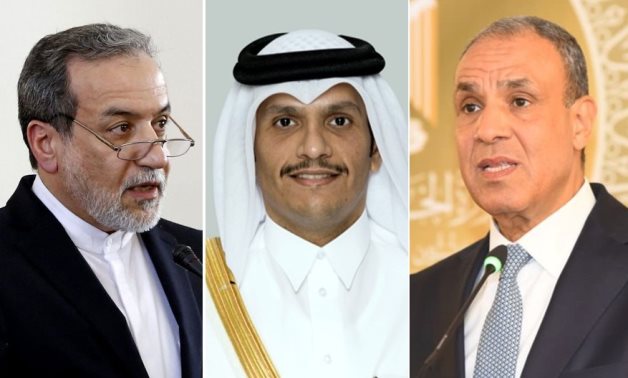
Photos of (from right) Egypt's FM Badr Abdelatty, Qatar's PM and FM Sheikh Mohammed bin Abdulrahman Al Thani and Iran’s FM Abbas Araghchi




CAIRO – 26 April 2026: Egypt’s Foreign Minister Badr Abdelatty has called for adherence to the path of negotiations between the United States and Iran to end the current war as he held phone talks with his Iranian and Qatari counterparts on Sunday.
Abdelatty, Iran’s Abbas Araghchi, and Qatar’s Sheikh Mohammed bin Abdulrahman Al Thani consulted on the path of US-Iran negotiations and efforts to de-escalate regional tensions, the Egyptian foreign ministry said in a statement.
During the calls, Abdelatty urged full commitment to the diplomatic solution and stressed that dialogue represents the primary safeguard against the expansion of conflicts in the region.
The talks come while US President Donald Trump said he had canceled a scheduled trip by his envoys, Steve Witkoff and Jared Kushner, to Islamabad for talks with Iran.
Trump cited Iran’s stance in ongoing negotiations, saying he saw “no point” in sending the delegation under current circumstances.
He added that “we have all the cards,” saying the Iranians can reach Washington by phone if they wish, while denying the decision signaled any move toward military action.
The Egyptian foreign minister emphasized the need to maintain the negotiating path and intensify coordination among relevant parties to sustain the ceasefire and consolidate de-escalation in a way that leads to ending the war.
He highlighted that achieving sustainable regional security and stability requires respect for state sovereignty and consideration of the security concerns of regional countries, particularly Gulf states, while ensuring security and freedom of international navigation.
Abdelatty stressed that continued coordination and joint action are the only way to support security and stability in the region and safeguard the resources of its countries.
US-Iran War
The US-Iran war is currently on hold under a ceasefire aimed at allowing talks on reaching a deal for an end to hostilities.
US President Donald Trump extended the ceasefire last week, citing internal divisions within the Middle Eastern country.
The war, triggered by US and Israeli strikes on February 28, has killed scores of people in Iran and caused widespread destruction. The United States said it struck thousands of targets, including missile launchers, military vessels, and industrial facilities.
The conflict has also prompted Iranian retaliatory strikes across the region, leaving dozens dead and contributing to wider instability. Tehran’s closure of the Strait of Hormuz has further disrupted global oil flows, driving a sharp surge in energy prices.

Be Social




Comments
Leave a Comment