IFC
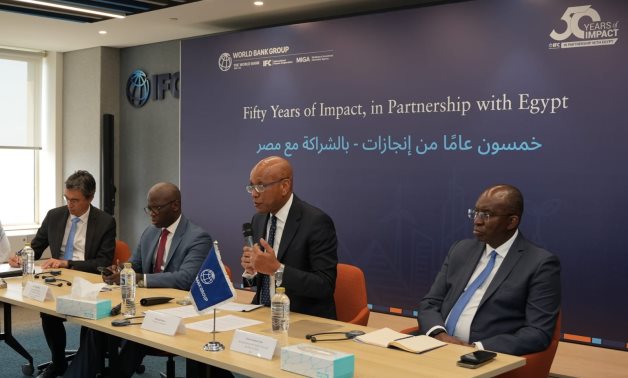
The milestone reflects a long-standing development relationship that has evolved alongside Egypt’s economic transformation, with IFC support spanning energy, agribusiness, manufacturing, healthcare, tourism, and financial services.
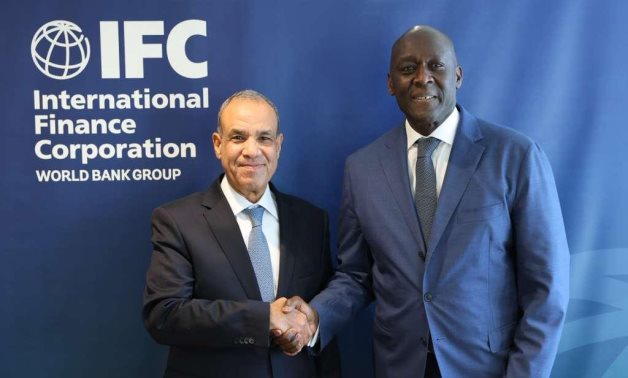
Managing Director of the IFC Makhtar Diop said expanding cooperation with Egypt will help achieve sustainable development and enhance investment prospects in the Egyptian market.
Silla stated that IFC financing has been channeled into a wide range of sectors, including commercial banking, healthcare, sustainable manufacturing, ports, and new and renewable energy, as part of efforts to promote inclusive and sustainable growth.

IFC Managing Director Makhtar Diop praised Egypt’s efforts in aligning development finance with national priorities

She emphasized the importance of unlocking the sector’s vast potential by engaging the private sector and welcomed the IFC's expertise in this domain.

During discussions with Emmanuel Nyirinkindi, IFC's Vice President of Cross-Cutting Solutions, Minister Al-Mashat explored avenues for collaboration to bolster private sector involvement in Egyptian government initiatives.

El-Said noted that the national structural reform program has four main pillars, the first one focuses on the real side of the economy which is: manufacturing, agriculture, and information and communications technology (ICT).

Maait said that the goal of the reforms is to inject more private investment flows into Egypt's economy and achieve more sustainable economic growth, led by the private sector in the upcoming period.

The objective is to increase the private sector's contribution to the state's total investments to 65 percent.

This investment has positioned Egypt as one of the top countries where the IFC operates. Additionally, the IFC has provided advisory services worth $34 million to support Egypt's economic development.
The volume of IFC’s investments exceeded $7 billion since the start of its work in Egypt, according to Rania A. Al-Mashat.

The agreement was signed by Makhtar Diop, Managing Director of the IFC and Rania Al Mashat, Minister of International Cooperation.

Minister of Planning and Economic Development and Chairwoman of The Sovereign Fund of Egypt (TSFE) Hala El-Said attended Wednesday the signing ceremony.
The IFC has a growing investment portfolio amounting to about $1.5 billion in investment projects in Egypt, in addition to $32 million in advisory programs.
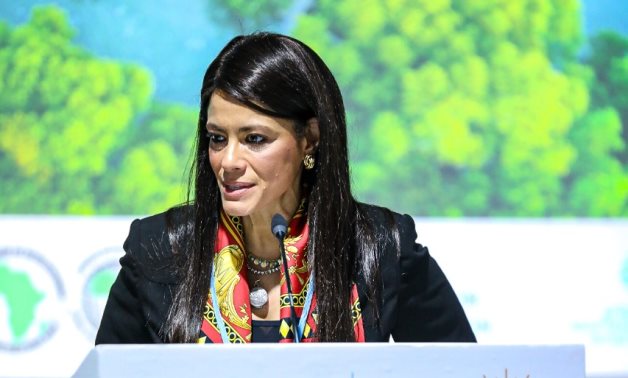
The Minister pointed out the importance of expanding the scope of cooperation between the IFC and private sector companies in Egypt through credit lines to banks to promote the development of small, medium and micro enterprises (SMEs), in addition to the availability of green bonds, to increase investments in various fields.
The financing is pending approval and would consist of a $75 million loan and interest rate swaps worth around $8 million, according to the IFC.
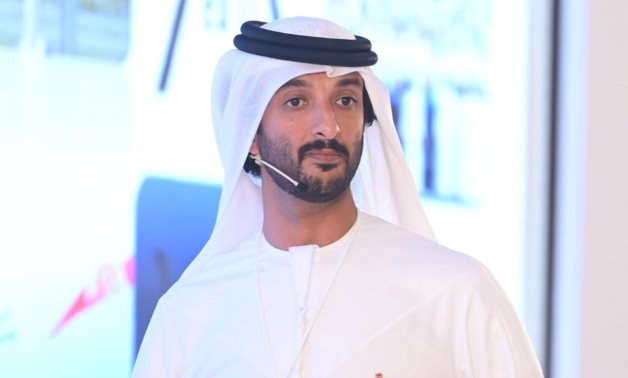
“This will take place through the International Finance Cooperation (IFC),” Al Marri elaborated on Tuesday.
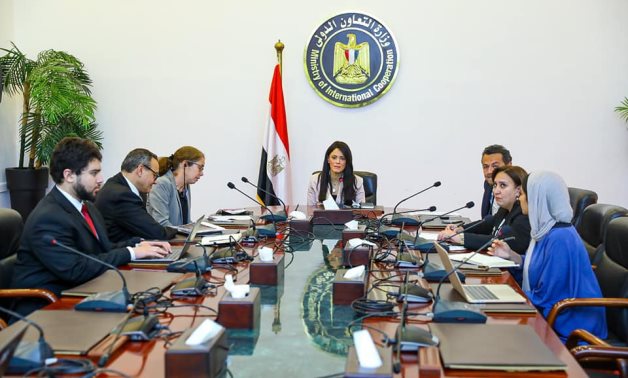
The size of the current funding portfolio between Egypt and the World Bank is $5.5 billion directed towards 15 projects.
The IFC's $15 million investment in Algebra Fund II will help support the growth of roughly 20 technology startups, primarily in Egypt but also in Africa more broadly, the IFC said in a press release.
This came during Al-Mashat’s meeting with the International Finance Corporation’s (IFC) Global Head and Director of Climate Business, Vivek Pathak, as part of the Minister’s participation in the United Nations Climate Change Conference (COP 26) at Glasgow, the United Kingdom, running from October 31 to November 12.