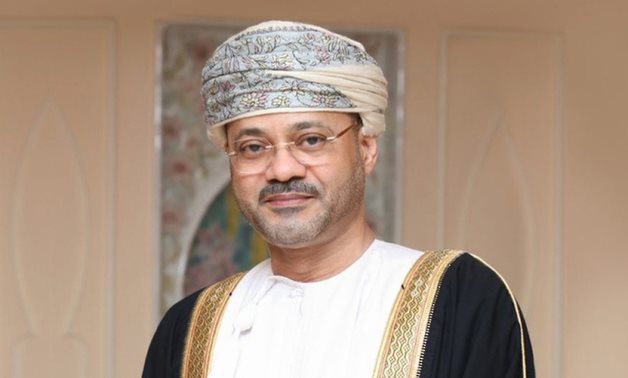




CAIRO – 14 July 2026: Omani Foreign Minister Badr bin Hamad Al Busaidi has revealed that complex discussions are currently underway to formulate a long-term arrangement guaranteeing freedom of navigation through the Strait of Hormuz.
He explained that establishing a permanent framework to ensure freedom of navigation in the strait is a primary focus. He noted the special responsibility the Sultanate of Oman bears in this matter, as its territorial waters—along with those of Iran—border the strategic waterway.
The Omani Foreign Minister stressed the necessity for Oman and Iran, in cooperation with the international community, to formulate realistic and sustainable arrangements consistent with international law. These arrangements must guarantee safe passage and protect navigation in the waterway, which serves as a cornerstone of global trade and the economy.
He emphasized his country's commitment to working alongside Iran and the international community to reach a lasting agreement.
On another note, the Foreign Minister stated that the region's relationship with the United States must be adjusted to align more closely with the strategic realities revealed by the war. He called for a balanced review of relations with international partners—foremost among them the United States—noting that the goal is not to abandon historical, long-standing ties, but rather to rebalance them.
He questioned what constructive role friendly nations, including the United States, could play if integration, rather than containment, became the foundation of regional security cooperation. He emphasized that Gulf security cannot be separated from the security of the northwestern Indian Ocean, the Bab el-Mandeb Strait, the Red Sea, and the maritime routes linked to the region's logistical and economic infrastructure.
He added that the peoples of this vast geographical area would benefit greatly from a legal and practical framework capable of protecting trade, ensuring safe navigation, and promoting sustainable stability and prosperity.
Al Busaidi stated that the war revealed the need for a comprehensive review of the Gulf region's security architecture, urging a shift from the decades-old "containment" policy to a system based on regional integration and shared responsibility.
In an article published in the French newspaper Le Monde, he added that the people of Oman and the wider Gulf are living under the weight of a war that should never have occurred. He expressed hope that current developments would lead to a genuine end to the conflict, rather than a temporary cessation of military operations that remains vulnerable to collapse.
Al Busaidi argued that the security system established in the Gulf since 1979 was built on the premise that Iran poses an existential threat to the region and Western interests—a premise he described as fundamentally flawed. He pointed out that past decades have witnessed massive military spending, the expansion of foreign military bases, and reliance on external protection, none of which established sustainable security or prevented recurring crises.
The recent war, he said, exposed the illusion of the containment policy, adding that the greatest threats to Gulf security often stem from decisions made outside the region, particularly in Tel Aviv.
Al Busaidi raised questions about how the Gulf security system could be rebuilt in light of these shifts, emphasizing that any future framework must include all eight Gulf states: the six GCC members, alongside Iran and Iraq. He noted that because each country has vital interests and responsibilities commensurate with its capabilities, all must participate in designing and implementing the new regional order.
Describing the war as a "catastrophe" that erupted without a UN mandate and failed to achieve its objectives, Badr Al Busaidi concluded by affirming his hope that its repercussions will finally dismantle the half-century-old containment policy, paving the way for a more just and realistic security system in the Gulf.

Be Social




Comments
Leave a Comment