
FILE - Sinai Peninsula, Egypt by NASA Johnson




CAIRO – 23 April 2026: Egypt will celebrate on Saturday the 44th anniversary of Sinai’s liberation from Israeli occupation (1967–1982), marking the restoration full sovereignty over the strategic peninsula and the conclusion of one of the most consequential chapters in modern Egyptian history.
“Sinai—that sacred stretch of Egypt’s land—has long been a target for covetous eyes, yet throughout history it has stood as a symbol of resilience and sacrifice,” President Abdel Fattah El-Sisi said while marking the occasion last year.
The story dates back to 1967, when Sinai, the “land of turquoise,” came under Israeli occupation following the Six-Day War.
The loss left a deep wound in the national consciousness, but it also reinforced Egypt’s determination to restore its territory and sovereignty.
In the years that followed, Egypt entered the War of Attrition, a prolonged phase of military and intelligence operations aimed at exhausting enemy forces and rebuilding strategic momentum.
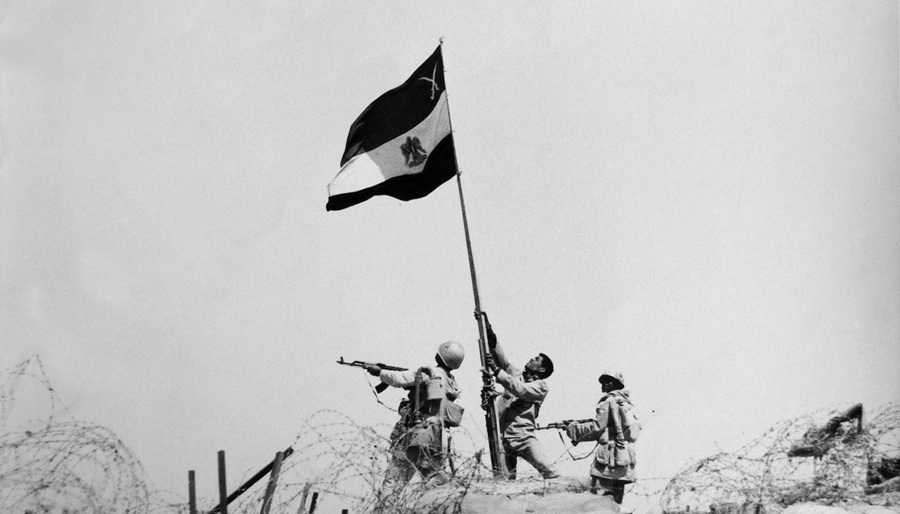
This sustained pressure helped set the stage for the October 1973 war, when Egyptian forces achieved a historic crossing of the Suez Canal and a major military breakthrough that reshaped the regional balance and reopened the path to diplomacy.
What followed was a complex process of statecraft involving military leaders, diplomats, and economic and legal experts.
Building on President Anwar Sadat’s landmark 1977 initiative and the Camp David framework, Egypt and Israel signed a peace treaty in 1979 that paved the way for a phased withdrawal from Sinai.
The process culminated on April 25, 1982, when Egypt regained full sovereignty over the peninsula following the final withdrawal of Israeli forces.
Even after that milestone, Egypt continued to assert its rights, culminating in the resolution of the Taba dispute through international arbitration and the reaffirmation of Egyptian sovereignty in 1989.
Taken together, these milestones form a continuous national journey—military, political, and diplomatic—through which Sinai was fully restored, becoming a lasting symbol of resilience, unity, and territorial integrity.
Fighting Terror, Achieving Development
In 2014, President El-Sisi launched a comprehensive national project for the protection and development of Sinai across security, economic, and infrastructural dimensions.
The initiative combined military efforts to eliminate terrorism and secure the peninsula with an ambitious development strategy aimed at transforming Sinai into a dynamic hub of growth.
In the following years, Egypt succeeded in defeating terrorism after a wave of attacks targeting security forces and civilians across the nation, dismantling extremist networks in Sinai and other areas where they had emerged.
In March, President El-Sisi said that the war on terrorism between 2012 and 2022 cost the state LE 30-40 million per day, bringing total spending to around LE 120 billion.
Marking Sinai Liberation Day in 2023, El-Sisi said in a televised address that Egypt is now waging a “battle for the development of Sinai,” following its liberation from both occupation and terrorism.
The development strategy has included the establishment of new urban communities and integrated projects spanning industry, agriculture, and trade.
It has also focused on upgrading major infrastructure networks to better connect Sinai with the Nile Delta and the rest of the country, bringing the peninsula closer to the national economic core.
It further emphasizes strengthening connectivity between Sinai, Suez Canal cities, and mainland governorates, alongside improving essential services in urban centers.
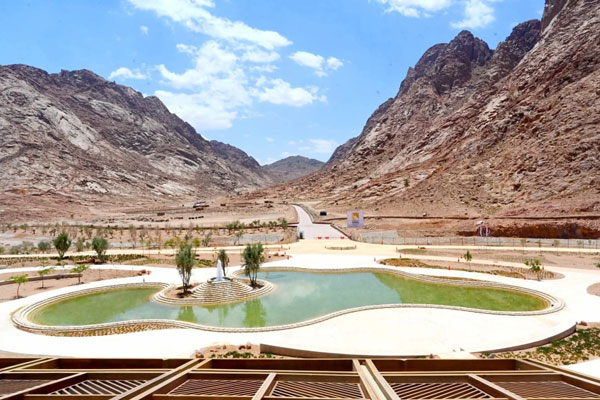
The strategy also seeks to attract investment by leveraging Sinai’s natural resources, expand tourism development, and accelerate the growth of new urban communities as part of Egypt’s broader national vision.
According to the Presidency, the state has invested more than LE 700 billion in development projects across Sinai.
Resisting Displacement
Israeli threats to Sinai were back when the war in Gaza erupted in October 2023. Israeli officials’ suggestions for the transfer of Palestinians into Sinai were met with firm rejection from Egypt.
Cairo reiterated that such scenarios would undermine the Palestinian cause and an aspired two-state solution, which views Gaza as an integral part of a future Palestinian state.
Shortly after the outbreak of the war, President El-Sisi warned against attempts to liquidate the Palestinian cause, stressing the importance of Palestinian steadfastness on their land.
Throughout the conflict, Egypt, alongside Arab and international partners, maintained its rejection of displacement scenarios, with El-Sisi reiterating that “Egypt will forever remain a gateway for aid, not a gateway for displacement.”
The modern history of Sinai, a pillar of Egypt’s national security, traces a path from occupation and war to diplomacy, security consolidation, and large-scale development. Once a frontline of conflict, it has become a focal point of state-building efforts and a symbol of restored sovereignty.

Be Social




Comments
Leave a Comment