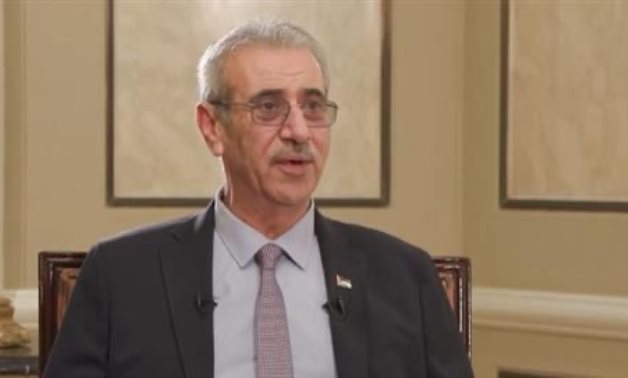
Head of the Palestinian National Committee for the Administration of the Gaza Strip Ali Shaath




CAIRO – 16 January 2026: Head of the Palestinian National Committee for the Administration of the Gaza Strip Ali Shaath (67 years) officially announced the commencement of the committee’s work, beginning with its meeting held today in Cairo.
In an interview with journalist and writer Samir Omar on Al Qahera News, Shaath revealed the 15-member committee has secured initial financial support from donor countries, along with approval of a two-year operational budget to enable it to carry out its responsibilities in accordance with relevant UN Security Council resolutions.
He explained that a major milestone in this process was the establishment of a dedicated fund at the World Bank for the reconstruction of Gaza and the provision of relief to its residents. This initiative is complemented by regional commitments of substantial and tangible financial support aimed at strengthening the committee’s operations on the ground.
The committee head further noted that the approved action plan is primarily based on the “Egyptian Plan,” which has been endorsed by the League of Arab States and welcomed by both the Islamic world and the European Union. The plan sets out clear implementation frameworks for urgent humanitarian relief, infrastructure rehabilitation, and housing reconstruction, particularly in light of estimates indicating that more than 85 percent of housing units in the Gaza Strip have been completely destroyed as a result of the war, now in its second year.
He officially launched the works of the committee following its first meeting in Cairo, with emphasizing that the next phase will witness the precise implementation of a specific timetable aimed at restoring hope and dignity to the Palestinian people and meeting their basic needs as quickly as possible.
Shaath revealed that the committee's first step in the rehabilitation and reconstruction plan is the urgent provision of 200,000 prefabricated housing units as an immediate and safe alternative for residents suffering harsh conditions in tents.
He explained that the plan goes beyond simply providing shelter. Strategic locations have been identified for these units, which will be transformed into integrated residential complexes with essential facilities for education, health, security, and relief. This is to ensure a dignified life and protect citizens, especially women and children, from the volatile weather and the repercussions of the conflict.
Shaath stressed that the committee members are leveraging their extensive experience in national and relief work to ensure that aid reaches those who need it most among the affected groups throughout the Gaza Strip.
He affirmed that the supporting countries pledged to provide full support to the committee and commission responsible for managing and rebuilding the sector, noting that the massive scale of the construction and rehabilitation operations requires investments estimated at billions of dollars to ensure the restoration of livelihoods in the sector.
Shaath emphasized the importance of close cooperation with Arab partners, particularly Egypt, to supply the plan's needs for building materials, furniture, and technical equipment, as well as utilizing contracting companies and engineering expertise to ensure the projects are implemented with the highest efficiency and in the shortest possible time.
He stressed that the committee was formed through broad national consensus and a direct mandate from the Palestinian leadership, with international and U.S. support aimed at helping the Palestinian people emerge from their current crisis.
Dr. Shaath explained that his appointment as head of the committee is grounded in firm legal and political foundations, foremost among them UN Security Council Resolution 2803 and U.S. President Donald Trump’s 20-point peace plan. He emphasized that the decision came with a clear mandate from the Palestinian leadership, which envisions the committee as a crucial link between the Gaza Strip and the West Bank, paving the way toward realizing the national dream of establishing an independent Palestinian state.
The committee chairman also revealed its composition, noting that it consists of 15 Palestinian figures known for their professionalism and moderation, with extensive experience in development, relief, and humanitarian work in the Gaza Strip. He added that the committee will operate during a two-year transitional period, dedicating its efforts to serving the most vulnerable groups, particularly women, children, and the sick—in an effort to compensate them for years of suffering and blockade.
Dr. Shaath said that the committee’s top priority at this stage is the humanitarian file, focusing on the provision of urgent relief and care. He stressed the importance of restoring hope and joy to the children of Gaza who have endured the trauma of war and displacement, affirming that the committee will work tirelessly to implement the provisions of the peace plan and alleviate the severe living conditions in the Gaza Strip.
He also expressed his deep gratitude to Egypt, its president, government, and people, commending Egypt’s pivotal role in overcoming obstacles to the committee’s formation and for hosting its inaugural meetings. He described Egypt as the “main supporter” of efforts to fulfill the Palestinian people’s aspirations for stability and reconstruction.
Shaath emphasized that the committee is composed entirely of highly qualified technocrats and specialized professionals, noting that its members were selected based on extensive professional expertise and without any partisan or political affiliations. He stressed that this approach ensures their full dedication to national, economic, and developmental efforts, as well as to delivering essential services to the Palestinian people.
He outlined aspects of his professional background that underscore the committee’s capacity to carry out its responsibilities. Born in Khan Younis in 1958, he earned an engineering degree from Ain Shams University in 1982, followed by a professorship in civil engineering from a leading British university. He also highlighted his extensive experience as a consultant on major projects for the Palestinian National Authority after the 1994 Oslo Accords, including overseeing the construction of the port and airport.
The committee head reviewed the significant developmental progress the sector has achieved over the decades through the efforts of dedicated professionals. He noted that Gaza expanded its healthcare infrastructure from just two hospitals to 38 prior to the war, in addition to establishing approximately 20 national universities, achieving self-sufficiency in higher education. He emphasized that this legacy of development is what the committee aims to restore and build upon through its experienced staff who lived through and contributed to this period of growth.

Be Social




Comments
Leave a Comment