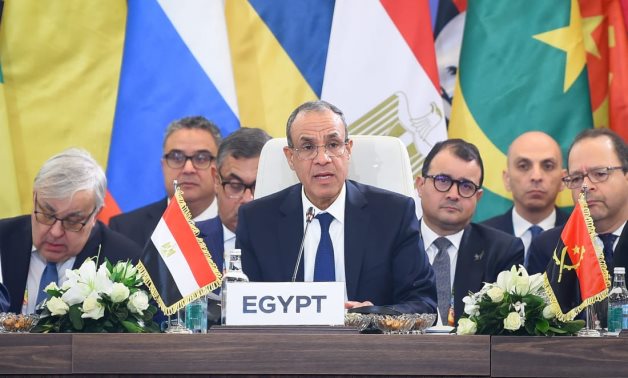
Egypt's FM Badr Abdelatty co-chair the Second Ministerial Conference of the Russia-Africa Partnership Forum in Cairo. Egyptian Cabinet




CAIRO – 20 December 2025: Foreign Minister Badr Abdelatty said on Saturday that shared water resources and transboundary rivers should serve as a basis for cooperation and mutual understanding among nations, rather than a source of tension or conflict.
Abdelatty delivered a speech at the Second Ministerial Conference of the Russia-Africa Partnership Forum in Cairo on behalf of President Abdel Fattah El-Sisi. The meeting was co-chaired by Abdelatty and the foreign ministers of Russia and Angola.
At the conference, Abdelatty said Egypt places special importance on strengthening cooperation in the management of transboundary rivers in accordance with relevant rules of international law.
“Water and transboundary rivers must be a bridge for cooperation and understanding between peoples, not a cause of tension or dispute,” Abdelatty said.
He noted that Egypt relies “almost entirely on the Nile River as its sole lifeline.”
From this perspective, he said, Cairo prioritizes adherence to international legal principles governing shared rivers, foremost among them the principle of prior notification and the obligation not to cause harm to downstream states.
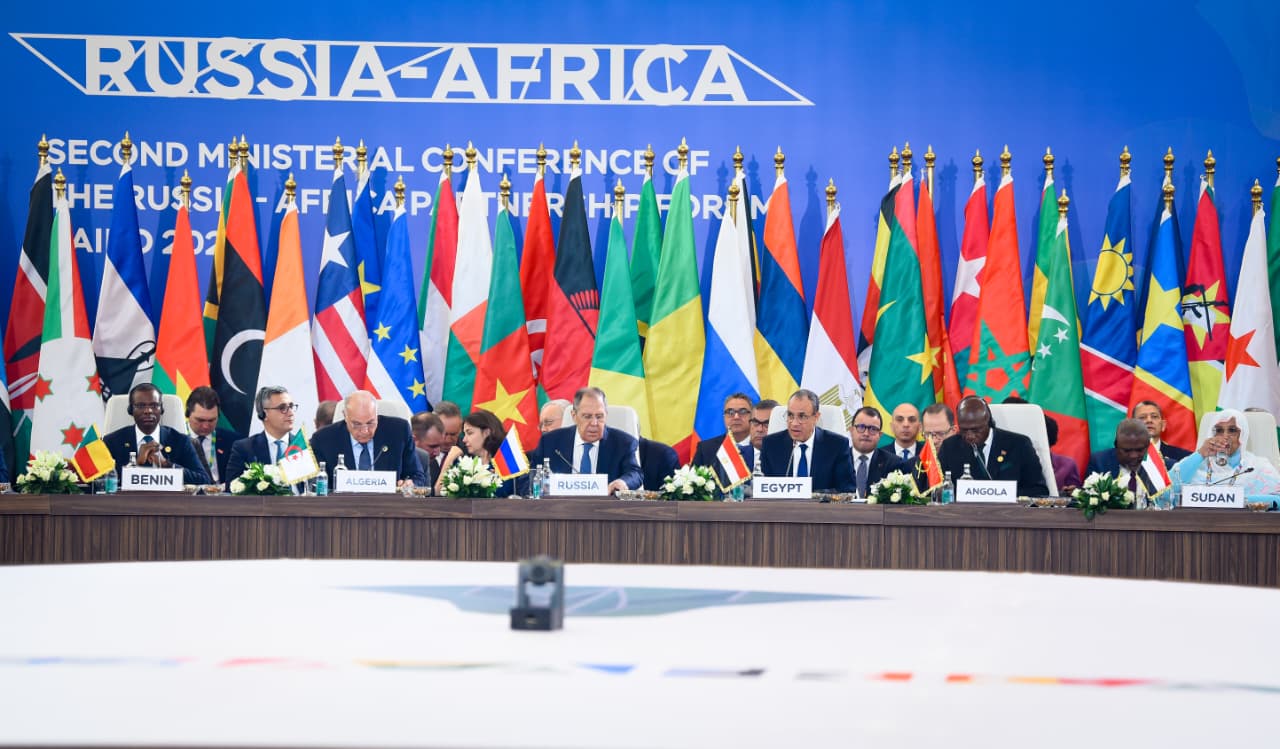
Abdelatty’s remarks came as Egypt and Sudan, the two downstream countries on the Nile River, have long called on Ethiopia to refrain from unilateral measures in the filling and operation of the Grand Ethiopian Renaissance Dam (GERD).
Egypt and Sudan have affirmed that they do not stand against development in Ethiopia but urged the upstream country to sign a binding legal agreement governing the operation and filling of the dam.
The downstream countries have expressed concerns over their water interests and rights in light of unregulated and uncoordinated filling and operation of the dam, especially during droughts or floods
GERD has a massive reservoir capable of holding up to 74 billion cubic meters of water. Ethiopia has rejected signing a binding deal on the dam, shattering negotiations that had continued over more than a decade.
In October, Egypt accused Ethiopia of creating a “man-made flood” that put the lives and resources of populations in the two downstream countries at risk, citing “hasty and uncoordinated filling” of the recently inaugurated dam.

Be Social




Comments
Leave a Comment