Grain
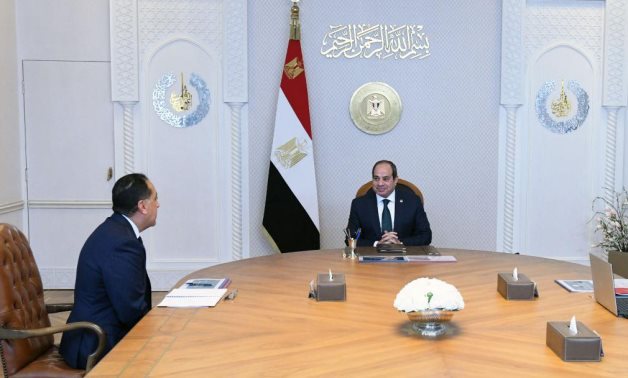
Prime Minister Mostafa Madbouly met with senior cabinet members and officials from the Suez Canal Economic Zone (SCZONE) and the "Future of Egypt" project to follow up on the establishment of a global hub for the storage, supply, and trade of grains and oils.

Ukraine’s Minister of Agricultural Policy and Food Vitaliy Koval recently expressed the country’s interest in establishing a logistics zone in Egypt to facilitate Ukrainian exports to Africa.

The ambassador stipulated that Egypt backs all efforts that would guarantee the flow of grain exports from all world countries to the global market.
The organization failed to play an effective role during the global crisis in 2008 to secure its members needs.
Nagdy pointed out that 80 percent of the components are locally made.
French Ambassador to Cairo Marc Barety told press Monday that his country is a producer of wheat and that it prioritizes exporting the crop to Egypt in the current harvest season.
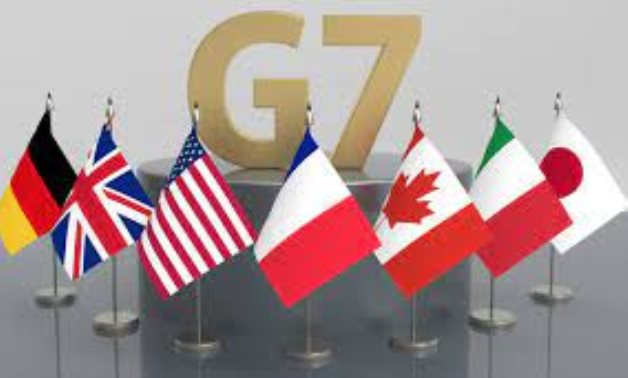
The G7 ambassadors to Cairo issued Tuesday a joint statement affirming their countries' support to Egypt to overcome the grain crisis incurred by the Russia-Ukraine War.
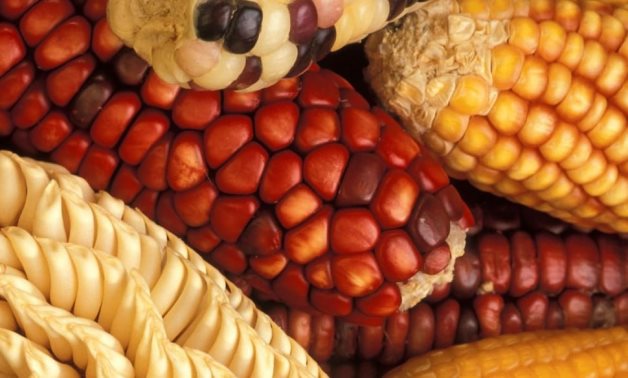
Egypt prohibits importing and planting GMO seeds, but allows imports of GM-produced soybeans and maize that have been approved from the country of origin, especially from the United States.
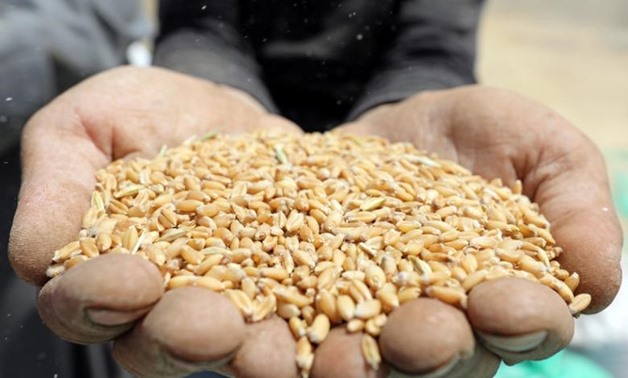
Minister of Agriculture Ezz el Din Abu Steit stressed that all grain imports coming from Russia are subjected to quarantine checks to ensure they are free from any harmful substances that may pose a danger to Egypt's agriculture, MENA reported.
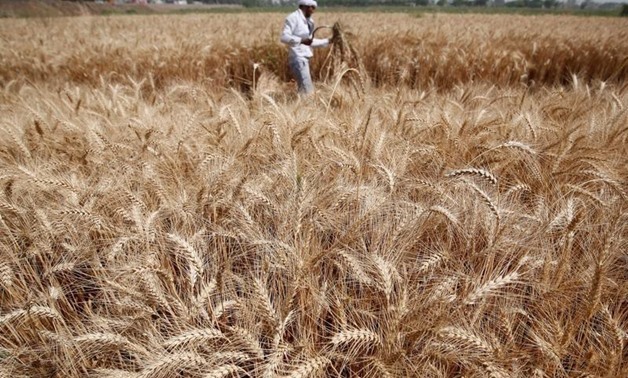
The lowest offer was at $197.95 a tonne free-on-board for 60,000 tonnes of Russian wheat, traders said.