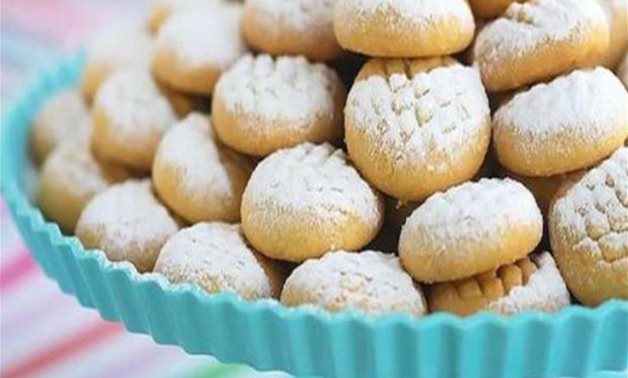
CAIRO - 18 March 2026: As the holy month of Ramadan comes to end, and Egyptians are preparing to celebrate Eid al-Fitr [meaning the feast of Breaking the fast," one of the main ways of celebration is by eating Kahk [biscuits or cookies covered with powdered sugar].
Kahk is also commonly known as "Kahk El Eid or Eid Kahk" [referring to Eid al-Fitr, during which Egyptians eat Kahk]. Egyptian employees nation-wide enjoy paid vacation during Eid al-Fitr.
Kahk is simply a sweet shortbread biscuit that is eaten in Egypt, primarily to celebrate festive occasions like Eid al-Fitr. Kahk is sometimes served plain, or stuffed with pistachio, nuts or dates.
Despite it is undeniably delicious, its high fat and calorie content can indeed cause health issues if consumed in excess.
That's why the Food Technology Institute, affiliated with the Agricultural Research Center of the Ministry of Agriculture, issued an awareness report containing important nutritional guidelines for citizens regarding the consumption of Kahk.
The report warned against excessive consumption due to their high concentration of fat, sugar, calorie, while advicing on increasing the nutritional value of this traditional sweet.
Potential health risks might include: weight gain, high cholestrol, digestive issues and nutritional concerns.
The Calorie Trap
Institute experts revealed that a single piece contains, on average, between 200 and 250 calories, noting that this number is likely to increase depending on the size of the Kahk and the type of filling used.
They explained that consuming large quantities in one sitting could consume the entire daily calorie requirement for an adult, which typically ranges from 2,000 to 3,000 calories. This could lead to sudden weight gain and digestive problems.
A Prescription for Healthy Kahk
In an effort to transform Kahk from mere sugary treats into a nutritious snack, the institute offered several tips for consumers and manufacturers. Key among these was controlling portion sizes, recommending smaller pieces to reduce calorie intake per piece. The institute also advised focusing on Kahk made with ghee (clarified butter) as an alternative to hydrogenated fats, ensuring better taste and higher nutritional value.
Furthermore, the institute recommended choosing Kahk filled with dates or nuts. This combination provides the body with vitamins, minerals, antioxidants, and dietary fiber, which enhances the product's nutritional value.
Nutritional Balance
The institute concluded its advice by emphasizing moderation when consuming Eid Kahk.
It stressed that adding healthy ingredients like nuts and dates transforms the Kahk into a nutrient-rich snack rather than a source of empty calories, allowing people to enjoy the festive spirit without compromising their health.








Comments
Leave a Comment