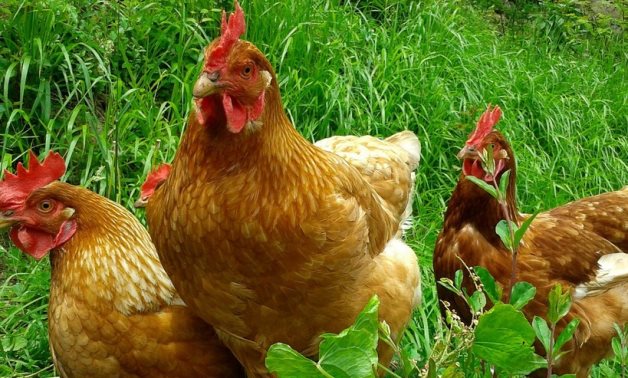
Hens- CC via itoldya420




CAIRO – 27 July 2026: Egypt’s Minister of Agriculture and Land Reclamation Alaa Farouk received Frank Kagyigyi Tumwebaze, Uganda's Minister of Agriculture, Animal Industry and Fisheries, and Robert Migadde Ndugwa, Uganda's Minister of State for Agriculture, Animal Resources and Fisheries, along with their accompanying delegation, to discuss ways to strengthen bilateral cooperation and advance the strategic partnership between the two countries across the agricultural, livestock, and fisheries sectors.
At the outset of the meeting, Mr. Farouk emphasised the deep-rooted historical and fraternal ties between Egypt and Uganda, highlighting the political leadership's commitment to strengthening cooperation with African partners. He stressed the importance of translating the memoranda of understanding signed between Cairo and Kampala into tangible development and investment projects that integrate Egyptian and Ugandan expertise to enhance food security and promote sustainable development.
For his part, Uganda's Minister of Agriculture, Animal Industry and Fisheries praised the remarkable progress achieved by Egypt's agricultural sector and commended the country's advanced scientific and research capabilities. He reaffirmed Uganda's commitment to expanding cooperation, exchanging technical and technological expertise, and benefiting from Egypt's experience in aquaculture, livestock breed improvement, veterinary vaccine production, and modern irrigation systems.
The two sides reviewed progress in implementing the joint integrated model farm for plant and animal production in Uganda, which spans 500 hectares. The project has become a successful model for transferring Egyptian agricultural technology and expertise to Uganda. They agreed to expand the cultivation of strategic crops, including maize, soybeans, beans, wheat, and sunflowers, while further enhancing the farm's role in introducing Egyptian livestock feeding and fattening systems, advancing agricultural mechanisation, and producing improved seeds and silage.
The ministers also reviewed the bilateral agreement on veterinary serums and vaccines, under which approximately 10 million doses of foot-and-mouth disease vaccine are supplied annually to Uganda. The vaccine is produced through cooperation between the Ministry of Agriculture and Land Reclamation, represented by the Veterinary Serum and Vaccine Research Institute, and the private sector. Both sides reaffirmed their commitment to maintaining and expanding the supply of veterinary products to safeguard livestock health in both countries.
The meeting also explored opportunities to encourage greater private-sector participation by facilitating joint agricultural and livestock investment projects between Egyptian and Ugandan businesses. The two sides agreed to provide the necessary support and incentives to enable companies from both countries to expand agricultural investments and establish commercial partnerships. These initiatives will capitalise on promising opportunities in agro-processing, livestock production, and modern irrigation infrastructure, contributing to economic growth, job creation, and increased value addition to agricultural products.
The ministers further discussed opening the Ugandan market to Egyptian poultry and egg products, building on Egypt's significant achievements in the poultry sector. Egypt also has production facilities officially recognised as free from avian influenza in accordance with the standards of the World Organisation for Animal Health (WOAH), enabling it to meet Uganda's demand for high-quality poultry products. Egyptian laboratories and research centres stand ready to provide technical support and apply the highest standards of biosecurity and veterinary inspection to ensure the safety and quality of traded products.
The meeting also addressed prospects for cooperation in establishing and managing integrated fish farms in Uganda under joint Egyptian-Ugandan management. The initiative would include deploying Egyptian experts to Uganda to transfer expertise and provide specialised training for Ugandan personnel in fisheries science and intensive aquaculture.
At the conclusion of the meeting, the two ministers underscored the importance of increasing bilateral trade in agricultural and veterinary products in line with the economic potential of both countries. They also stressed the need to facilitate market access, expand the mutual trade of fruits, citrus crops, veterinary medicines, meat, and animal feed, and strengthen training and capacity-building programmes through grants and technical assistance provided by the Egyptian International Center for Agriculture and the Agricultural Research Center.

Be Social




Comments
Leave a Comment