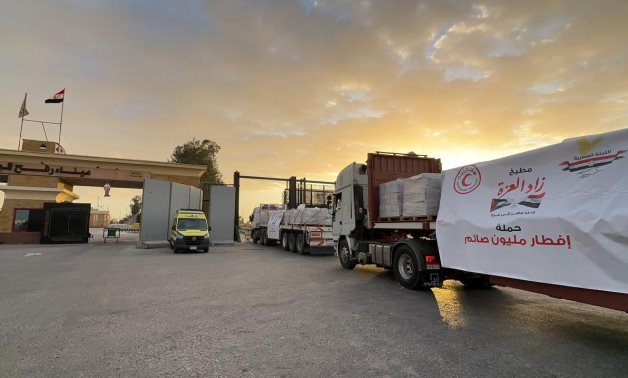
The Egyptian Red Crescent is providing Iftar for one million fasting individuals in the Gaza Strip




CAIRO - 27 July 2026: The Egyptian Red Crescent said its 243rd "Zad El-Ezza... From Egypt to Gaza" convoy is carrying more than 2,673 tons of humanitarian assistance as part of its role as the national mechanism for coordinating aid deliveries to the Gaza Strip.
In a statement issued on Monday, the organization said the convoy includes 1,092 tons of food parcels and flour, 95 tons of relief supplies and 1,485 tons of fuel needed to operate hospitals and other vital facilities across the enclave.
The Egyptian Red Crescent has maintained a presence at the border since the start of the crisis. The Egyptian side of the Rafah border crossing has never been closed. It has remained on full alert at its logistics centers while continuing efforts to facilitate the entry of humanitarian aid, which has now exceeded one million tons, with the support of more than 75,000 volunteers.
Israeli forces closed the crossings serving the Gaza Strip on March 2, 2025, following the expiration of the first phase of the Gaza ceasefire agreement and the failure to reach a deal extending the truce. The ceasefire was subsequently broken with intensive airstrikes on March 18, 2025, followed by renewed ground operations in several areas of the enclave.
Israeli authorities also barred the entry of humanitarian aid trucks, fuel and shelter supplies for displaced Palestinians who had lost their homes during the war, while refusing to allow heavy equipment needed for rubble removal and reconstruction into Gaza.
Aid deliveries resumed in May 2025 under a mechanism implemented by Israeli authorities and a US security company, despite objections from the United Nations Relief and Works Agency for Palestine Refugees in the Near East, which said the arrangement did not comply with the established international humanitarian mechanism.
The Israeli military announced a 10-hour temporary humanitarian pause on July 27, 2025, suspending military operations in parts of the Gaza Strip to facilitate the delivery of aid.
Mediators—Egypt, Qatar and the United States—continued efforts to broker a comprehensive ceasefire and prisoner exchange agreement, culminating in a deal reached in the early hours of October 9, 2025, in line with US President Donald Trump's plan announced in Sharm El-Sheikh and mediated by Egypt, the United States and Qatar, with Turkish support.
The second phase of the agreement entered into force on February 2, 2026, following the completion of prisoner exchanges and the handover of the remains of the last Israeli captive under the first phase. The agreement allowed Palestinians to return to the Gaza Strip and enabled wounded Palestinians to travel for treatment at Egyptian hospitals after the Palestinian side of the Rafah crossing was reopened.

Be Social




Comments
Leave a Comment