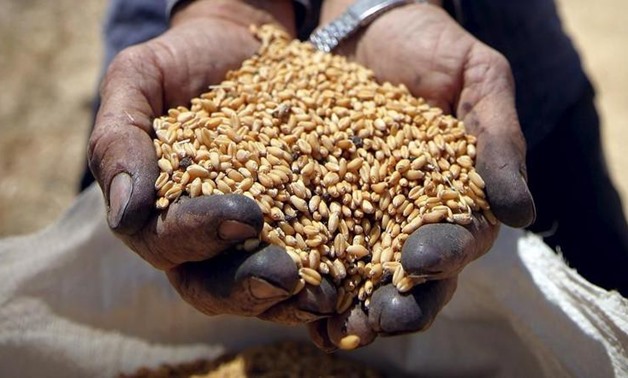
CAIRO - 9 July 2026: Egyptian Minister of Agriculture and Land Reclamation Alaa Farouk, announced that domestic wheat production this year has surpassed 10 million tons, marking a 6.5% increase compared to last year.
The Minister explained that this significant production growth has positively impacted the country's import bill, contributing to a reduction in wheat imports to approximately 12.5 million tons, compared to 13.2 million tons in the previous period.
Farouk noted that the government procurement system has recorded its highest historical rates this year and is very close to achieving its target of collecting 5 million tons by the end of the current season.
Farouk attributed this surge to the record increase in wheat cultivation areas, which reached 3.76 million feddans, an increase of nearly 600,000 feddans compared to the previous season.
This was supported by the announcement of a rewarding procurement price of 2,500 Egyptian pounds ($50.26) per ardeb (198 liters) for farmers as an incentive, based on directives from President Abdel Fattah al-Sisi.
Regarding production efficiency, the Minister of Agriculture revealed a significant improvement in yield per feddan, with the overall average ranging between 18 and 20 ardebs. Meanwhile, yields on farms that adopted advanced technologies and good agricultural practices jumped to 28 ardebs per feddan, placing Egypt among the world's leading countries in terms of wheat production efficiency.
The success of research programs led by the Agricultural Research Center
Farouk added that this breakthrough is primarily based on the success of research programs led by the Agricultural Research Center in developing and disseminating new, high-yielding varieties that are tolerant to climate change.
Approximately 60 new varieties and hybrids have been developed in the last three years for strategic crops such as; wheat, corn, rice, oilseed crops, and fodder.
The minister concluded by highlighting the most prominent newly developed wheat varieties, including the high-yielding varieties "Misr 3" and "Misr 4," the rust-resistant "Giza 171," the water-efficient "Sakha 95 and 96," and the early-maturing "Seds 14 and 15."
He also mentioned durum wheat varieties suitable for pasta production and tolerant to harsh conditions, such as "Beni Suef 5 and 7" and "Sohag 5 and 6."
These varieties were complemented by the application of modern, water-efficient practices across 2.8 million acres — such as terrace farming, laser leveling, and subsoil tillage — which directly contributed to increasing productivity by nearly 20%.








Comments
Leave a Comment