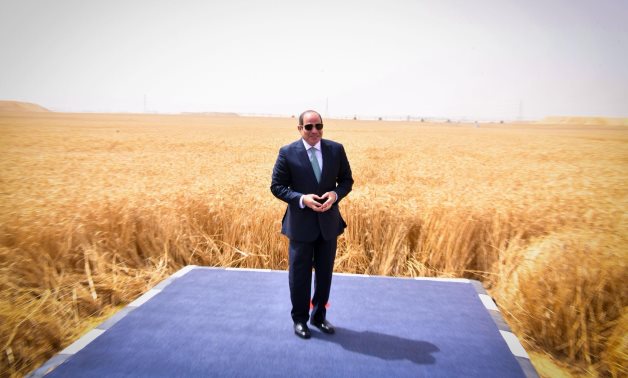
President Abdel Fattah El-Sisi inaugurates the New Delta land reclamation megaproject along the Sheikh Zayed axis in Giza Governorate, 17 May 2026. Presidency




CAIRO – 17 May 2026: President Abdel Fattah El-Sisi on Sunday inaugurated the New Delta land reclamation project in Giza Governorate, which currently spans around 2.2 million feddans and carries a total cost of nearly LE 800 billion.
The New Delta project, part of the “Future of Egypt” Authority for Sustainable Development, is one of several national initiatives aimed at reclaiming more than 4.5 million feddans, Bahaa El-Ghannam, the authority’s chief, said during the inauguration.
He described the New Delta as “the backbone of Egypt’s agricultural system today,” alongside other reclamation projects in Minya, Beni Suef, Fayoum, Sinai, and southern regions including Aswan.
Project Cost, Challenges
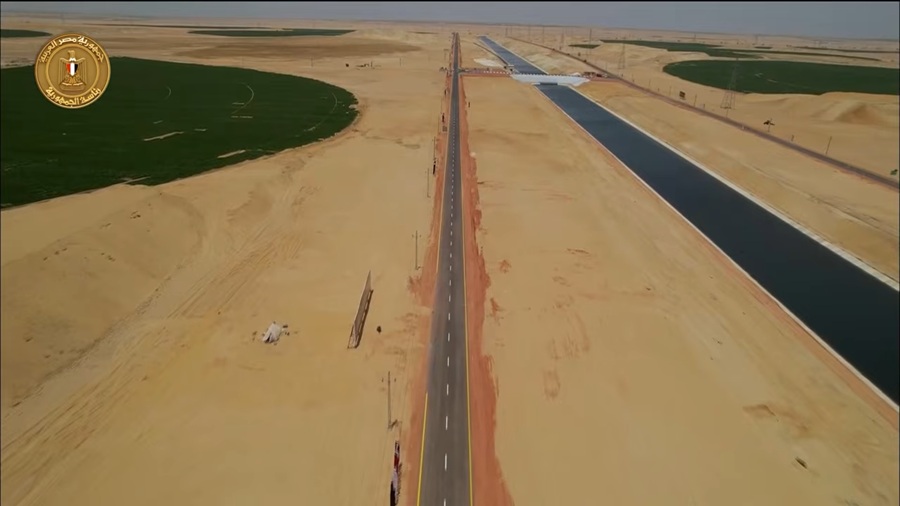
During the ceremony, El-Sisi noted that the project’s cost reaches nearly LE 800 billion, with investment of around EGP 350,000 to 400,000 per feddan, in addition to the construction of new road networks extending up to 12,000 km.
The president highlighted coordinated efforts across state institutions to implement the project, with strong private sector participation. He noted the involvement of around 150 companies in agricultural production alone and hundreds more in other sectors.
El-Sisi stated that the project has overcome major challenges, including the water needed for land cultivation.
He emphasized that the project relies on collecting agricultural drainage water from across the Delta after advanced tertiary treatment.
The system includes two main transfer routes: the northern and eastern corridors, each about 150 km long, El-Sisi explained.
He noted that transporting water against the natural gradient required the construction of 19 major pumping stations to serve irrigation of 2.2 million feddans, in addition to power generation facilities with a total capacity of around 2,000 megawatts.
Project Strategy
El-Sisi stressed that the project’s strategy is based on integrating old and new agricultural lands.
It focuses traditional crops such as wheat and maize in the Nile Valley and Delta due to their high productivity, while prioritizing desert-adapted crops such as sugar beet in new reclaimed areas to maximize efficiency and land use.
The project, El-Sisi said, also creates around two million sustainable job opportunities, underscoring the key role of the private sector, where agricultural activity is carried out by companies under agreed crop cycles.
Minister of Water Resources and Irrigation Hani Sewilam said the New Delta is among the largest agricultural projects worldwide.
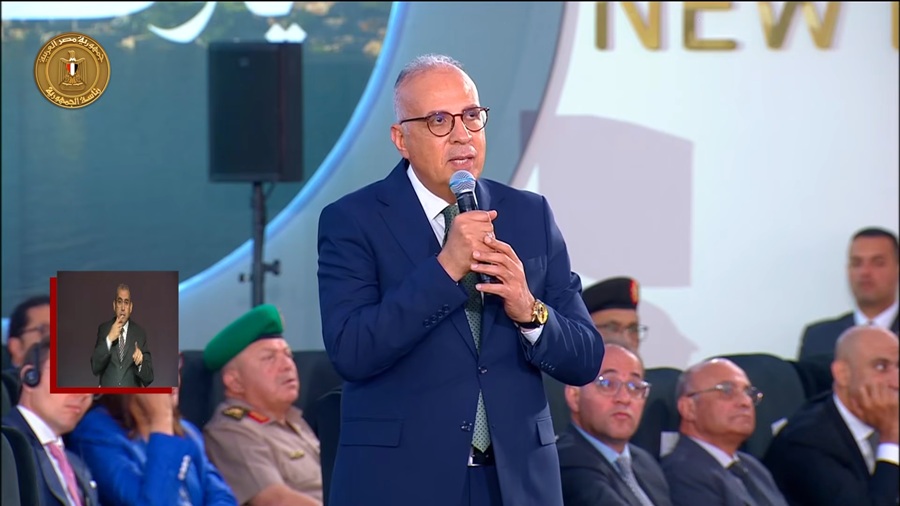
Sewilam said the water transfer route to the project extends 170 km from east to west, adding that the ministry has constructed 13 pumping stations to facilitate the delivery of water to reclaimed lands.
He also pointed to another 50-km route featuring six main pumping stations, each equipped with more than 13 pumps, designed to lift over 9 million cubic meters of water per day.
‘Self-Sufficiency Elusive’
Despite ongoing land reclamation projects, the president said it is difficult for any country to achieve full self-sufficiency in all crops due to climatic, water, and environmental constraints.
He noted that Egypt imports between 14 and 17 million tons of animal feed annually in addition to wheat imports.
Field Visit
During the ceremony, El-Sisi inaugurated the Pumping Station No. 3 (Naba’) via video conference.
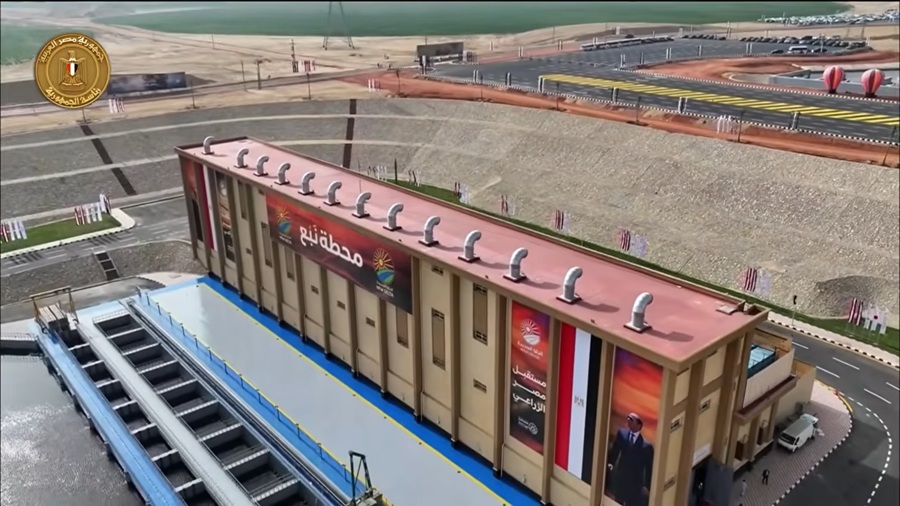
El-Sisi later toured the New Delta project, inspecting Naba’ station and reviewing control and operational systems, before proceeding to the wheat harvesting site.
He also observed sugar beet production before taking a commemorative photo with workers.
State officials attending the ceremony included Prime Minister Mostafa Madbouly, along with the ministers of defense, water resources, transport, supply, and agriculture, and the governor of the Central Bank of Egypt.

Be Social




Comments
Leave a Comment