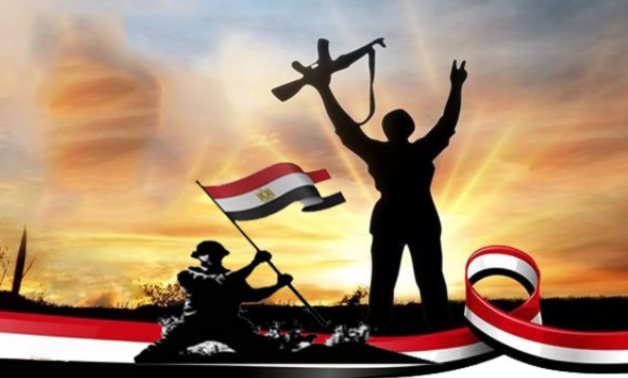
Sinai Liberation




CAIRO - 22 April 2026: As Egypt approaches the anniversary of the Sinai Liberation, the significance of this sacred land is once again brought to the forefront—not merely as a territory recovered through diplomacy and war, but as the fundamental pillar of Egypt’s national security.
Throughout history, Sinai has served as the nation’s first line of defense, a strategic position that has made it a constant target for external threats, extremist incursions, and organized campaigns of misinformation.
Over the past decade, the Egyptian state faced a complex array of challenges in Sinai, primarily the rise of terrorist organizations that sought to exploit the region's unique geography. However, these threats were met with a comprehensive military and security response.
Through large-scale operations, the Egyptian Armed Forces and Police succeeded in dismantling the organizational infrastructure of these groups, significantly degrading their capabilities, and restoring full sovereignty over every inch of the peninsula.
The reality of this confrontation extended beyond the battlefield. It was a holistic strategy aimed at "drying up the wells" of extremism. By securing the borders, cutting off logistical supply lines, and confronting radical ideologies, the state achieved a decisive decline in terrorist incidents. This success effectively neutralized the bets placed by hostile entities on destabilizing the Egyptian state from within Sinai.
Despite these clear victories, Sinai remained a focal point for media campaigns led by hostile organizations, particularly the terrorist Muslim Brotherhood. These entities attempted to distort the truth through fragmented narratives and the deliberate omission of security and developmental milestones. Yet, these fabrications have crumbled in the face of a tangible reality: the return of stability to once-volatile areas and the visible presence of a functioning, secure state.
With the foundations of security firmly established, Egypt transitioned into a transformative phase: Comprehensive Development. The state has executed an integrated network of tunnels, bridges, and highways that have permanently bridged the gap between Sinai and the Nile Valley. The tunnels beneath the Suez Canal have revolutionized the movement of people and goods, effectively integrating Sinai into the national economy.
The developmental footprint in Sinai is vast and multi-sectoral:
- Infrastructure: Massive investments in road networks and water desalination plants.
- Urban Expansion: The establishment of new cities and modern housing projects tailored for Sinai’s residents.
- Economic Sovereignty: National projects in agriculture, mining, and industry aimed at achieving self-sufficiency and creating thousands of jobs for local youth.
The Egyptian leadership’s philosophy is clear: true security is maintained not only through military force but through human development and dignity. By providing essential services, high-quality education, and healthcare, the state has eliminated the social and economic vacuums that extremist groups once exploited for recruitment. This shift has transformed Sinai into an attractive hub for both domestic population growth and international investment.
As the liberation anniversary arrives, Sinai stands as a model of victory over both violence and doubt. Every road paved and every project inaugurated serves as an irrefutable rebuttal to those who sought to weaken the state.
Egypt’s journey in Sinai—balancing the restoration of security with the launch of a massive developmental surge—proves that attempts to shake national stability cannot withstand a reality that is changing for the better every day. Sinai remains, as it has always been, the heart of Egypt’s resilience and the cornerstone of its future.

Be Social




Comments
Leave a Comment