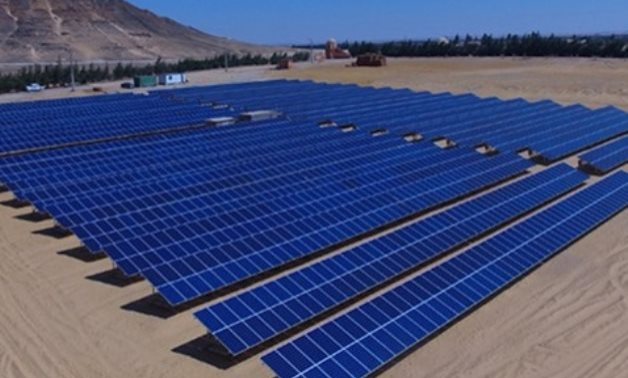
Benban Solar Park - State Information Service




CAIRO – 9 April 2026: Abdel Fattah El-Sisi has directed the government to expand reliance on solar energy by accelerating the completion of renewable energy projects, amid an ongoing power crisis linked to the regional military conflict, Prime Minister Mostafa Madbouly said.
During the cabinet’s weekly meeting on Thursday, Madbouly reviewed several recent presidential activities, including a meeting focused on assessing the status of new and renewable energy projects. The discussions also covered targeted capacity additions from wind, solar, and battery storage systems to the national electricity grid.
Madbouly emphasized the importance of the President’s directives to expand solar energy use through the completion of ongoing renewable energy projects. He noted that these efforts align with Egypt’s broader strategy to diversify energy sources, reduce dependence on fossil fuels, and transition toward a more sustainable energy mix in line with the National Energy Strategy.
Egypt is considered one of the most favorable locations globally for solar power generation, enjoying some of the highest sunshine rates in the world. The country receives an annual average of approximately 2,900 to 3,750 hours of sunshine, equivalent to about 9 to 11 hours per day. These levels increase further south, particularly in Aswan and desert regions, where sunshine exceeds 4,000 hours annually, making them ideal for solar energy production, according to the Central Agency for Public Mobilization and Statistics (CAPMAS).
Accordingly, Aswan Governorate in Upper Egypt stands out as a leading model in clean energy production. It hosts several strategic projects, most notably the Benban Solar Park. The government is also developing new solar power stations in the Fares and Raqaba areas within the governorate.
Engineer Ibrahim Mahrous, a member of the Arab Council for New and Renewable Energy, told Youm7 that Egypt’s total production from renewable energy projects currently stands at about 9 gigawatts. This capacity is distributed across solar, wind, hydropower, and nuclear energy, reflecting the country’s diversified energy portfolio and its gradual progress toward self-sufficiency.

Be Social




Comments
Leave a Comment