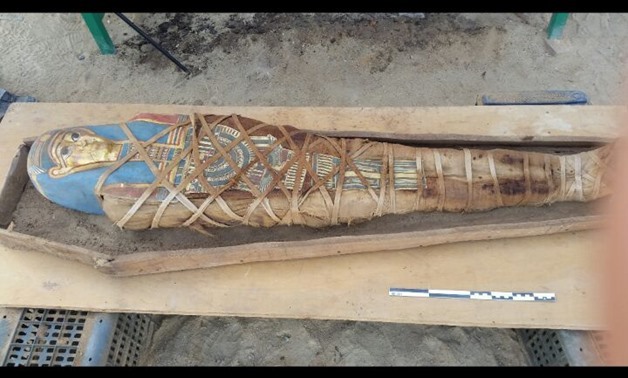
Ancient Egyptian coffin




CAIRO - 9 April 2026: Egypt has published the results of an impactful study involving the full genome sequencing of its citizens, revealing a distinct 18.5% genetic component likely linking modern Egyptians to their ancient ancestors.
Minister of Higher Education and Scientific Research Abdel Aziz Qonsowa announced the findings in a Wednesday statement, noting the data establishes a "national genetic reference" that allows for personalized medicine.
Researchers of the study, which is part of the Egyptian and Ancient Egyptian Genome Reference" project, isolated a unique "Egyptian-enriched" signature that distinguishes locals from neighboring populations.
The study, involving 1,024 citizens across 21 of Egypt’s 27 governorates, identified 51.3 million genetic variants, including 17.1 million previously unknown to global databases.
European genome data had incorrectly assigned 83.3% of Egyptians to high-risk strata for stroke and 76.4% for chronic kidney disease, instead of labeling only 10% of the population as such.
While Egyptians share a dominant 71.8% ancestry component with Middle Eastern populations, the study found that HLA genes—which govern immune system responses—specifically tie Egyptians to the Levantine-Eastern Mediterranean cluster. This finding is vital for improving the success rates of organ transplants and treating autoimmune diseases locally.
The study also identified Familial Mediterranean Fever (FMF) as the nation's most prevalent genetic condition, with 9.1% of the population acting as carriers.
Project lead Khaled Amer described the findings as a turning point that puts Egypt on the global genome map. Acting President of the Academy of Scientific Research and Technology Gina El-Feki added that the project secures Egypt’s scientific sovereignty.
The national project was funded by the Academy of Scientific Research and Technology and implemented by the Center for Research and Regenerative Medicine (ECRRM), in collaboration with the Ministry of Higher Education, the American University in Cairo, and Alexandria University.

Be Social




Comments
Leave a Comment