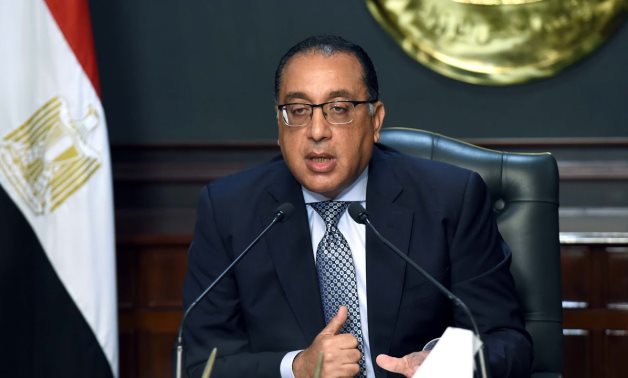
Prime Minister Mostafa Madbouli
CAIRO - 10 March 2026: Amid escalating military conflict in the Middle East, Egypt positions its economy within a "safety zone" by relying on a decade of reform and proactive crisis management. This resilience is anchored in financial gains directed to social protection and a flexible, rational approach that preserves stability despite external shocks.
Preliminary estimates suggest that the ongoing war has had a significant impact on international tourism, foreign direct investment (FDI), and global trade. Aviation routes to Middle Eastern tourist destinations are facing disruptions, and capital flows have retreated due to heightened geopolitical risks. These factors, combined with the volatility of foreign investment in government debt instruments, contributed to the Egyptian pound fluctuating against the US dollar, which recently exceeded the LE52 mark.
However, expectations suggest a gradual stabilization as de-escalation efforts continue. Egypt remains committed to a flexible exchange rate regime, where the value of the currency is determined by market dynamics of supply and demand.
In response to rapid military developments and sharp increases in global energy prices, the Egyptian government, led by Prime Minister Mostafa Madbouly, has activated a daily monitoring mechanism. This initiative ensures full coordination between the Central Bank and relevant ministries to protect the national economy and guarantee the continuity of energy supplies.
To mitigate the impact on citizens, the government has launched a package of temporary proactive measures, beginning with its own agencies through strict austerity and fuel consumption rationalization. The Prime Minister has also directed governors to implement field monitoring of electricity usage, including street lighting and commercial billboards, to ensure national resources are preserved without disrupting essential public services.
Egypt’s economic security is further bolstered by record foreign reserves, which have reached $52.6 billion. With monthly imports averaging $7 billion, these reserves cover approximately seven months of commodity imports—significantly higher than the global safety average of three months. According to the International Monetary Fund (IMF), Egypt’s commitment to exchange rate flexibility has been instrumental in growing total international reserves, which are projected to reach $59.2 billion by the end of this period.
Additionally, the state has secured energy needs through advanced pricing hedges and strategic supply contracts to limit the impact of global price spikes on the local market.
Looking forward, Egypt aims to attract $100 billion in FDI over the next six years, with an annual target of $12 to $15 billion.
The government is coordinating with international financial institutions to accelerate funding tranches and expand the government IPO program to support economic agility.
Furthermore, in an unprecedented move to protect consumers, the government is exploring the referral of price manipulators to military courts to prevent the exploitation of current emergency conditions.
To shield the most vulnerable, the "Takaful and Karama" social support program has been extended, and a new wage improvement package, including a rise in the minimum wage, is set for early announcement for the 2026/2027 fiscal year.
The monetary policy remains focused on inflation targeting, with the Central Bank of Egypt having already reduced interest rates by 8.25% since the beginning of 2025, successfully bringing inflation down to 11%.
Despite the $10 billion loss in Suez Canal revenues since October 2023 due to regional instability, the government continues to push forward with tax reforms and customs improvements to enhance the business environment.
The prime minister stressed that while Egypt maintains strategic reserves and forward contracts for gas and fuel, these agreements remain tied to global pricing formulas.
This volatility has placed "exceptional pressure" on the state budget, he pointed out.
He stressed that the government opted to raise fuel prices to secure supplies for the electricity, industry, and housing sectors, ensuring that the production wheel would not stop.
Madbouly said the decision was taken in response to investors' and factory owners' demands, who warned of the severe negative effects of machines stopping work.
Additionally, Madbouly affirmed that despite these raises, the state continues to bear the lion’s share of these price differences to shield citizens from the full impact of global inflation.
He noted that the government never intended to raise fuel prices and had initially planned to stabilize prices for a full year. Still, the severity of the global crisis necessitated this proactive intervention to protect the pillars of the national economy.








Comments
Leave a Comment