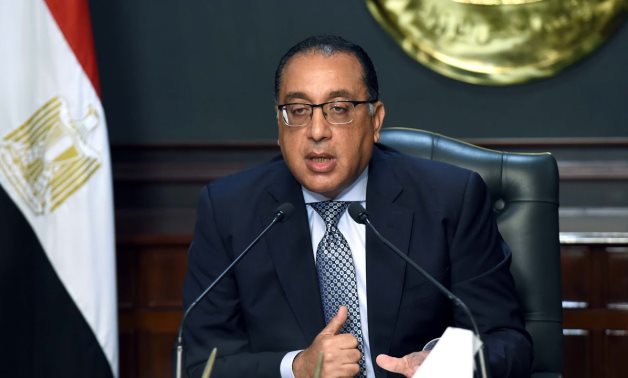
Prime Minister Mostafa Madbouly chairs government meetings as Egypt activates daily monitoring of global markets amid energy price volatility.




CAIRO, March 10, 2026: With military tensions in the region still moving fast, and global energy markets jolting hard in response, the Egyptian government says it is shifting into a day by day posture to protect supplies, contain spillover into local prices, and keep the economy running.
In a statement published Tuesday, the Cabinet said Prime Minister Mostafa Madbouly has ordered the activation of a daily monitoring mechanism for global market developments, with a specific focus on energy prices and international financial flows, coordinated across the Central Bank, ministries, and relevant state bodies.
Officials said the goal is to give the state room to act early, before shocks feed through into fuel availability, market stability, and day to day economic activity.
At the center of the package is energy security.
The government said it is tracking delivery schedules and existing contracts for petroleum products on a daily basis, and leaning on pre agreed contractual arrangements and price hedges that cover a meaningful portion of imports, to reduce the impact of global price spikes.
It added that coordination is ongoing with international partners in the energy sector to ensure steady supplies, while also working to raise domestic production during the current period.
That comes as oil markets have been volatile, with recent swings driven by war related risk in the region and concerns about supply routes. Reuters reported oil prices fell sharply on March 10 after earlier surging, as markets reacted to comments about possible de escalation, highlighting how quickly energy prices can move in the current environment.
The Cabinet said the government and the Central Bank are also working in parallel to bolster foreign currency resources.
Steps include engaging international financial institutions to accelerate some scheduled financing tranches, moving in international markets, and expanding the state’s government listings programme in the coming months, alongside efforts to attract foreign direct investment and support both goods and services exports.
Acknowledging what it called a high level of uncertainty, the government said the central crisis committee has approved a set of temporary, preemptive measures to strengthen the economy’s ability to absorb shocks, keep fuel and goods available, and stabilise local markets until the global picture is clearer.
The first message was symbolic and practical: the state says it will start by tightening its own belt.
The Cabinet said it will immediately begin spending rationalisation across government entities and affiliated bodies, with a stated commitment to keeping the social dimension in view.
That includes:
In one of the sharpest lines in the statement, the Cabinet said it will immediately begin implementing President Abdel Fattah El Sisi’s directive to study referring price manipulators to military prosecution, to deter attempts to exploit exceptional conditions by raising or manipulating prices.
The State Information Service separately reported on the same direction in recent days, framing it as part of an effort to protect markets during regional turmoil.
The government acknowledged that, despite the state continuing to bear a large share of the real cost of energy, the size of global increases means it cannot absorb the full rise indefinitely.
It said it has therefore decided to reprice some petroleum products, in line with a Petroleum Ministry statement issued earlier the same day, describing the step as reflecting only part of global moves while ensuring fuel supply sustainability and market stability.
Business focused coverage has also pointed to the broader context: Egypt is a net energy importer and is exposed to oil supply shocks when regional conflict pushes prices higher.
To soften the social impact, the Cabinet said it will extend the decision to increase cash support provided to beneficiaries of Takaful and Karama and other priority groups holding ration cards for an additional two months, as part of the broader social protection package.
It also said it intends to announce early a package of wage and income improvements for state employees starting in FY2026/27, including raising the minimum wage to better reflect current economic conditions.
The Cabinet repeatedly described the measures as temporary and said it will keep tracking global developments daily, with readiness to review the steps if global energy markets improve.
It also appealed to citizens to rationalise consumption and cooperate, positioning the period as exceptional, but manageable, if resources are used carefully and markets are protected from abuse.

Be Social



Comments
Leave a Comment