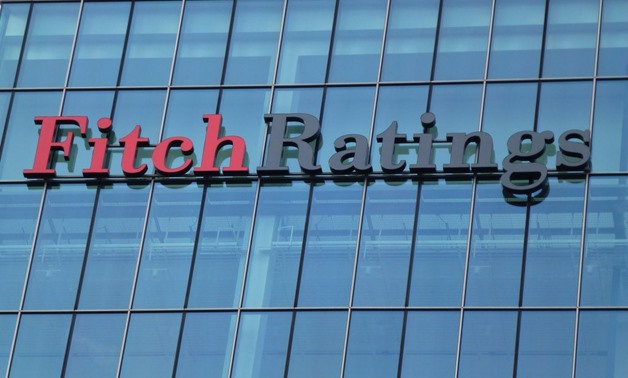




CAIRO – 2 March 2026: The Cabinet's Information and Decision Support Center (IDSC) has released a summary of a recent Fitch Ratings report detailing the significant repercussions of escalating tensions in the Middle East.
This review is part of the IDSC's ongoing commitment to monitoring analyses from international think tanks and financial institutions regarding regional stability.
The report indicates that large-scale military escalation has led to a sharp deterioration in maritime security across the Arabian Gulf and the Strait of Hormuz, with impacts extending into the Red Sea. In response, the U.S. Navy announced a broad "maritime warning area" encompassing the Arabian Gulf, the Gulf of Oman, the northern Arabian Sea, and parts of the Red Sea.
Authorities stated they cannot guarantee the safety of commercial navigation within this zone and have advised vessels to maintain a distance of at least 30 nautical miles from U.S. warships.
In this volatile environment, shipping and transport firms face extremely limited alternatives for global supply routes. Fitch notes that these developments have shifted the risk profile toward a systemic global supply chain shock. Pressures on shipping routes, insurance premiums, vessel availability, and inventory cycles are increasingly intertwined. This synergy is structurally driving up shipping costs, war risk premiums, and working capital requirements for both energy and container trade flows.
Market behavior has rapidly shifted from "increased caution" to "palpable disruption." Major oil companies and leading trading houses have suspended crude and fuel shipments through the Strait of Hormuz. Traffic has slowed significantly, with analysts warning of a potential total standstill.
As of February 28, vessel queues and temporary stoppages were reported near strategic entrances, halting several oil tankers and Liquefied Natural Gas (LNG) carriers. Simultaneously, Iranian-backed Houthi forces have signaled a resumption of their campaign against shipping, raising the prospect of renewed disruption in the Red Sea, including risks of misidentification and electronic jamming. Consequently, the EU’s ASPIDES mission has been placed on high alert, and the UK Maritime Trade Operations (UKMTO) has warned of heightened risks to commercial navigation and communications.
Fitch Ratings underscores that the Strait of Hormuz remains the world's most vital energy chokepoint, carrying an average of 20 million barrels per day (bpd)—roughly 20% of the global oil supply. While Saudi Arabia and the UAE possess alternative pipeline routes with capacities of 3.5 to 5.5 million bpd, these cover only a fraction of total flows. Furthermore, these alternatives have not been tested under prolonged crisis conditions, and the infrastructure itself remains geographically vulnerable to disruption.

Be Social



Comments
Leave a Comment