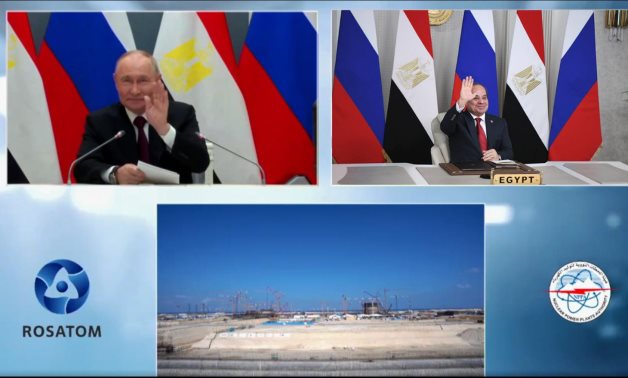
President Abdel Fattah El-Sisi and Russian President Vladimir Putin take part in a virtual ceremony marking the installation of the pressure vessel for the 1st unit of Egypt’s El Dabaa NPP. Egypt's Presidencyy




EL DABAA - 19 November 2025: President Abdel Fattah El-Sisi and Russian President Vladimir Putin took part via video conference on Wednesday in a ceremony marking the installation of the reactor pressure vessel for the first unit of Egypt’s El Dabaa Nuclear Power Plant.
The milestone coincides with Egypt’s Fifth Nuclear Energy Day, celebrated annually on November 19, representing a key stage in the construction of Egypt’s first nuclear power facility, which aims to generate electricity safely and sustainably.
The reactor pressure vessel is a central safety component of any nuclear plant, containing the nuclear fuel and coolant and providing a robust barrier designed to withstand high temperatures, pressure, and other operational stresses.
Here’s What to Know
Situated in northern Egypt, El Dabaa plant, the country’s first NPP, is being developed by the Russian State Atomic Energy Corporation (Rosatom) and operated by Egypt’s Nuclear Power Plants Authority (NPPA).
It will feature four Generation III+ VVER‑1200 reactors with a combined capacity of 4.8 gigawatts, contributing significantly to Egypt’s energy mix and supporting the country’s transition to clean power.

The El Dabaa NPP represents the largest project in Russian-Egyptian cooperation since the construction of the Aswan High Dam, highlighting the deepening strategic partnership between the two countries in the energy sector.
On November 19, 2015, Egypt and Russia signed a government agreement establishing the legal framework for Egypt’s first nuclear power plant and for enhancing national capabilities in peaceful nuclear applications.
‘Enhancing Egypt’s Energy Security’
Putin delivered a speech, congratulating Egypt on the installation of the reactor pressure vessel.
He described the pace of construction as a “remarkable success” and said the project would provide the electricity needed to support Egypt’s growing economy.

The Russian president emphasized that the electricity generated by El Dabaa will bolster Egypt’s energy security, noting that the Russian contractor employs the latest technology and fully adheres to environmental standards.
‘Peaceful Nuclear Leadership’
In his speech, El-Sisi stated that the project places Egypt in a leading position on the map of the peaceful uses of nuclear power, besides creating thousands of direct and indirect jobs.
El-Sisi noted that El-Dabaa plant project supports the preparation of a new cadre of Egyptian professionals in nuclear energy and heavy industry.
The project reflects a genuine investment in Egyptian human capital, El-Sisi emphasized, encompassing extensive cooperation in training and technology transfer.
‘Nuclear Dream Coming True’
El-Sisi highlighted that the revival of Egypt’s peaceful nuclear program is a strategic decision that strengthens the country’s role as a regional energy hub, especially amid global fuel price rise and repeated energy crises.
“Today, we are writing a new, luminous chapter in our nation’s journey,” El-Sisi stated.
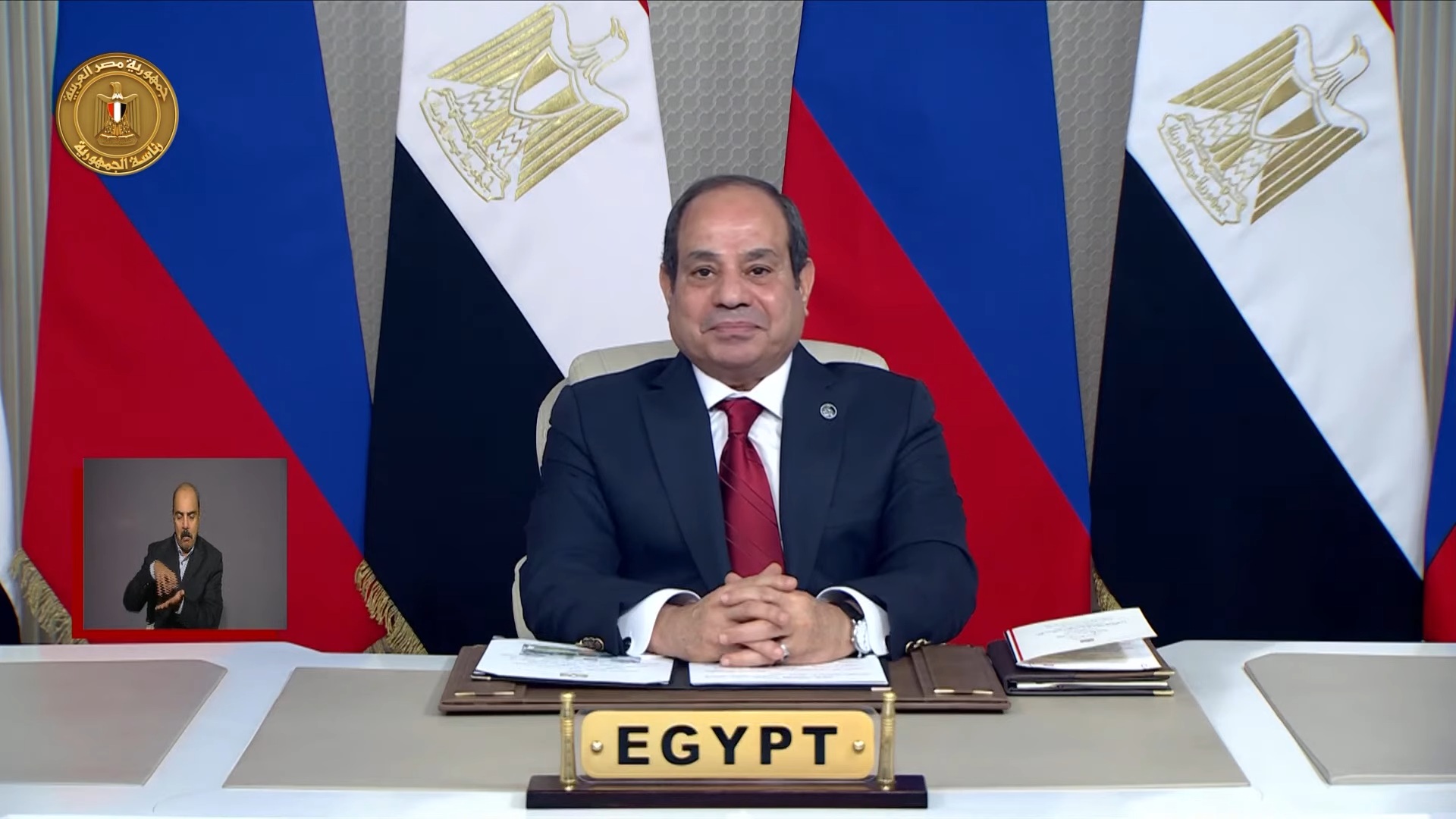
“Since the mid-20th century, Egypt’s nuclear dream has inspired its people, and now, thanks to determination, effort, and perseverance, we see it becoming a reality on the ground.”
El-Sisi stressed that the nation’s nuclear energy program ensures securing sustainable, safe, and clean power sources in line with Egypt’s Vision 2030.
Putin said Russia is providing training programs for Egyptian nuclear personnel, expressing hopes for Egypt to leverage nuclear science and technology in fields such as medicine and agriculture.
He concluded by thanking all the staff involved in the El Dabaa project from both Egypt and Russia, and congratulated Egypt on its fifth annual Nuclear Energy Day.
Longstanding Collaboration
El-Sisi said the project reflects decades of fruitful bilateral collaboration with Russia, starting with the construction of the Aswan High Dam in the 1960s and culminating in the project to establish the El Dabaa NPP.
The president called the El-Dabaa plant a “national giant” and a strategic asset sending a clear message that “Egypt is advancing steadily toward a more sustainable and technologically advanced future, overcoming challenges through sincere determination and persistent effort.”

For his part, Putin reiterated Russia’s support for Egypt’s developmental ambitions through the long-standing strategic partnership between the two countries.
He highlighted decades of cooperation, including Soviet involvement in building the Aswan High Dam and major Egyptian industrial projects.
The Russian leader said the partnership continues to be reflected in rising trade, intensified industrial collaboration, and Russia’s ongoing development of an industrial zone in the Suez Canal Economic Zone.
Putin also used the occasion to wish El-Sisi a happy birthday.
Fuel Purchase, Cooperation Agreement
During the historic event, Prime Minister Mostafa Madbouly witnessed the signing of the official order for the supply of nuclear fuel for the first reactor unit.
This key step confirms the project’s readiness to move to the next stages of implementation.
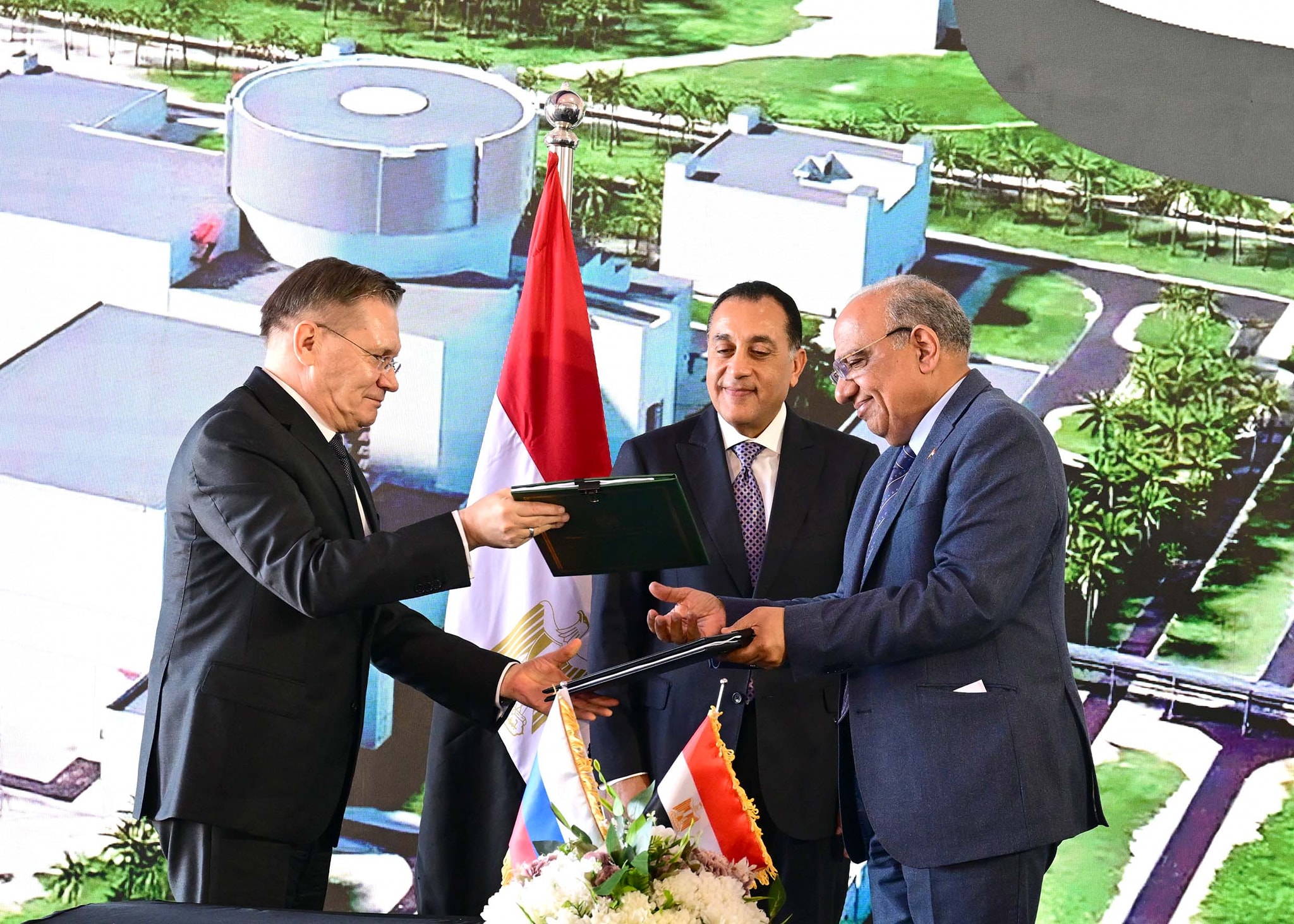
These steps represent major technical milestones in the construction of Generation III+ reactors, reflecting progress according to the highest standards of quality and nuclear safety.
Additionally, a comprehensive program agreement was signed between Egypt and Russia, covering cooperation in multiple areas, including nuclear energy, medical applications such as the production of radioactive isotopes for cancer treatment, as well as other fields like 3D printing to support the nuclear sector and communications.

Be Social




Comments
Leave a Comment