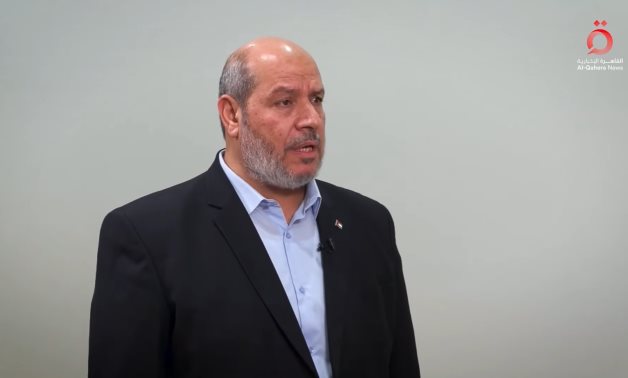




CAIRO – 21 October 2025: Hamas leader and chief negotiator Khalil Al-Hayya reaffirmed the commitment of Palestinian factions in Gaza to fully implementing the ceasefire agreement signed in Sharm El-Sheikh, including the retrieval and handover of bodies of all deceased captives as stipulated in the deal.
In an interview with Al Qahera News broadcast early on Tuesday, Al-Hayya said Hamas has “no desire or interest” in keeping the bodies of captives in Gaza.
He stressed that the movement seeks to return the remains of Israeli captives to their families while ensuring that the remains of Palestinian prisoners held by Israel are also returned and buried with dignity.
His remarks came amid Israeli accusations that Hamas is not doing enough to recover captives’ bodies from under the rubble.
Hamas, which has so far handed over 12 bodies out of 28 deceased captives, in addition to another body delivered on Monday pending forensic identification, has requested the entry of specialized equipment, DNA testing devices, and medical teams to facilitate the process.
“We are facing great difficulty,” Al-Hayya said. “These bodies lie in changed terrain, some underground, others beneath large and high-rise buildings. It takes time and heavy equipment.
Meanwhile, he emphasized that “our determination and willpower will see this file completed in full.”
‘The War Is Over’
Al-Hayya stressed that since the peace agreement was signed in Sharm El-Sheikh, under Egyptian sponsorship and with the participation of mediators from Qatar, Turkey, and the United States, Hamas has been firmly resolved to uphold it to the end.
“I believe the efforts made by the mediators, our brothers in Egypt, Qatar, and Turkey, alongside all nations and the major international gathering hosted by Egypt with the presence of US President Trump, express the global will declaring that the war in Gaza has ended,” he said.
“This international will assures us that the war is over and will not return.”
‘Humanitarian Aid Enters as Agreed’
Regarding aid deliveries, Al-Hayya said the agreed quantities of humanitarian assistance have been entering Gaza through the crossings as outlined in the deal.
He, however, expressed hope that these supplies would increase to meet people’s needs.
“We call on our brothers, the mediators, to exert further efforts to increase aid, especially shelter materials, medical supplies, and relief for all people ahead of winter,” he added.
Agreement Durability, Tough Tests
Al-Hayya voiced confidence that the ceasefire would hold.
“First, because we want it to hold and our will to commit to it is strong. Second, the international determination, the major conference in Egypt, and the promises and guarantees we heard, all these reassure us that this agreement will endure.”
The ceasefire and prisoner swap agreement, brokered under a peace agreement between Israel and Hamas signed in Egypt, marks the first phase of a broader peace plan proposed by President Donald Trump.
The ceasefire took effect on 10 October, after two years of war killed over 67,000 Palestinians, devastated the enclave, displaced most of the population, and plunged the strip into famine.
This initial phase also includes a partial withdrawal of Israeli forces inside the Gaza Strip.
However, in recent days, the truce has been marred by violations, including a series of deadly Israeli airstrikes that killed dozens of Palestinians, after Tel Aviv accused Hamas of killing two of its soldiers in a Rafah attack.
Hamas denied knowledge of the Rafah clashes.

Be Social




Comments
Leave a Comment