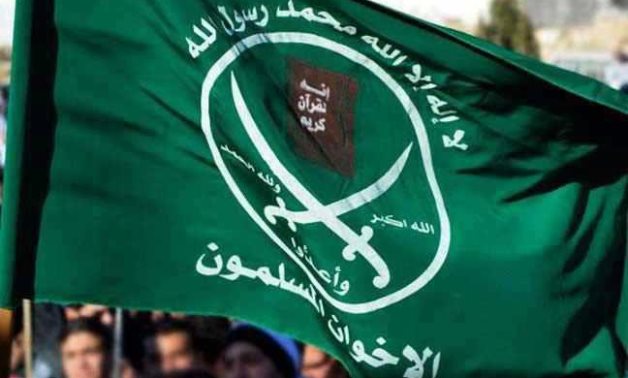
A file photo of the Muslim Brotherhood's banner




CAIRO – 12 August 2025: Commentators in both the United Kingdom and France are sounding the alarm over what they see as the growing influence of the Muslim Brotherhood in civil society, warning that the group’s ideological agenda may be undermining democratic values and/or national cohesion.
The Muslim Brotherhood was outlawed and designated by Egypt as terrorist after the ousting of the group-affiliated president, Mohamed Morsi, in 2013.
In France, President Emmanuel Macron has called on his government to step up efforts against the spread of political Islamism within French institutions, following the release of a report detailing the influence of the Muslim Brotherhood on community organizations and public discourse.
‘Threat to National Cohesion’
The report, commissioned by the French government, accuses the Muslim Brotherhood of actively promoting an ideological framework that challenges anti-republican principles.
"The reality of this threat [to national cohesion], even if it is long-term and does not involve violent action, poses a risk of damage to the fabric of society and republican institutions ... and, more broadly, to national cohesion," said the report, according to the AFP.
Leading French politician Marine Le Pen commented on the report, criticizing the government for what she described as persisting inaction. Posting on X, she reiterated her long-standing call for decisive steps to eliminate “Islamist fundamentalism.”
Meanwhile, President of the Rassemblement National party Jordan Bardella said in an interview with France Inter that “If we come to power tomorrow, we will ban the Muslim Brotherhood.”
‘No Place for Brotherhood’
In the United Kingdom, concerns have resurfaced in a recent opinion piece by David Abrahams in The Telegraph. The article, which carries the name “the Muslim Brotherhood has no place in British society,” criticizes the state of “silence” surrounding the Muslim Brotherhood’s presence in the UK.
The author argues that the 2015 UK government review of the Muslim Brotherhood, which warned against Brotherhood’s ideology as a potential threat to democratic values, “gathers dust while the Brotherhood continues to embed itself within civil society.”
The review found that the Brotherhood used a dual discourse and that its ideology could serve as a gateway to radicalization.
“The Brotherhood has created a political ecosystem where Muslim identity is defined not by faith, but by fealty to a cause. Its fiercest opponents are often Muslims themselves, but their resistance is dismissed as inauthentic or ignored altogether,” Abrahams says.
He warned that “this conflation of Islam with Islamism is not just inaccurate; it is dangerous. It entrenches the myth that to be Muslim in Britain is to support reactionary ideology, and it stokes division by pushing moderate Muslims to the margins.”
The simultaneous warnings from France and voices in the UK, both of which are home to large and diverse Muslim populations, reflect a broader unease in parts of Western Europe about the intersection of religion, political systems, and democratic governance.

Be Social




Comments
Leave a Comment