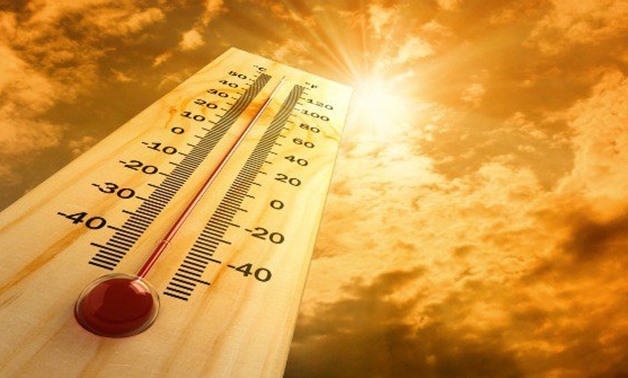
Scorching heat waves felt in Egypt and Arab neighbors due to Indian Monsoon - file
CAIRO - 13 May 2025: The Indian monsoon low pressure currently controls a large area of the Arabian Peninsula, affecting the Levant, Turkey, and southern Egypt, with extreme humidity.
Temperatures rise in the Arabian Peninsula, the Levant, Iraq, and western Iran. It also causes intense heat waves in Egypt.
Humidity levels increase in the northern part of Egypt. In southern Upper Egypt, the low originates from the Arabian Peninsula, and the mass, with its strong heat characteristics, moves across the Red Sea. The weather there is extremely hot (temperatures around 44°C throughout the summer).
In the below lines, information about the monosoon:
1. The monsoon low pressure specializes in record highs and intense heat waves during the scorching summers of the Arabian Peninsula, Egypt, and southern Europe.
2. The Indian monsoon low is a massive heat wave affecting three continents: Asia, Africa, and Europe. This low begins to form over Indian territory beginning in April of each year.
3- Its influence intensifies in June and July, controlling a vast area of the Arabian Peninsula and reaching the Levant and Egypt. It then begins to weaken beginning in September and completely disappears in October.
4- This depression plays a role in attracting tropical monsoon winds to India and Southeast Asia. This depression leads to a rise in temperatures in the Arabian Peninsula, the Levant, and Iraq, with temperatures exceeding 50°C in Iraq and western Iran for most of the summer.
5- It also causes severe heat waves in Egypt. The Indian monsoon depression may record low atmospheric pressure values, reaching as low as 995 millibars during July.
6- During this period of each year, Egypt experiences high temperatures and high humidity. This also increases the intensity of dangerous solar radiation and the risk of sunstroke.
7. Depending on the severity of the summer, many crops are affected, most notably summer fruits such as mangoes, olives, dates, pomegranates, and others. This can lead to reduced fruit size (mangoes, olives, dates), increased fruit stings (pomegranates, mangoes), or decreased oil content, as in olives.
8. Vegetable crops are sometimes severely affected, with reduced productivity, such as tomatoes and other vegetables. This sometimes creates a production gap and increases the prices of these crops.
9. Field crops such as: rice, corn, soybeans, and cotton are also affected to varying degrees.
10. Proactive measures must be taken when a severe heat wave is expected to mitigate its negative effects.








Comments
Leave a Comment