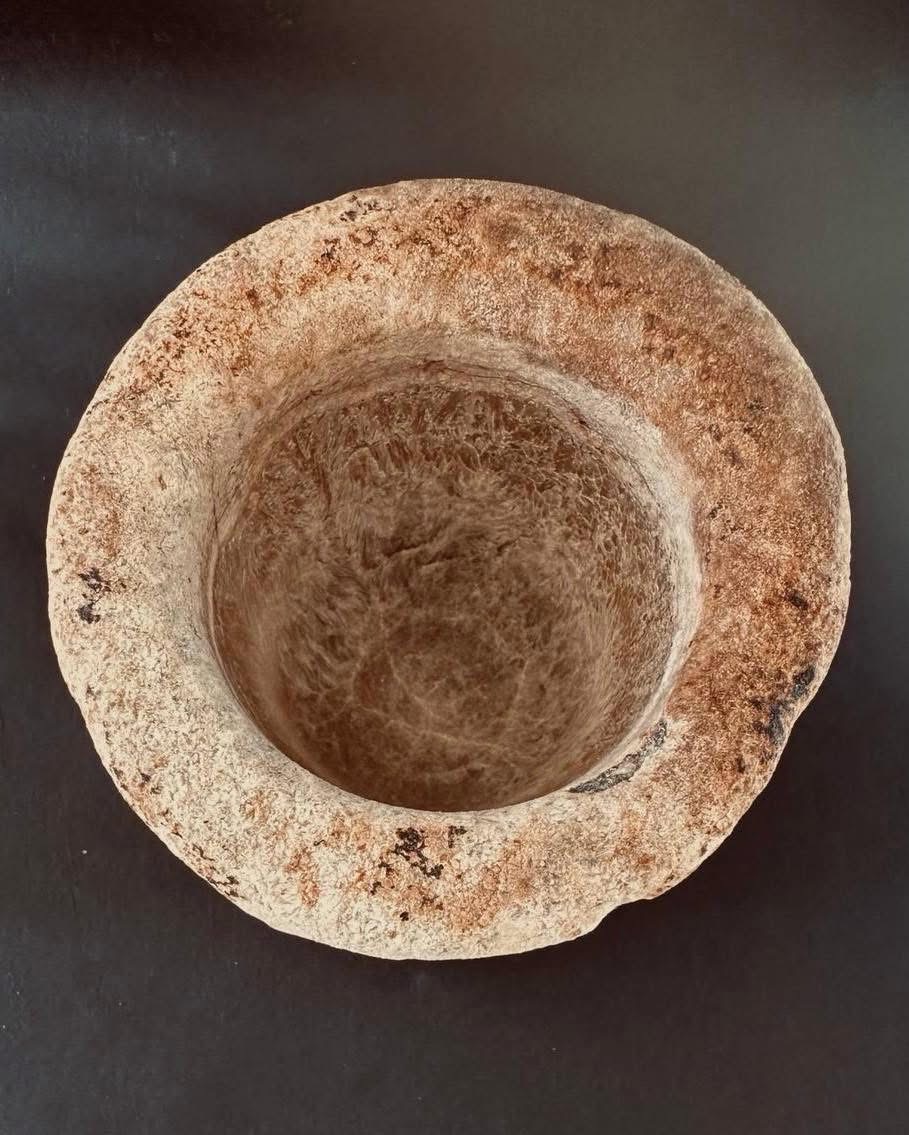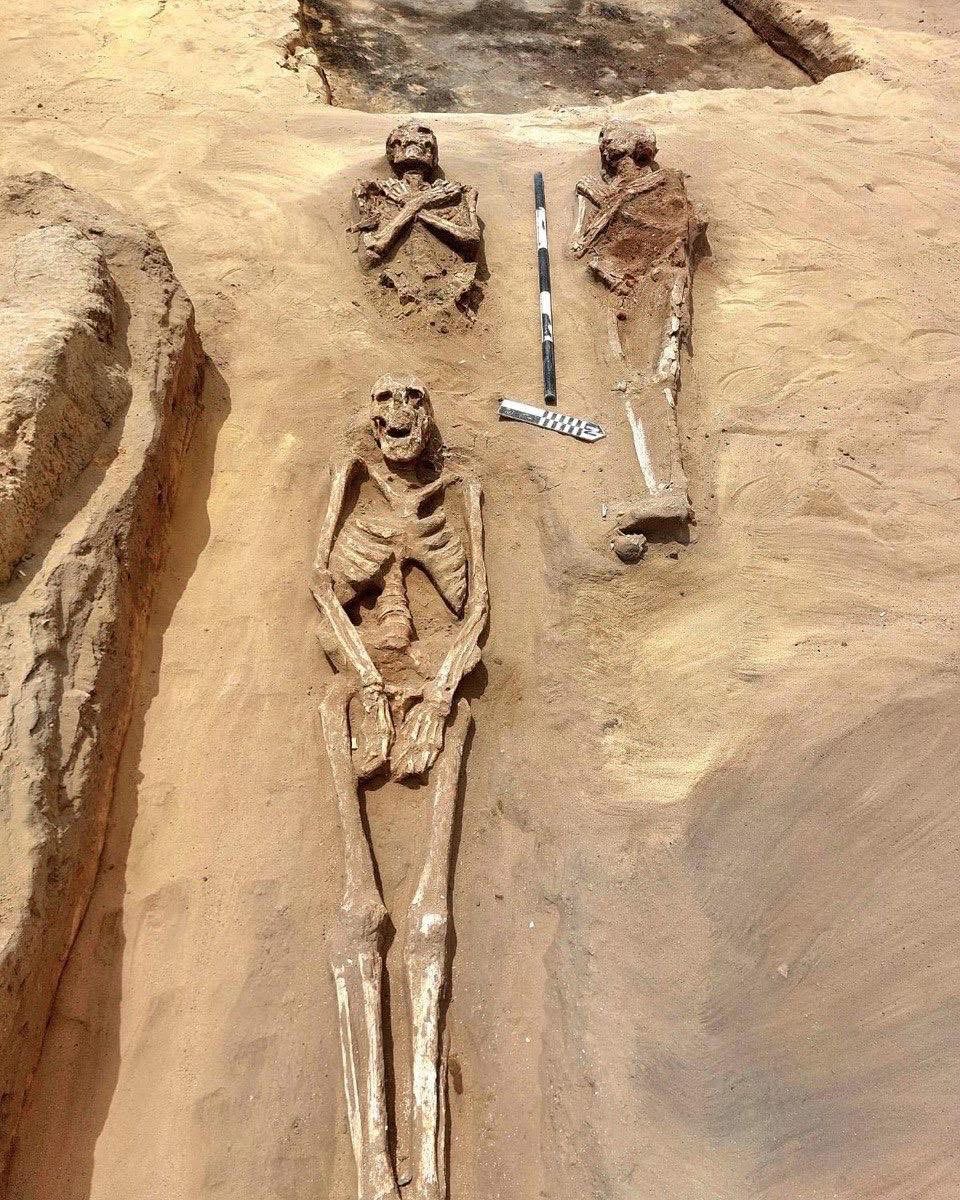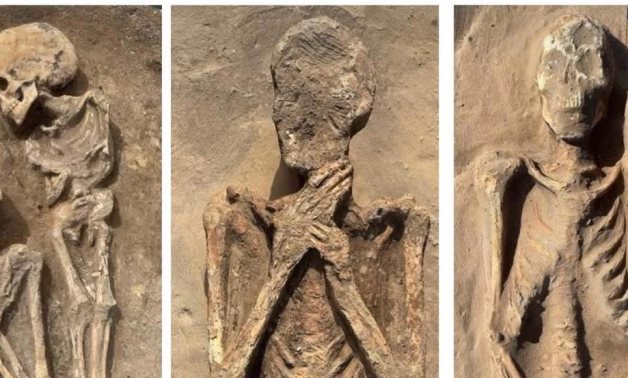
An Egyptian archaeological mission affiliated with the Supreme Council of Antiquities has uncovered part of a Greco-Roman necropolis at the Tell Kom Aziza archaeological site in Beheira Governorate. The discovery sheds new light on the site’s history and archaeological significance, highlighting its role as a multi-period settlement in Egypt’s Nile Delta.
Excavation work revealed a diverse range of burial styles, including simple burial pits in which the deceased were interred directly into the ground, as well as graves surrounded by mudbrick structures. Archaeologists also uncovered several burials inside painted plaster coffins and others within barrel-shaped pottery coffins, one of the most common coffin types used during the Ptolemaic period.
Comments
Leave a Comment