Egypt has announced a significant archaeological discovery at the “Panhesy” tomb site in the El-Matariya archaeological area of Ain Shams, revealing new secrets of the ancient Heliopolis necropolis.




The Ministry of Tourism and Antiquities has announced a significant archaeological discovery at the “Panhesy” tomb site in the El-Matariya archaeological area of Ain Shams, revealing new secrets of the ancient Heliopolis necropolis.
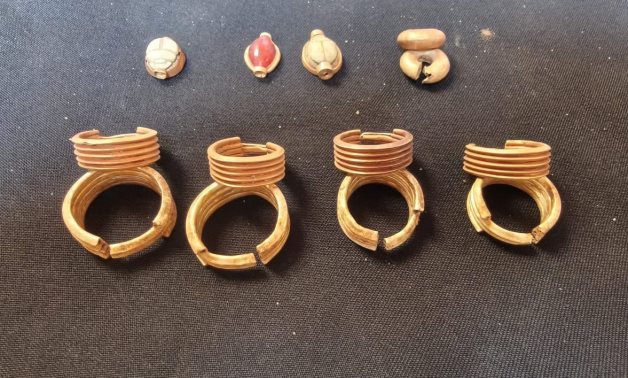
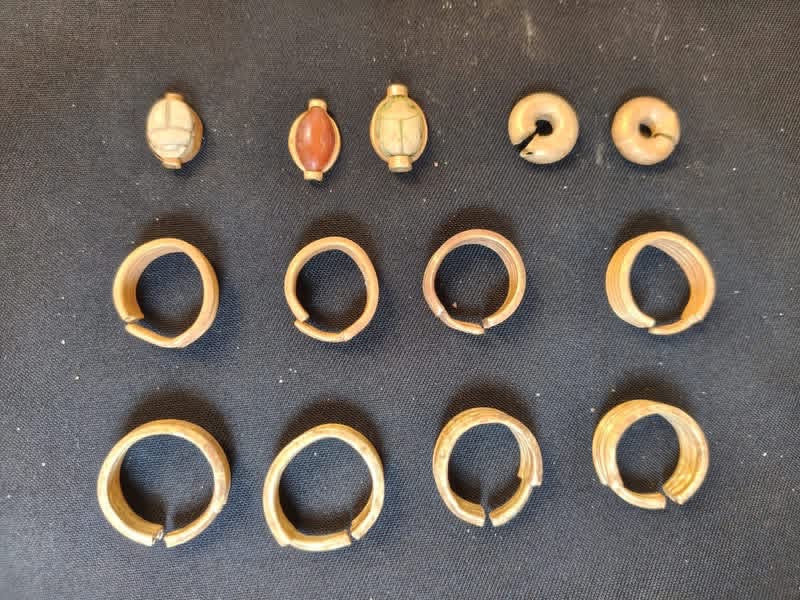
During excavation work conducted by the Egyptian archaeological mission of the Supreme Council of Antiquities, archaeologists uncovered a remarkable cache containing the first nearly complete funerary furniture assemblage ever discovered in the area, along with a collection of rare artifacts and several metal earrings believed to be made of gold.
Sherif Fathy, Minister of Tourism and Antiquities, stated that the discovery reflects the success of Egyptian archaeological missions in re-examining the rich history of Heliopolis, one of the oldest and most important religious cities of the ancient world. He noted that the newly uncovered artifacts provide a clearer picture of the daily life and funerary practices of the region’s inhabitants across successive historical periods.
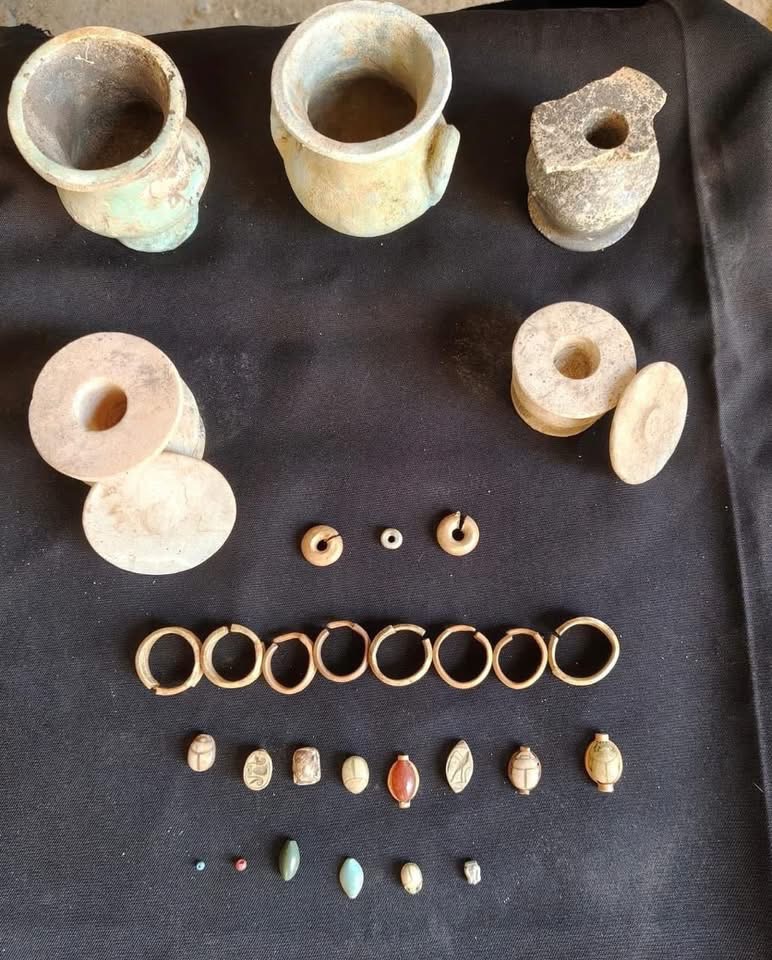
Dr. Hisham El-Leithy, Secretary-General of the Supreme Council of Antiquities, explained that ongoing excavations revealed a mudbrick burial structure containing human skeletal remains. As careful scientific excavation continued beneath it, archaeologists uncovered a unique cache featuring an exceptional collection of cosmetic tools and symbolic artifacts associated with funerary rituals.
Among the discoveries were a copper mirror, two alabaster kohl containers with lids that still preserve traces of kohl, and a third kohl container made of black obsidian, a rare material in such archaeological contexts.
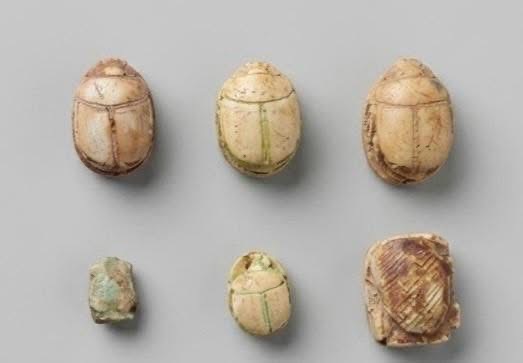
The mission, headed by Kotb Fawzy Kotb, Head of the Central Administration for Cairo and Giza Antiquities, also discovered two light-blue faience vessels. One of the vessels contained six symbolic scarabs bearing incised inscriptions, including two scarabs surrounded by yellow metal frames believed to be made of gold.
Mohamed Abdel Badei, Head of the Egyptian Antiquities Sector at the Supreme Council of Antiquities, stated that the cache also included a collection of faience amulets in various symbolic forms, including a duck-shaped amulet and another in the form of the Atef Crown. Four stones were also found, two of which are believed to be agate. One is pinkish-red and surrounded by a yellow metal frame likely made of gold, while the other is greenish-blue in color.
In addition, archaeologists uncovered a distinguished collection of yellow-colored metal earrings consisting of five pairs in varying sizes, believed to be made of gold, with diameters ranging between 1.5 and 2.5 centimeters.
Abdel Badei noted that this discovery builds upon the results of previous excavation work at the site during the current season. Earlier discoveries included remains of funerary structures built of mudbrick and limestone, as well as two coffins found in fragmented and layered condition. One coffin was made of pottery, while the other was crafted from gilded plaster and decorated with red-painted motifs. The latter contained gilded human remains believed to belong to a military figure, along with a coin that may date to the Roman period. Limestone blocks bearing hieroglyphic inscriptions were also uncovered, further enhancing the site’s importance for studying its historical and cultural chronology.
The historical and cultural significance of this discovery lies in the fact that the Panhesy necropolis serves as a living archaeological record documenting the various periods through which the area passed. The cemetery was used for the burial of prominent individuals across multiple eras, from the Late Period through the Roman era and into the Christian period.
The site forms an integral part of the Great Necropolis of Heliopolis, known in antiquity as “Iunu” (On), which served as the principal religious center for the worship of the sun god Ra. This gives the discovery exceptional importance for the study of funerary practices, as well as the religious, social, and cultural development of the inhabitants of this sacred city throughout different historical periods.

Be Social




Comments
Leave a Comment