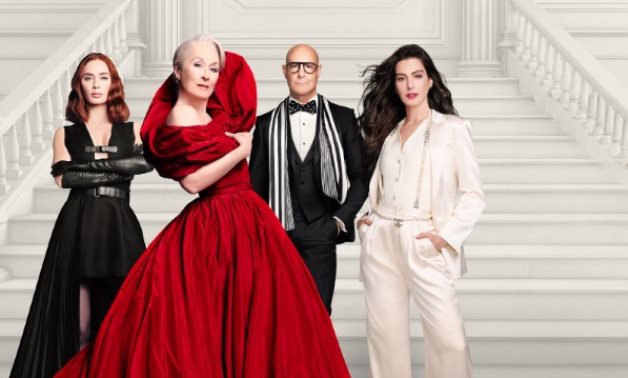
Time and time again, after the release and subsequent success of “The Devil Wears Prada” back in 2006, every single cast member was asked if a sequel was happening, and all their answers boiled down to “We will return when there’s a good script and when the time and messaging is right” now, twenty years later, Oscar Winners Meryl Streep, Anne Hathaway, and Oscar Nominated Actors, Emily Blunt and Stanely Tucci, alongside with the original director David Frankel and writer Aline Brosh McKenna have returned with the much anticipated sequel “The Devil Wears Prada 2”
And boy did they stick the landing. Two decades later, no one has lost their touch, from the music score to the pacing and the acting; the movie didn’t feel like a quick cash grab or an insult to its predecessor, but a proper and logical continuation to the story about what it takes to be not only a woman in the publication field, but the journalistic side of it.
The movie’s 119-minute runtime seems a bit short, but it’s packed with many storylines and not-so-subtle messages and digs at certain people that are all relevant in these current times.
So what is the film trying to tell us about the publishing world and about ourselves?
***Spoiler Warning***
Journalism Vs Corporate Greed
The main message of the movie is “journalism matters, in all of its forms.” Whether investigative journalism, fashion analysis, hot takes, or opinion pieces, the movie celebrates authenticity and the creative people who chase the stories and make art.
With Andy and her coworker being laid off, and Miranda’s fight to survive in a medium that no longer exists, in the face of greedy entrepreneurs who want to strip creativity and lean into AI, both characters, despite their differences, are united by passion and love for the arts. to create meaningful stories that resonate with audiences, not just clickable material, because, in the words of Miranda Priestly, “You're not a visionary: you're a vendor,” and that line specifically, is a “**** You” to the greedy people, the “Jeff Bezos” “Elon Musk” to any higher up who wants to strip down people’s livelihood, creative ventures and originality out in favor of meaningless, brainrot content that fill up the algorithm.
Addressing The Elephants in The Room (Character-wise)
One of the things the people seem to critique about the movie is the quote-on-quote “humanization” of the devil, AKA Miranda Priestly. In the sequel, Miranda seems like a pushover, a woman who “fell from grace.” Sure, she still has her gravitas and influence. Still, with the digitization of magazines and the death of print, to survive and keep “Runway” running, it’s about monetizing content, listening to the higher-ups, accepting budget cuts instead of producing several hard-hitting pieces, and fostering creativity in the workplace.
If we are going to be completely honest, Miranda was never a villain; she is simply a woman with power who knows how to do her job and do it well, as said in the original film
"Okay, she's tough, but if Miranda were a man… no one would notice anything about her, except how great she is at her job."
In the first movie and the sequel, Miranda is doing her best to stay ahead of the curve; she wants to rule, not play by the rules of men, but to move forward, you have to be tough, ice cold, a “dragon lady,” but she doesn’t care. To her, it’s not only about herself and her position; she genuinely cares about the readers, the legacy of “Runway,” and creating perfection that’s timeless.
When it comes to Emily as a character, again, it feels like she got a 180 shift, from a woman who adores fashion and worships Miranda, to becoming “a vendor.”
On paper, it doesn’t make any sense. Still, in reality, who hasn’t had a change of character during the course of 20 years, and apparently, it seems like she is based on “Lauren Sachnez,” and even if it was merely a coincidence, Emily’s descent into the “corporate” and “Ad” world can be read as selling out. Still, it can also be read “adapting.” She wants the power, the influence, and the fame, with access to fashion, but she doesn’t have the creativity, so why not choose that path? A tragic yet true story on how flying too close to the sun, then getting burnt by the harsh reality.
Andy’s arrival has awoken something in both Miranda and Emily, Miranda finally seeing a worthy companion who cares about the medium and has integrity, and whose idealism is a driving force to their work, and Emily seeing how newfound confidence has led to her traveling the world, writing interesting stories, and choosing to be a single person without any care in the world, in the end, Emily wanted that friendship with Andy.
Cliche but Hopeful
There are some “cliches” being thrown in the film, from Andy and Miranda having supportive partners that don’t want them to sacrife their careers and secure in their masculinity(unlike their previous partners in the first film) to Sasha Barnes, “played by Lucy Liu,” saving “Elias Clark” from the greedy billionaire “Benji Barnes,” so she can give the publication world room for real stories to develop, and How Gen Z are actually useful and smart and shouldn’t be judged by their appearances (AKA Andy’s assistant) to Nigel finally having his flowers and recognition that he always deserved throught his years in “Runway”, the movie’s endgoal is about hope, that no matter how things change personally and professionally, as long as you have the gumption, the support system and strong believes that art matters, stories matter, and audiences deserve quality content not just “clickbait” material, that you believe in oneself, you are going to be ok.
That’s why most of the people who have watched the sequel come out of the theater with a positive attitude and hope in their hearts, that life will be ok, and as long as you are striving for perfection without the shortcuts and building something real, in any job, it will always be timeless.








Comments
Leave a Comment