The Egyptian archaeological mission of the Supreme Council of Antiquities, working in the Ruba’iyat area in Qallaya, Housh Issa Center, Beheira Governorate, has successfully uncovered an ancient building believed to have been used as a guesthouse during the early period of Coptic monasticism, dating back to the 5th century AD. This discovery comes as part of the ongoing excavation work at the site.
The excavations revealed several architectural elements added to the building in later historical phases, reflecting its evolution over successive periods.
Dr. Hisham El-Leithy, Secretary-General of the Supreme Council of Antiquities, stated that this discovery represents an important scientific contribution to the study of early monastic architecture in Egypt. He noted that the Qallaya area is considered the second-largest monastic cluster in the history of Christian monasticism, and its architectural style reflects the early foundation of monasteries.
He also highlighted that the decorations and paintings discovered are among the most important sources for studying early Coptic art in Egypt, as they provide historical and archaeological insights into the nature of monastic life and the development of artistic expression in its initial stages.
The discovery clearly illustrates the evolution of monastic architecture with its simple ascetic character, showing a functional progression from individual cells to semi-communal living spaces, and eventually to structures designed to accommodate visitors, whether senior monastic fathers, aspirants to monastic life, or other visitors.
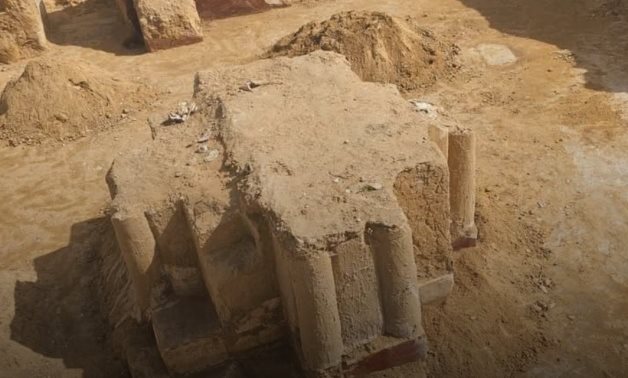
Dr. Diaa Zahran, Head of the Islamic and Coptic Antiquities Sector at the Supreme Council of Antiquities, explained that the discovered building consists of 13 multifunctional rooms, including chambers for individual and communal monk residence, rooms for hospitality and education, which are large halls divided by architectural arches, as well as service facilities including a kitchen and storage areas.
In the northern part of the building, a large hall was uncovered, containing distinctive architectural elements, including stone benches decorated with plant motifs, likely used to receive visitors and provide services. The building also includes an eastern prayer area featuring a niche on its eastern wall, topped with a limestone cross. The building extends along a north-to-south axis.
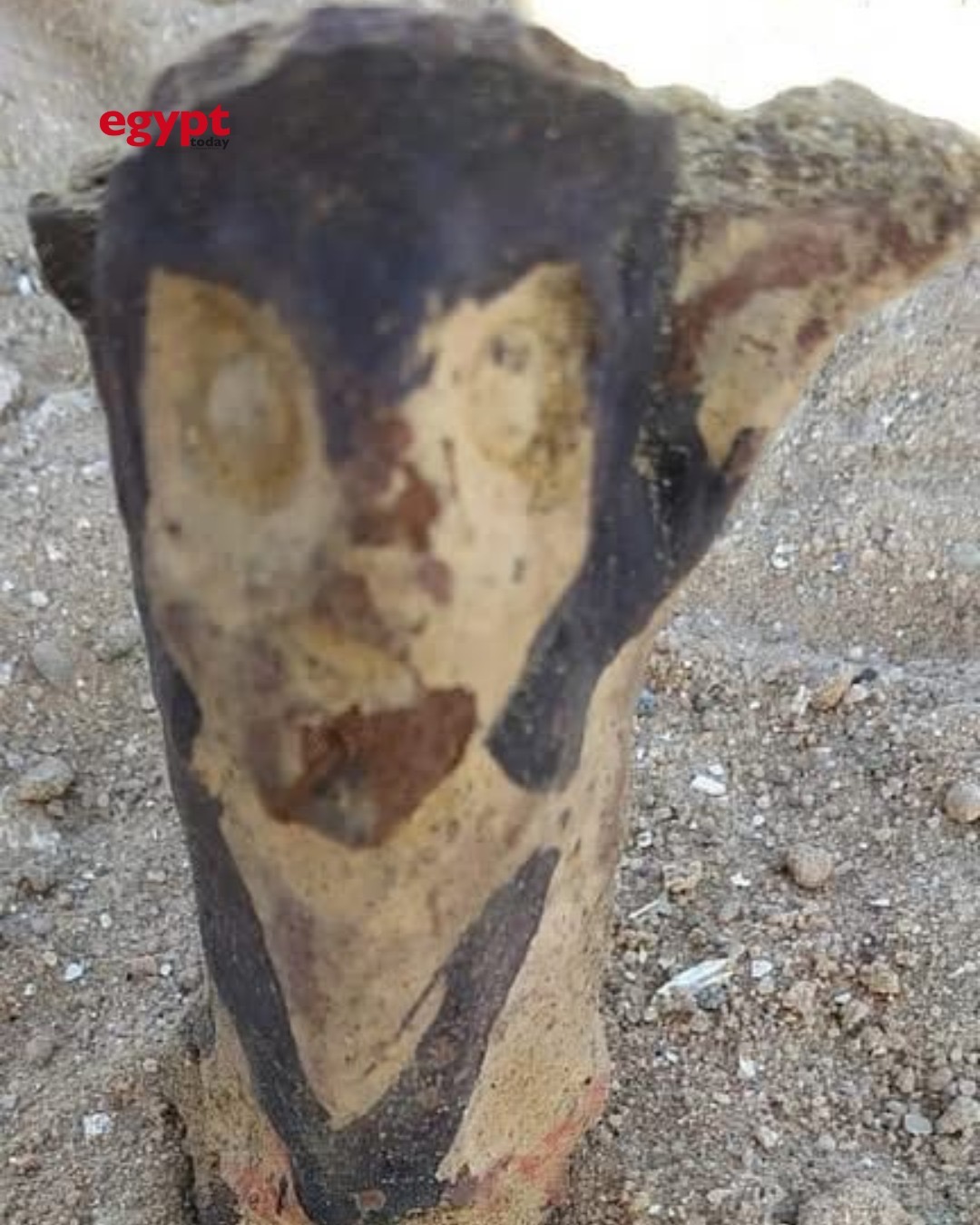
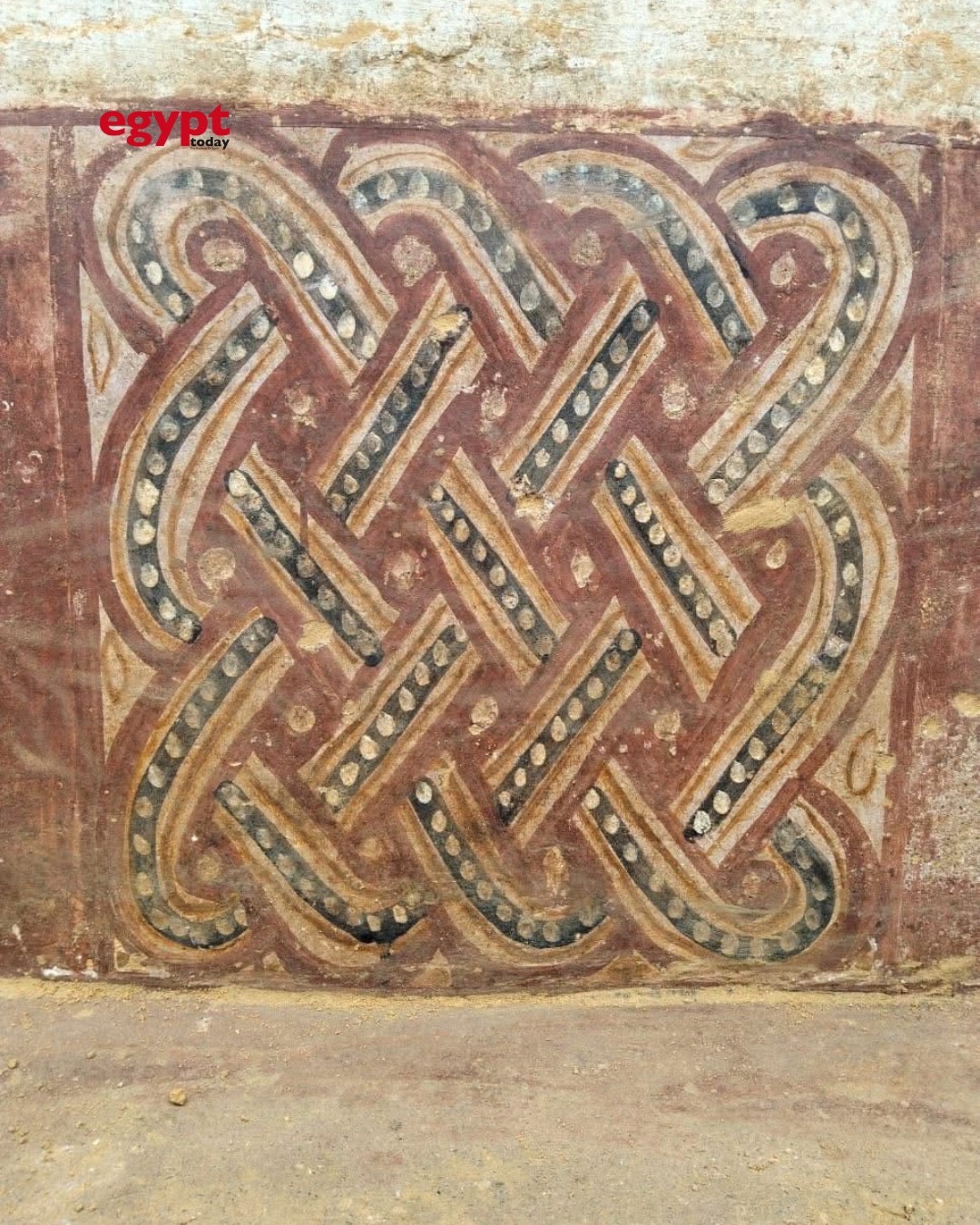
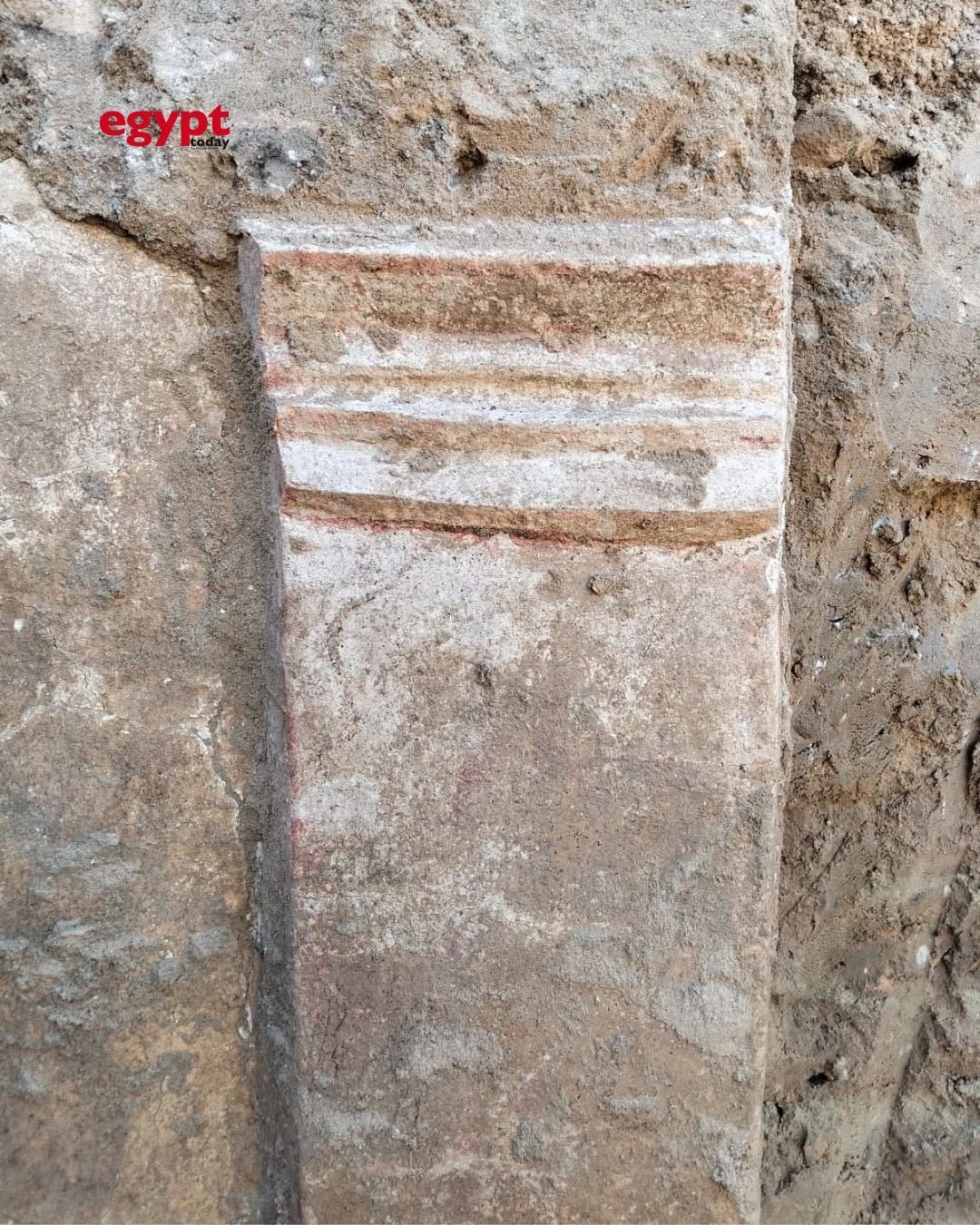
Mr. Samir Rizk Abdel-Hafiz, Head of the Mission and Director General of Beheira Antiquities, added that the excavations revealed several wall paintings depicting incomplete figures of monastic personalities, identifiable by their clothing, along with various plant motifs, including braid patterns in red, white, and black, and an eight-petal flower.
A mural was also discovered depicting two gazelles surrounded by plant motifs, with a central double circular shape containing internal plant decoration, reflecting the rich symbolic expression of early Coptic art.
The mission also found a complete two-meter marble column, along with capitals and column bases, pottery vessels, and numerous ceramic sherds, some decorated with plant and geometric motifs, others inscribed with Coptic letters, and others plain.
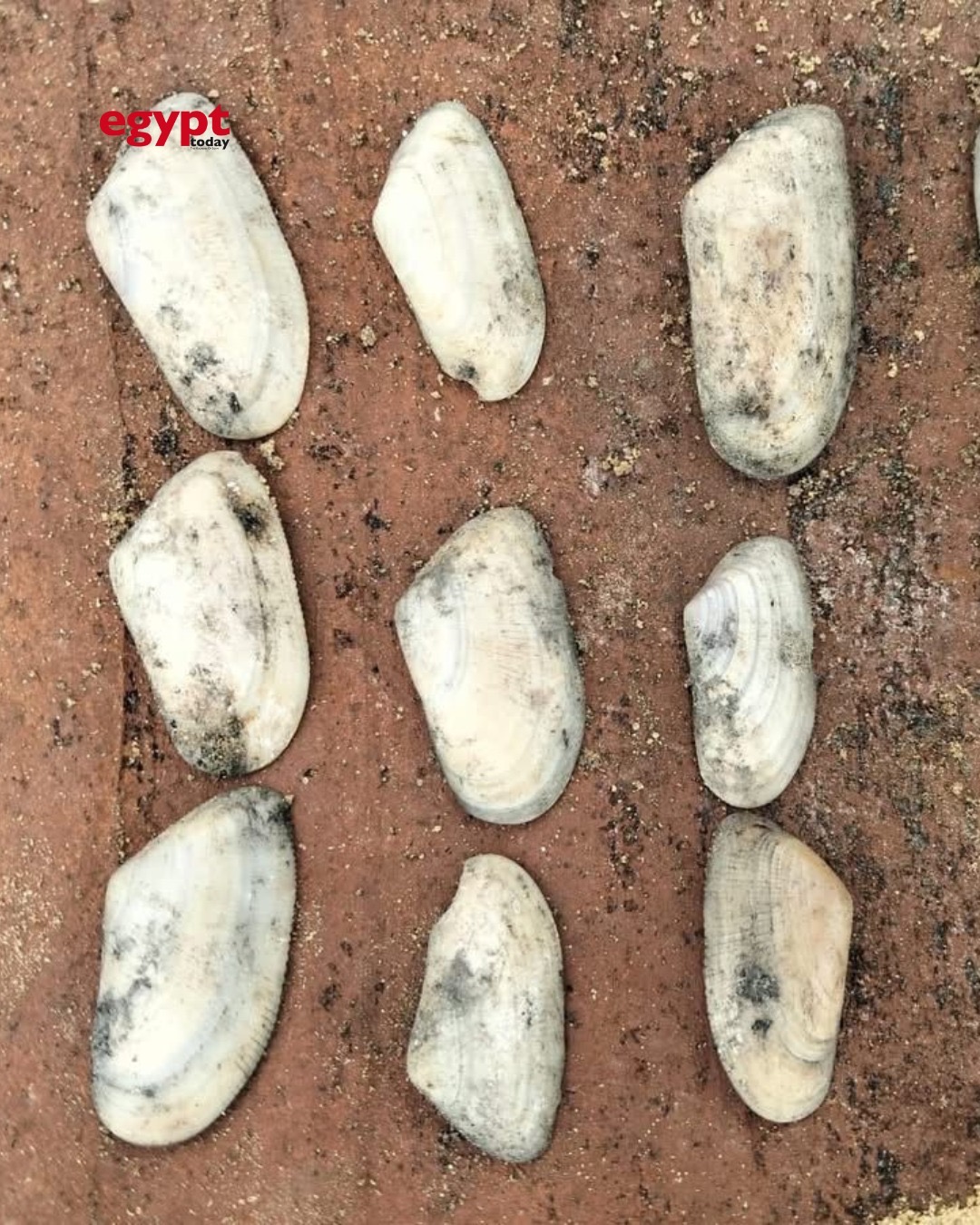
Remains of bird and animal bones were discovered, along with several seashells in one of the rooms, reflecting the site's daily and dietary activities.
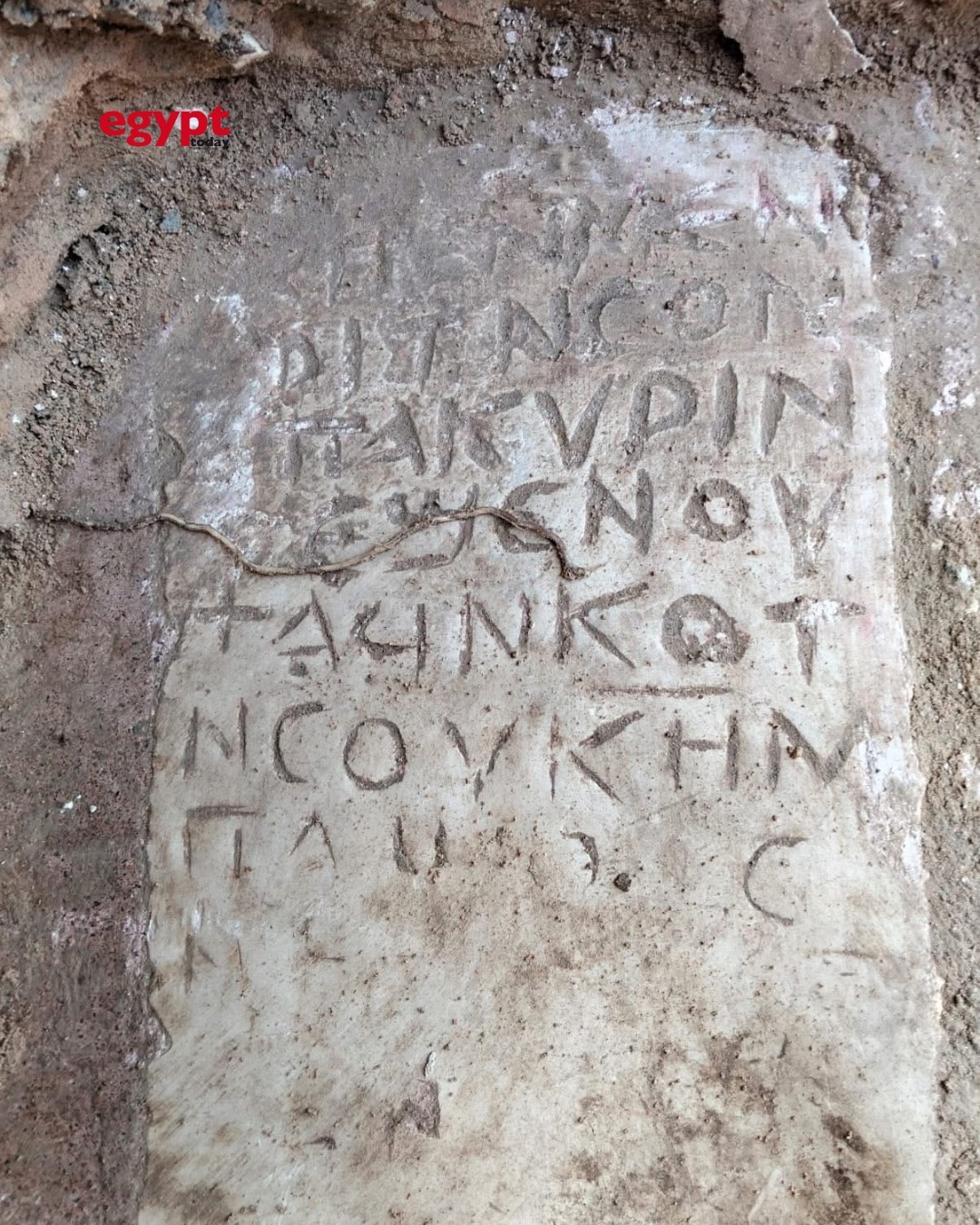
Among the most notable finds was a rectangular limestone piece found at the entrance of one of the rooms, engraved with a Coptic text believed to be a tombstone. Preliminary translation indicates the passing of a person named “Apa Kyr bin Shenouda,” confirming the continuity of human activity at the site during the flourishing of monastic life in the area.
It is worth noting that the mission began work at the site in the 2023 season. During this period, it uncovered two “manshoubiyat” structures, clusters of monastic cells, along with a group of wall paintings reflecting the site’s status as one of Egypt’s oldest monastic centers. Excavations also revealed several service buildings and attachments associated with these structures, as well as pottery vessels used for food preparation and for storing grains and liquids.
Egypt Uncovers Ancient Building from the Beginnings of Coptic Monasticism in the 5th Century in Qallaya, Beheira
The Egyptian archaeological mission of the Supreme Council of Antiquities, working in the Ruba’iyat area in Qallaya, Housh Issa Center, Beheira Governorate, has successfully uncovered an ancient building believed to have been used as a guesthouse during the early period of Coptic monasticism, dating back to the 5th century AD. This discovery comes as part of the ongoing excavation work at the site.
The excavations revealed several architectural elements added to the building in later historical phases, reflecting its evolution over successive periods.
Dr. Hisham El-Leithy, Secretary-General of the Supreme Council of Antiquities, stated that this discovery represents an important scientific contribution to the study of early monastic architecture in Egypt. He noted that the Qallaya area is considered the second-largest monastic cluster in the history of Christian monasticism, and its architectural style reflects the early foundation of monasteries.
He also highlighted that the decorations and paintings discovered are among the most important sources for studying early Coptic art in Egypt, as they provide historical and archaeological insights into the nature of monastic life and the development of artistic expression in its initial stages.
The discovery clearly illustrates the evolution of monastic architecture with its simple ascetic character, showing a functional progression from individual cells to semi-communal living spaces, and eventually to structures designed to accommodate visitors, whether senior monastic fathers, aspirants to monastic life, or other visitors.
Dr. Diaa Zahran, Head of the Islamic and Coptic Antiquities Sector at the Supreme Council of Antiquities, explained that the discovered building consists of 13 multifunctional rooms, including chambers for individual and communal monk residence, rooms for hospitality and education, which are large halls divided by architectural arches, as well as service facilities including a kitchen and storage areas.
In the northern part of the building, a large hall was uncovered, containing distinctive architectural elements, including stone benches decorated with plant motifs, likely used to receive visitors and provide services. The building also includes an eastern prayer area featuring a niche on its eastern wall, topped with a limestone cross. The building extends along a north-to-south axis.
Mr. Samir Rizk Abdel-Hafiz, Head of the Mission and Director General of Beheira Antiquities, added that the excavations revealed several wall paintings depicting incomplete figures of monastic personalities, identifiable by their clothing, along with various plant motifs, including braid patterns in red, white, and black, and an eight-petal flower.
A mural was also discovered depicting two gazelles surrounded by plant motifs, with a central double circular shape containing internal plant decoration, reflecting the rich symbolic expression of early Coptic art.
The mission also found a complete two-meter marble column, along with capitals and column bases, pottery vessels, and numerous ceramic sherds, some decorated with plant and geometric motifs, others inscribed with Coptic letters, and others plain.
Remains of bird and animal bones were discovered, along with several seashells in one of the rooms, reflecting the site's daily and dietary activities.
Among the most notable finds was a rectangular limestone piece found at the entrance of one of the rooms, engraved with a Coptic text believed to be a tombstone. Preliminary translation indicates the passing of a person named “Apa Kyr bin Shenouda,” confirming the continuity of human activity at the site during the flourishing of monastic life in the area.
It is worth noting that the mission began work at the site in the 2023 season. During this period, it uncovered two “manshoubiyat” structures, clusters of monastic cells, along with a group of wall paintings reflecting the site’s status as one of Egypt’s oldest monastic centers. Excavations also revealed several service buildings and attachments associated with these structures, as well as pottery vessels used for food preparation and for storing grains and liquids.








Comments
Leave a Comment