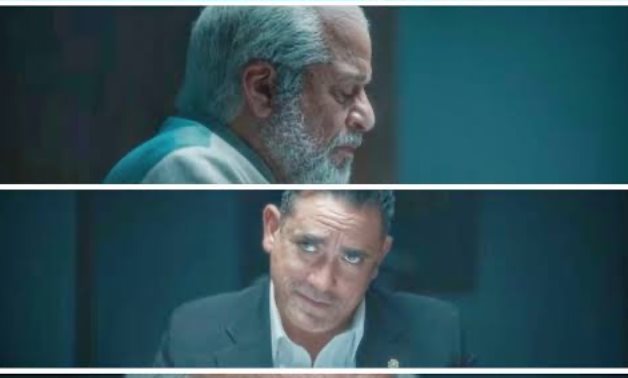
Sherif Mounir and Amir Karara.
During his 2020 interrogation, Mahmoud Ezzat admitted that before 2013, the Muslim Brotherhood operated on a strict hierarchy demanding absolute obedience, with members “like the dead in the hands of their guide.” After June 30, 2013, the group faced internal rebellion, divisions, and a loss of trust among leadership.
Ezzat disclosed the existence of a committee responsible for gathering intelligence on the state, which he claimed was justified due to the Brotherhood’s “conflict with the state.” He managed the organization from hiding, relying on trusted assistants and international leaders, while avoiding direct responsibility for armed operations carried out by Hasm and the Revolution Brigade.
He also discussed the group’s funding, which came from foreign support and donations, distributed according to hierarchy. Specific allowances were provided to members, the families of imprisoned members, and the families of leaders. Ezzat oversaw media platforms abroad, including the Watan channel, and maintained the group’s public presence via social media, leaving technology management to his aides.
Internal disputes within the Brotherhood were also revealed. Ezzat highlighted conflicts with leaders like Mohamed Montaser and Mohamed Kamel, justifying certain operations with the claim that “necessities may permit the forbidden” to protect the organization. His main concern after his arrest was the group being labeled a terrorist organization, while National Security officer Murad emphasized that a return to the pre-2011 power structure was impossible.
Mahmoud Ezzat’s Defeat in His Own Words
At the start of the investigation following his arrest, officer Murad addressed Ezzat: “We’re in 2020. In eight more years, the Muslim Brotherhood will mark 100 years of destruction, chaos, assassinations, and bombings. Let me ask you something: did you succeed in preserving the Muslim Brotherhood?”
Ezzat’s response was brief and telling: “There’s no point anymore.”
Ras El Afaa takes its inspiration from true events, most notably the security campaign known as “Head of the Snake,” the operation that resulted in the capture of Mahmoud Ezzat, widely believed to be the secretive figure who oversaw many of the Muslim Brotherhood’s activities behind the scenes. The series draws on the efforts of Egyptian National Security forces to track Ezzat in the years following the June 30 Revolution, a period marked by heightened tension and conflict involving the organization.
The drama focuses on the work of National Security officers as they carry out intricate missions to pursue terrorist cells linked to the Muslim Brotherhood. These groups are depicted as organizing attacks such as bombings and assassinations while operating through hidden communication channels and tightly guarded networks used for planning and recruitment.
Throughout the series, viewers see how security forces gradually penetrate these covert structures, gathering intelligence and dismantling the cells before their plans can be carried out. The story also reflects real-life incidents, including the assassination of former Egyptian Public Prosecutor Hisham Barakat, and portrays the investigations and security operations that eventually led to the arrest of those involved in the attack.
Ras El Afaa features a star-studded cast including Amir Karara, Ahmed Ghozzi, Sherif Mounir, Caroline Azmy, Magda Zaki, Eslam Gamal, Jala Hisham, and Mahmoud El Bezzawy among others. The series is written by Hani Sarhan and directed by Mohamed Bakir.








Comments
Leave a Comment