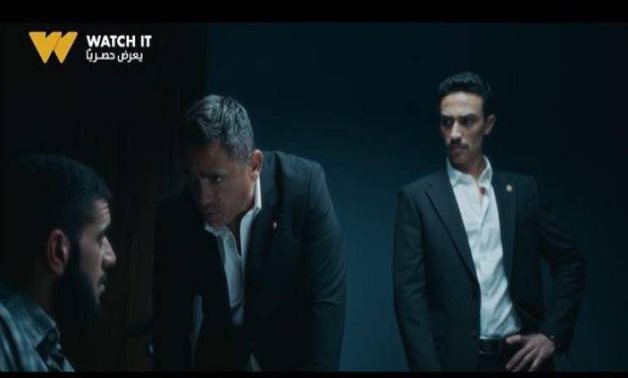
Amir Karara and Ahmed Ghozzi.




The hit series Ras El Afaa continues to captivate audiences with its unflinching portrayal of the dark and dangerous schemes orchestrated by terrorist organizations in Egypt. Combining suspenseful storytelling with real-world-inspired tactics, the series exposes the lengths to which these groups went to destabilize the country, putting innocent lives at risk and undermining national institutions.
One of the most chilling revelations in the series involves the use of everyday vehicles as instruments of terror. Ras El Afaa details how terrorists changed the colors of cars to disguise them during attacks, making it difficult for authorities to track their movements. The show also highlights how the Hasm Movement’s surveillance unit meticulously monitored police vehicles, targeting officers for assassination. These calculated tactics resulted in the tragic deaths of many innocent martyrs, showing how seemingly small manipulations can have devastating consequences.
The series also dives deep into the political and institutional ambitions of the Muslim Brotherhood. Viewers see the calculated strategy of leader Mahmoud Ezzat (Sherif Mounir) to spread chaos and manipulate public opinion. By igniting misinformation and creating distrust among citizens, Ezzat aimed to weaken confidence in Egypt’s state institutions. This plot underscores the dangerous ways extremist groups attempt to destabilize governments by eroding the public’s trust in law enforcement, the judiciary, and other key institutions.
Ras El Afaa further exposes the Brotherhood’s long-term strategy to control Egypt’s professional syndicates. The series reveals how, over many years, the group infiltrated and dominated important syndicates, using these positions of influence to extend their reach into crucial sectors of society. This calculated effort was part of a broader plan to consolidate power, manipulate key institutions, and expand their societal influence while remaining under the radar.
By combining high-stakes action, political intrigue, and investigative storytelling, Ras El Afaa provides a gripping portrayal of the hidden tactics and long-term strategies used by terrorist organizations to target the state and its citizens. The series not only entertains but also sheds light on the real-world dangers of extremist manipulation, offering viewers both suspense and insight into the challenges faced by national security forces in protecting their country.
Ras El Afaa takes its inspiration from true events, most notably the security campaign known as “Head of the Snake,” the operation that resulted in the capture of Mahmoud Ezzat, widely believed to be the secretive figure who oversaw many of the Muslim Brotherhood’s activities behind the scenes. The series draws on the efforts of Egyptian National Security forces to track Ezzat in the years following the June 30 Revolution, a period marked by heightened tension and conflict involving the organization.

Be Social




Comments
Leave a Comment