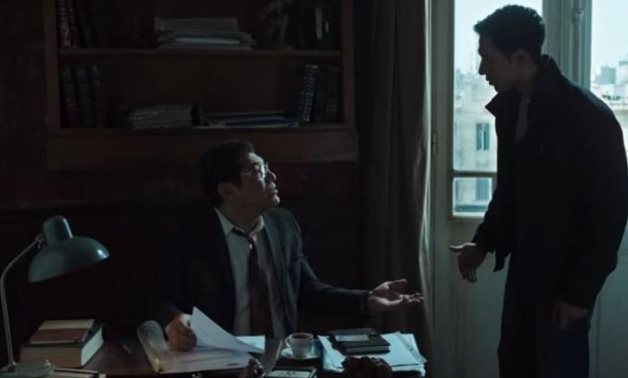
Essam Omar and Bassem Samra.




The final episode of Ein Sehreya delivered an intense and emotionally charged conclusion, bringing long-awaited justice, painful confessions, and heartfelt sacrifice to the forefront.
After twenty years of silence and suffering, Zaki, played by Bassem Samra, finally stood before the court to present a plea that was as personal as it was powerful. His defense was not centered on money, revenge, or property disputes. Instead, Zaki made it clear that the real issue was far more serious: the health and lives of Egyptian citizens who had been subjected to suspicious drug trials without their knowledge and without approval from the Ministry of Health.
He directly accused Shehab El Saftawi, portrayed by Mohamed Alaa, of exploiting his influence and authority to inject innocent patients with toxic substances under the guise of medical treatment. Zaki meticulously presented official documents, damning evidence, victims’ names, and witness testimonies, building a case rooted in truth and accountability.
In one of the most heartbreaking moments of the episode, Zaki revealed blood on his handkerchief while delivering his plea. Despite his visible pain and physical weakness, he refused to stop. He pushed forward, his voice trembling yet determined, demanding justice for the victims and accountability for the crimes committed against them.
The courtroom erupted in applause, a rare but powerful gesture reflecting respect for his courage and the humanitarian values he embodied. His words shifted the narrative from a legal battle to a moral reckoning about responsibility, corruption, and the sanctity of human life.
Beyond the courtroom drama, the finale delivered an intimate and emotional confrontation between Adel played by Essam Omar, and Zaki, revealing the hidden truths behind their long struggle.
Zaki confessed that he had secretly coordinated with Touha (Ahmed Bla) Adel’s close friend, to sabotage the operation that had been planned against Shehab. He further disclosed that the 12 million pounds were never actually lost and remain safely in their possession, a revelation that completely reframed previous events.
Adel, on his part, successfully handed over the video he had filmed of Shehab confessing to his crimes, including conducting illegal drug experiments on patients without their consent. The footage became a crucial piece of evidence that strengthened the case.
In a deeply selfless decision, Zaki declared that he would take full responsibility for the case himself. He insisted that Adel still has his entire life ahead of him and should not sacrifice his future. He urged him to care for his younger brother and entrusted him with the responsibility of looking after his daughter, Basma.
The emotional weight of this scene underscored the series’s core themes of sacrifice, redemption, and unconditional love. Zaki’s decision was not just a legal strategy but a father’s ultimate act of protection.
The finale of Ein Sehreya balanced legal suspense with emotional depth, offering viewers both closure and reflection. It explored the consequences of power abused, the cost of silence, and the resilience of those who refuse to accept injustice.
By the end, the series left audiences with a powerful message: justice may be delayed, but it is never meaningless when pursued with courage and integrity. Through Zaki’s unwavering determination and Adel’s growth, Ein Sehreya concluded as a story not only about exposing corruption, but about preserving humanity in the face of betrayal and loss.
In a new dramatic milestone, Essam Omar takes on a fresh leading role opposite Bassem Samra, as they come together in the Ramadan 2026 drama season through the series Ein Sehreya. Spanning 15 episodes, the show delivers an exciting and suspenseful drama that falls under the theme of pursuits and chases, adding a new layer of thrill and artistic intrigue to the Ramadan lineup.

Be Social




Comments
Leave a Comment