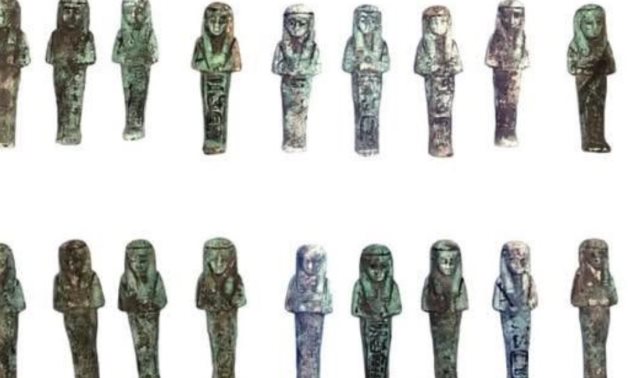
Major Discovery in Tanis Unearths 225 Royal Ushabti Statues.
A French archaeological mission working at the Tanis site in Sharqiya, led by Dr. Frédéric Payraud of Sorbonne University, has uncovered a major find inside one of the site’s most storied royal tombs. This cemetery first gained worldwide fame in 1939, when the treasures of Tanis were discovered and are now displayed in the Egyptian Museum in Tahrir.
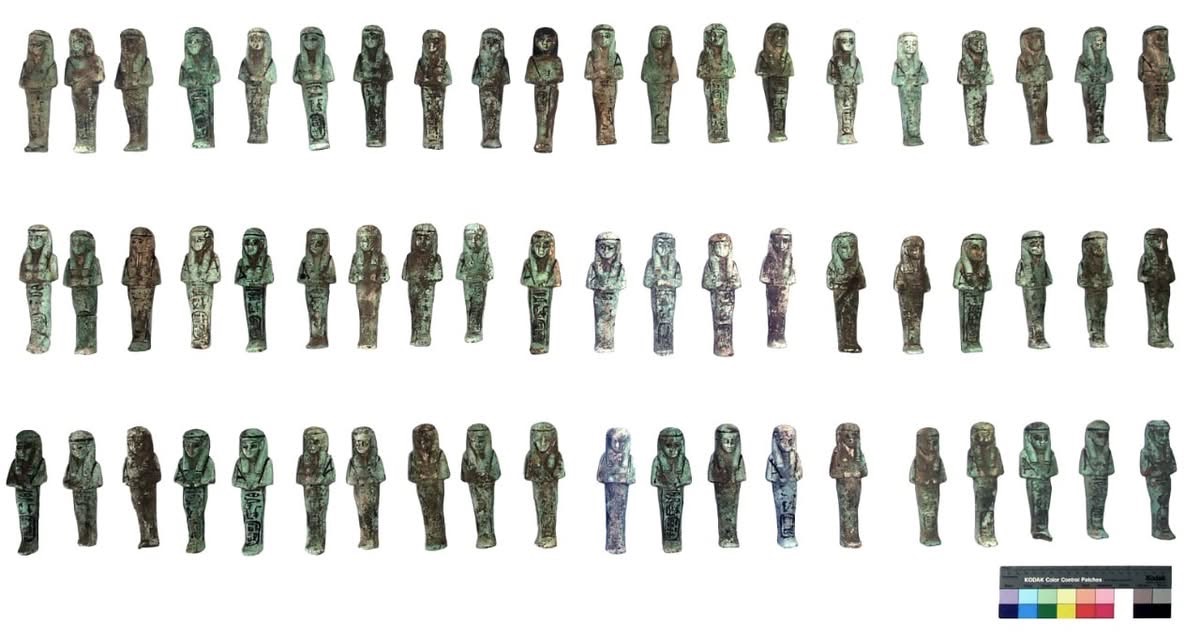
During the careful cleaning of the northern chamber floor in the tomb of King Osorkon II of the Twenty Second Dynasty, the team unearthed a large assemblage of 225 funerary figurines (ushabti) belonging to King Shoshenq III, one of the dynasty’s most prominent rulers known for his major building projects in Tanis.
Remarkably, the figurines were found in their original position, buried within compacted layers of silt, near an uninscribed granite sarcophagus previously discovered without a confirmed owner.
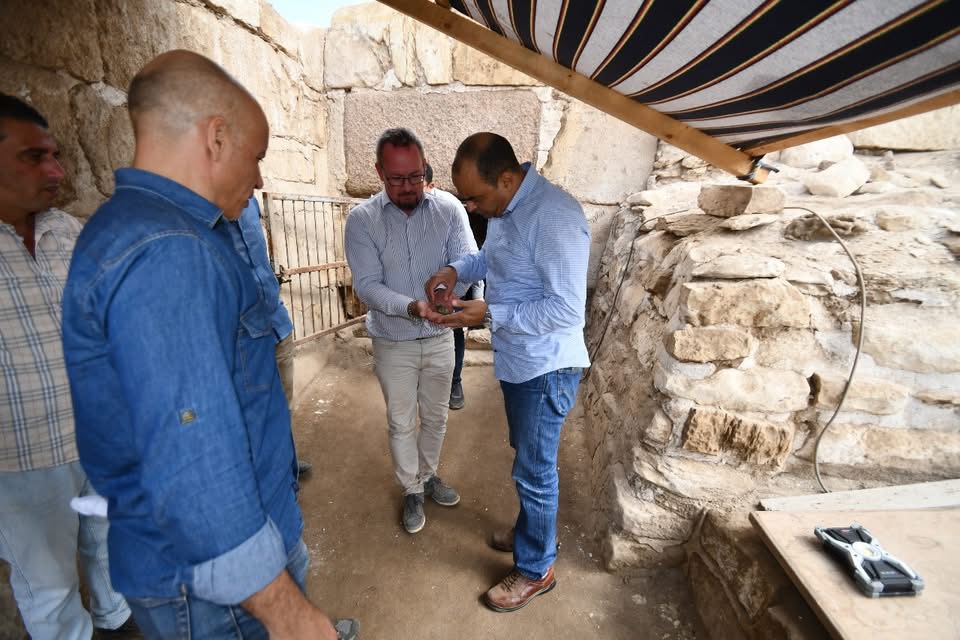
Dr. Mohamad Ismail Khaled, Secretary General of the Supreme Council of Antiquities, who inspected the site, described the discovery as a unique scientific breakthrough and the most significant find in Tanis’s royal necropolis since 1946.
He noted that the evidence strongly suggests the granite sarcophagus may belong to King Shoshenq III, marking a crucial step toward resolving one of Tanis’s longstanding archaeological mysteries.
This opens new avenues for research into royal burial practices of the period, including whether the king was originally interred in Osorkon II’s tomb or whether his funerary objects were later transferred there for protection.
He added that the discovery reflects the deep and productive collaboration between the French mission and the Egyptian team. He reaffirmed that Tanis still holds many secrets yet to be uncovered, underscoring the need to continue excavation and restoration work at one of the most important royal centers of the Third Intermediate Period.
Mohamed Abdel Badi, Head of the Egyptian Antiquities Sector, noted that the mission also identified new and previously unknown inscriptions inside the same chamber, enhancing scholars’ understanding of the evolution of royal tomb use and burial methods during this era.
Dr. Hesham Hussein, Head of the Central Department for Delta Antiquities, explained that the French team has been working at Tanis since 1929 under a long-standing partnership with the Supreme Council of Antiquities dedicated to studying and conserving this key royal site.
He stated that the discovery came during the preparatory phase of a comprehensive project to safeguard the royal tomb, which includes installing a new protective shelter over the area, reducing salt damage, and cleaning architectural elements inside and outside the structure.
Dr. Frédéric Payraud added that the next phase will focus on a detailed study of the newly uncovered inscriptions in the northern chamber of Osorkon II’s tomb, along with continued cleaning that may reveal further insights into the burial circumstances of King Shoshenq III.
He noted that it remains unclear whether the king was originally buried in Osorkon II’s tomb or whether his funerary goods were moved there later for protection from looting, and emphasized that much work lies ahead to answer these questions.








Comments
Leave a Comment