Major Archaeological Discovery in Egypt’s Western Desert Unveils Ancient City from Pagan to Christian Era.
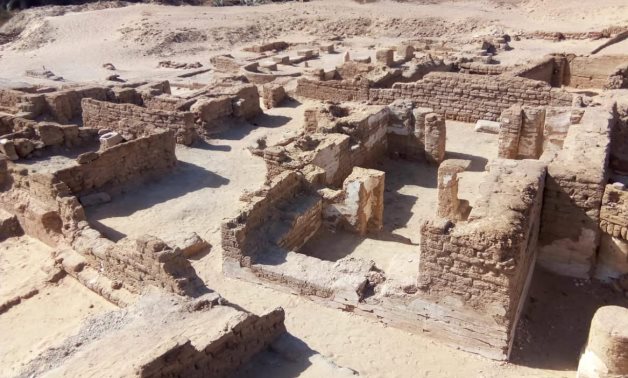
An Egyptian archaeological mission from the Supreme Council of Antiquities has uncovered the remains of the main residential city in the Kharga Oasis, located in the Islamic and Coptic archaeological area of Ain el-Kharab in Egypt’s New Valley.
The town dates back to the pivotal transition period from paganism to Christianity.
Minister of Tourism and Antiquities, Mr. Sherif Fathy, hailed the discovery as a testament to the richness and diversity of Egypt’s ancient civilization, especially during critical historical moments. He emphasized how the find deepens understanding of Egypt’s religious transformation and highlight the cultural and religious tolerance that has long defined the country’s heritage.
The minister reaffirmed the ministry’s commitment to supporting archaeological missions across Egypt, commending the dedication and accomplishments of Egyptian teams in placing Egypt firmly on the global cultural tourism map.
Dr. Mohamed Ismail Khaled, Secretary-General of the Supreme Council of Antiquities, underscored the importance of the discovery, which sheds light on the early Coptic period in the Kharga Oasis. He emphasized the significance of Egypt’s Western Desert oases as longstanding centers of religious and social life.
The excavation revealed a well-preserved city with mudbrick residential buildings—some with plaster-coated walls—alongside service areas that housed daily-use ovens, storage structures, and large pottery jars embedded in the ground for storing grains and food. A rich collection of artifacts was also unearthed, including ostraca, pottery, stone and glass fragments, burial remains, and a remarkable wall painting depicting Jesus Christ healing a sick person.
Dr. Seham Ismail, Director General of Kharga Antiquities and head of the mission, announced the discovery of two church ruins. One is a basilica-style mudbrick church with a large hall and two side aisles separated by three square columns on each side. The church’s southern section contains several service buildings.
The second church is smaller, with a rectangular layout surrounded by seven external columns. Some of its interior walls bear Coptic inscriptions, and service structures were also found on its western side.
Dr. Ismail added that findings from previous excavation seasons suggest the site was used across multiple historical periods. Roman-era buildings were repurposed during the early Coptic period and even into the Islamic era, highlighting the site’s long-standing significance.








Comments
Leave a Comment