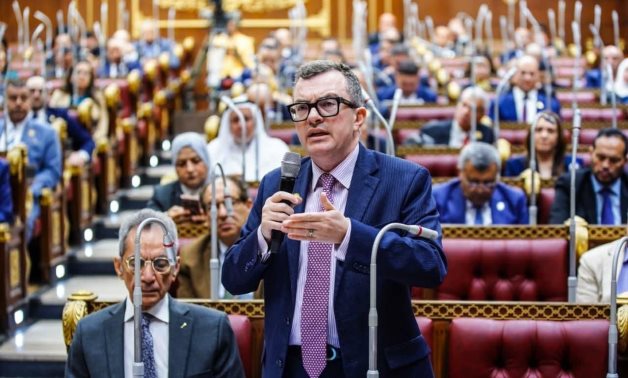




CAIRO - 9 June 2026: Minister of Planning and Economic Development Ahmed Rostom said the government has kept the health and education sectors outside its austerity measures to ensure the continued delivery of essential services.
Rostom made the remarks during a plenary session of the Senate, chaired by Counselor Essam El-Din Farid, as senators discussed the report of the Economic, Financial and Investment Affairs Committee on the Economic and Social Development Plan for FY2026/2027.
He explained that the government’s austerity measures did not suspend allocations included in the investment plan. Instead, the measures involved postponing some energy-intensive projects, as part of efforts to secure energy supplies amid ongoing geopolitical tensions and regional crises that have contributed to global energy pressures.
Rostom reaffirmed the government’s commitment to working with the Senate in a spirit of transparency, openness, and realistic implementation. He said this cooperation is aimed at improving the state’s public investment plan, directing resources toward development priorities, and helping investment levels reach their targeted rates.
The minister added that the government is keen to keep the Senate updated on implementation progress through semi-annual reports that provide clear indicators on the performance of annual investment plans.
He also said the ministry had sent a detailed copy of the latest follow-up report to the Senate Secretariat and the Senate’s Economic Committee last February.
Rostom noted that the investment plan currently being reviewed by the Senate is a general framework, while its detailed executive components are fully available through the ministry’s electronic system.
He stressed that the government and the Ministry of Planning are fully committed to the system to ensure that the plan remains aligned with the state’s broader development vision.
The minister said the current investment plan places strong emphasis on attracting and stimulating private sector investment, describing the private sector as a key partner in the development process.
He added that the plan is built on clear development priorities and pathways, while direct financial and material incentives for private investment remain available through the relevant legislative frameworks and the Investment Law.
Rostom said these incentives, recently announced by the Ministry of Investment, are intended to help private sector investors make full use of available opportunities.
He also announced that the new annual plan includes a notable increase in investment allocations directed toward supporting and developing projects in free zones and investment zones affiliated with the Ministry of Investment.
According to Rostom, these allocations are expected to support economic growth and help create more job opportunities.

Be Social



Comments
Leave a Comment