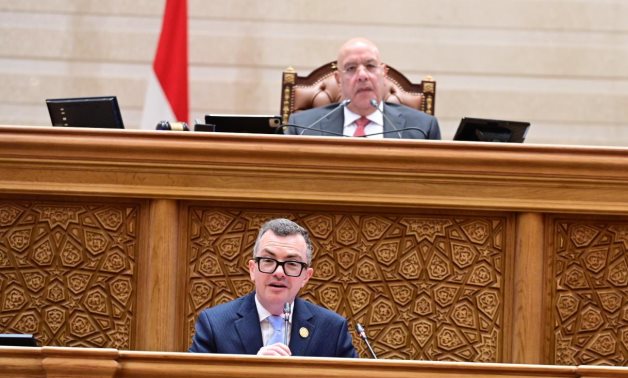
CAIRO - 22 April 2026: Egypt is stepping up its focus on growth, investment, and human development under its economic and social development plan for fiscal year 2026/2027, as outlined by Planning Minister Ahmed Rostom before Parliament.
The government is targeting economic growth of 5.4 percent next fiscal year, with projections rising to 6.8 percent by 2029/2030, while maintaining a cautious scenario of 5.2 percent amid ongoing global uncertainty.
At the core of the plan is a push to expand investment and private sector participation, with total investments estimated at LE 3.7 trillion. The private sector is expected to contribute 59 percent, with a goal to increase this to 64 percent by the end of the medium-term plan. The investment rate is forecast to rise from 17 percent of gross domestic product (GDP) next year to 20 percent by 2030.
Growth is expected to be driven primarily by real economy sectors, particularly manufacturing, which alone is projected to contribute 29 percent of total growth. Other key sectors include trade, tourism, construction, and agriculture, collectively accounting for 64 percent of economic expansion.
GDP is projected to reach LE 24.5 trillion in FY2026/2027 and grow to LE 36.8 trillion by the end of the decade, with agriculture, industry, construction, and trade forming the backbone of economic activity.
Alongside growth targets, the plan places strong emphasis on human development and service delivery. Health sector allocations will increase by 25 percent, with continued expansion of the universal health insurance system, including new phases, while pre-university education spending will rise by 11.5 percent, alongside plans to expand school capacity and upgrade technical education.
Social protection funding is set to increase by 57 percent, while infrastructure investments continue to scale up across key sectors such as water, housing, irrigation, and renewable energy.
The flagship “Haya Karima” initiative remains central to the plan, with the government prioritizing the completion of its first phase and the rollout of a second phase aimed at improving living conditions in rural areas.
Rostom said that while global challenges, from supply chain disruptions to inflation and energy price volatility, continue to weigh on the outlook, they also open the door for greater localization of industry and increased export opportunities.
He stressed that the plan’s success will ultimately be measured not only by growth figures, but by tangible improvements in citizens’ quality of life and access to opportunities.








Comments
Leave a Comment