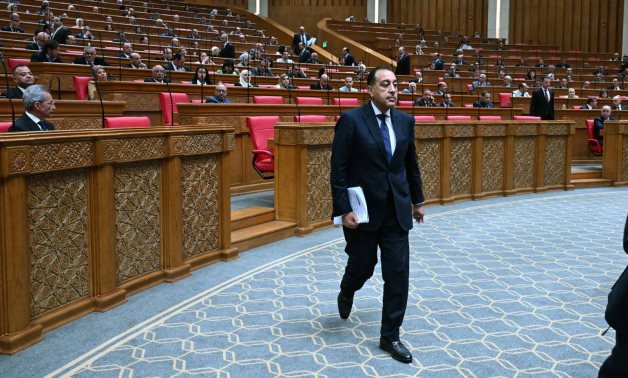




CAIRO - 21 April 2026: Prime Minister Mostafa Madbouly said the world is facing exceptional economic pressures triggered by the Iran war, with the impact extending to energy supplies, supply chains, inflation, prices, transport, trade, industry, and tourism. He said the crisis has quickly weighed on the global economy and left immediate effects on people across the region and beyond.
Speaking before the House of Representatives, Madbouly said global oil supplies suffered a historic shock after attacks on energy infrastructure and disruptions to shipping through the Strait of Hormuz, which handles around 20 precent of the world’s oil. Exports passing through the strait dropped from 20 million barrels per day before the crisis to around 3.8 million barrels per day.
He added that the geopolitical escalation caused major turbulence in global markets, with oil prices surging from $69 per barrel to $120 before easing to $95. He warned that prices could rise further to between $150 and $200 if the situation deteriorates further. He also noted that at least 60 countries had adopted emergency measures by April 8, 2026.
Madbouly also pointed to the sharp impact on tourism, with regional losses estimated at around $600 million per day. At the same time, the FAO food price index rose by 2.4 precent amid international warnings of severe disruptions to food supply chains, which he described as the most intense since the Covid-19 pandemic.
On the domestic front, Madbouly said the Egyptian government responded from the first hours of the crisis through a proactive plan built on five pillars: real-time monitoring, careful analysis, presenting alternatives, decisive action, and assessing the public impact of each decision.
He said the government formed a crisis committee to track developments and prepare scenarios to secure energy needs and maintain market stability. It also set up a Foreign Ministry task force and a 24-hour hotline to support Egyptians abroad. Meanwhile, strategic reserves of food and medicine were secured for several months, helping prevent shortages in local markets.
Madbouly added that the government coordinated daily with the Central Bank to provide foreign currency for essential goods and production needs, supported by exchange rate flexibility and inflation-targeting policies. He also said the state rolled out a LE 40 billion cash support package for 15 million families during Ramadan and Eid Al-Fitr, while wages in the new budget were increased by 21 precent, lifting the minimum wage to LE 8,000 at a cost of LE 100 billion.
To ensure sustainability, the prime minister said the government had taken difficult but necessary decisions, including raising fuel prices to absorb the increase in the imported gas bill from $560 million to $1.65 billion per month. Rationalization measures also included cutting fuel allocations for government vehicles by 30 precent, bringing forward shop closing hours, and introducing one remote workday per week during April, generating initial savings of 18,000 megawatt-hours.
Looking ahead, Madbouly said renewable energy remains the most effective path to improving the economy’s resilience. Egypt’s installed renewable capacity rose from 5,934 megawatts in 2020 to 9,366 megawatts in 2025, with plans to add 2,500 megawatts this year and raise the share of renewable energy to 45 precent by 2028, which he said would save $7 billion annually.
He also revealed plans to expand oil and gas discoveries, while committing to settle all dues owed to foreign partners by June 2026 and accelerate exploration efforts to boost domestic output and reduce pressure on foreign currency resources.
Madbouly reviewed indicators from before the war, saying inflation had fallen to 11.9 precent in January 2026, while foreign reserves climbed to $52.8 billion by the end of March 2026. He added that the economy posted 5.3 precent growth in the first half of the current fiscal year, supported by stronger industrial performance and tourism revenues of $10.2 billion.
He concluded by saying the government is treating the current situation as a prolonged crisis and has prepared all possible scenarios. He also praised the Egyptian public for its awareness and cooperation, while noting that international institutions including the IMF, Fitch, and Standard & Poor’s had commended Egypt’s ability to manage external shocks effectively.

Be Social




Comments
Leave a Comment