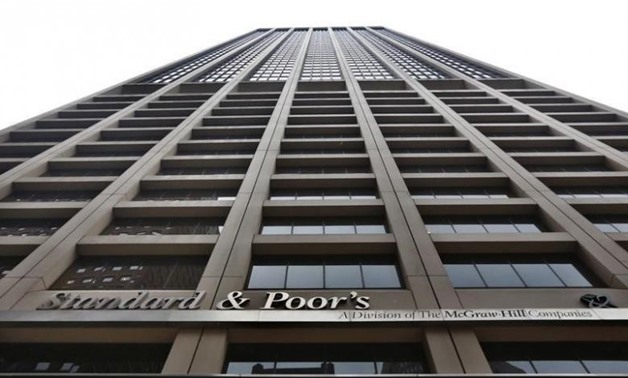




CAIRO - 10 April 2026: S&P Global Ratings has maintained Egypt’s sovereign credit rating at ‘B/B’ with a stable outlook, citing the country’s ongoing reform efforts alongside mounting risks from regional geopolitical tensions.
The agency said the outlook reflects a balance between improving economic fundamentals and downside risks tied to a prolonged conflict, which could weigh on key sources of foreign currency inflows.
According to S&P, Egypt’s recent policy measures, particularly the shift to a more flexible exchange rate and broader macroeconomic reforms, have strengthened the country’s external position and unlocked funding from the International Monetary Fund and other partners.
These steps helped boost foreign currency inflows and supported a rise in international reserves to $52.8 billion in March 2026, positioning Egypt more favorably compared to previous external shocks.
Still, the rating agency highlighted renewed vulnerabilities, including Egypt’s growing reliance on energy imports and exposure to global commodity price fluctuations. It now expects the current account deficit to widen to 4.8 percent of GDP in FY2025/2026.
The report also pointed to heightened sensitivity to capital flows, with foreign portfolio outflows reaching roughly $10 billion shortly after the escalation of regional tensions.
S&P underscored the importance of Egypt’s commitment to a market-driven exchange rate, noting that authorities have continued to allow the currency to adjust in line with market conditions. The Egyptian pound has depreciated by around 13 percent since late February.
Maintaining this flexibility is seen as critical to preserving investor confidence and supporting external stability.
While economic activity has shown resilience, S&P expects growth to ease, forecasting 4.7 percent for FY2025/2026, down slightly from earlier estimates, as regional developments weigh on trade, tourism, and investment.
What could move the rating
S&P said a downgrade could follow if reform momentum weakens or if external financing conditions deteriorate, particularly amid rising borrowing costs or constrained market access.
Conversely, an upgrade would depend on faster improvements in debt metrics, stronger foreign direct investment inflows, and progress in opening up the economy to private sector participation.
Overall, the agency signaled that Egypt’s credit profile remains closely tied to its ability to sustain reforms and navigate external shocks, particularly in a volatile regional environment.

Be Social



Comments
Leave a Comment