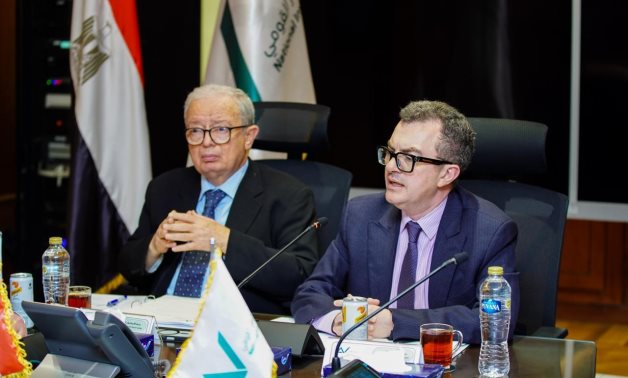
CAIRO - 6 April 2026: Egypt’s Minister of Planning and Economic Development, Ahmed Rostom, chaired a board meeting of the National Investment Bank (NIB) to review ongoing restructuring efforts aimed at strengthening the bank’s role as a key investment and development arm of the government.
The meeting was attended by Deputy Prime Minister for Economic Affairs Hussein Issa and Minister of Investment and Foreign Trade Mohamed Farid, alongside senior officials and board members. Discussions focused on enhancing the efficiency of public investments and supporting the implementation of Egypt’s economic and social development plan.
Rostom emphasized that restructuring the National Investment Bank remains a top government priority, with the goal of transforming it into a more effective institutional tool that supports development projects and maximizes returns on state investments.
He noted that the bank is expected to play a greater role in the coming period, particularly in supporting emerging investments and participating in new initiatives related to employment, entrepreneurship, and startups.
A key focus of the meeting was strengthening coordination between the Ministry of Planning, the Ministry of Finance, and the National Investment Bank through the integration of investment plan databases. This step aims to improve transparency and efficiency by linking financial allocations to actual project implementation rates, in line with Egypt’s shift toward a program- and performance-based budgeting system.
Rostom also highlighted the importance of upgrading digital infrastructure and leveraging advanced technologies to support data integration and monitoring mechanisms.
He stressed that future efforts to enhance the bank’s role align with presidential directives to prioritize citizens’ needs within all development plans, while expanding private sector participation in the economy. These efforts are ultimately aimed at improving living standards and quality of life for Egyptians.
The minister added that government projects must be based on clear feasibility studies, innovative financing tools, and effective partnerships to ensure sustainability and maximize development impact. This approach is closely linked to strengthening public investment governance, setting clear project priorities, and improving performance evaluation systems.
The board also reviewed the bank’s future restructuring roadmap and its role in implementing public investment governance reforms, ensuring that projects align with national priorities and deliver measurable economic and social returns.








Comments
Leave a Comment