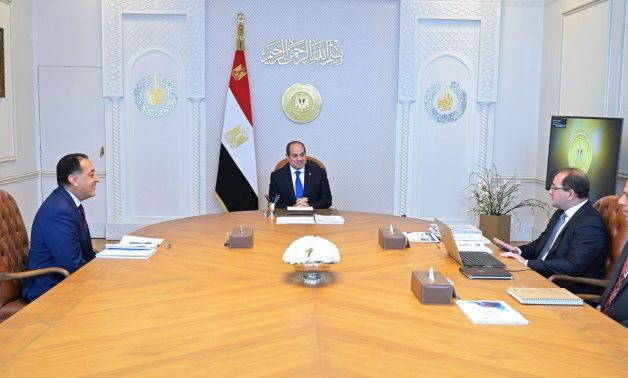
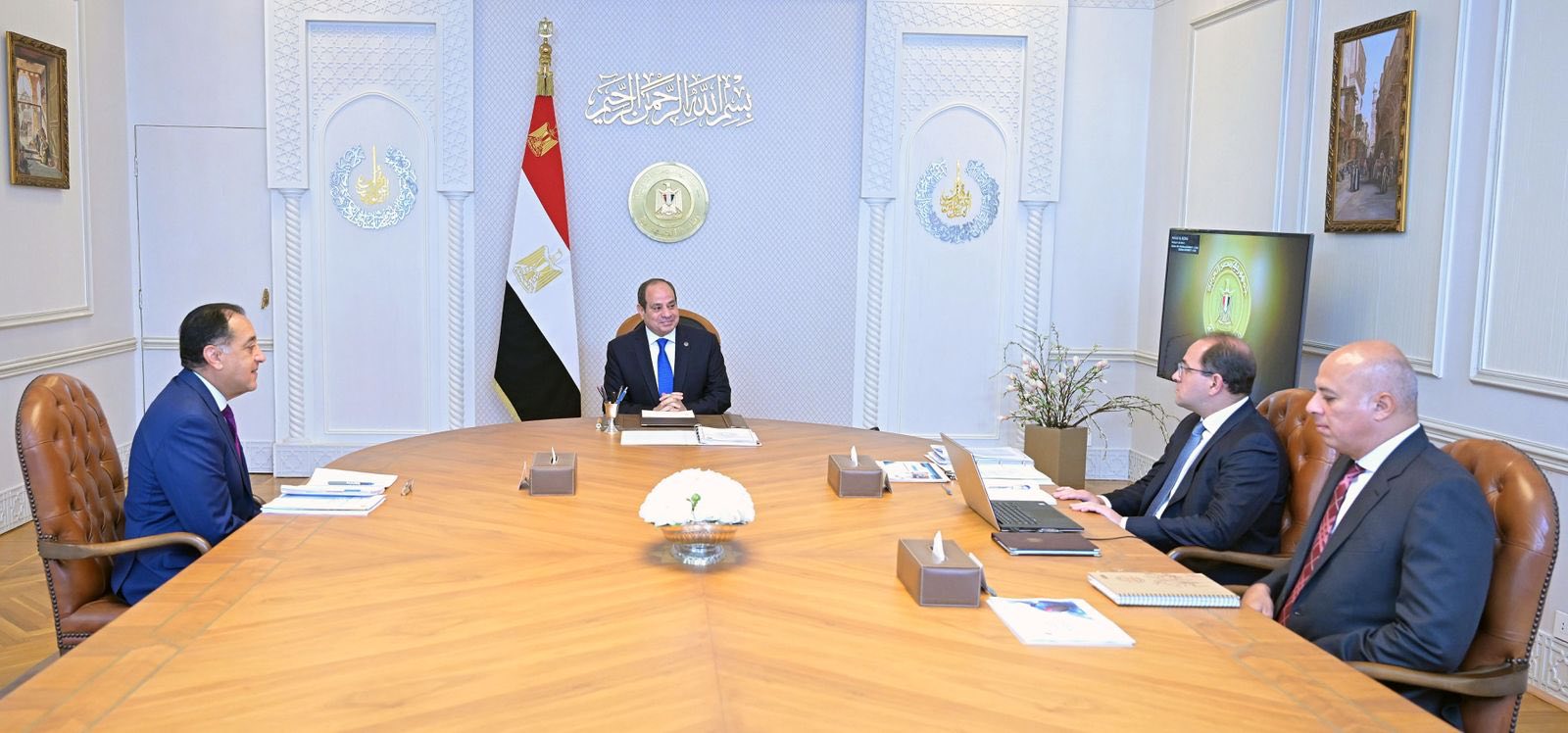
Egypt’s President Abdel Fattah El-Sisi meets with Prime Minister Mostafa Madbouly and Minister of Finance Ahmed Kouchouk on 30 Nov. 2025. Egyptian Presidency




CAIRO – 30 November 2025: President Abdel Fattah El-Sisi on Saturday instructed the government to launch Egypt’s second tax facilitation package, underscoring the need to modernise the tax system.
During a meeting with the prime minister and the minister of finance, El-Sisi directed building new relationships among all parties in the tax system based on trust, transparency and clarity, the Presidency said in a statement.
He also instructed the government to improve all tax services, providing additional facilitations, and strengthening confidence among investors.
El-Sisi reviewed the details of the second package, which aims to support and encourage tax compliance, widen the taxpayer base, while simplifying and digitalizing procedures.
It forms part of a four-package strategy, whose first phase sought to “turn a new page and build trust between the Egyptian Tax Authority and taxpayers,” the statement added.
The strategy ensures tax compliance during the coming phases.
Four-Package Strategy
Finance Minister Ahmed Kouchouk said the second package of tax incentive measures targets all compliant segments of the tax community and is designed to support committed taxpayers through facilitations and tax advantages.
He added that such facilitations would strengthen trust, encourage continued voluntary compliance, help them grow and enhance their competitiveness, and safeguard taxpayers’ rights while providing liquidity for them and for companies.
The minister said the tax facilitation initiative has proved successful in its first phase and offered a strong model for the kind of change sought for the benefit of the business community and the Egyptian economy.
Kouchouk noted that 400,000 old files have been closed voluntarily, and 650,000 taxpayers have submitted new or amended returns that generated about LE 78 billion in additional taxes.
Meanwhile, newly reported business activity increased by around LE 1 trillion, he added.
The pillars of the second phase of the initiative include improving the efficiency and effectiveness of the VAT refund system and establishing premium tax-support service centers, the minister noted.
Under this phase, a package of incentives and benefits will be introduced for compliant taxpayers, alongside several other reforms in response to requests from the business community, taxpayers, accountants and tax experts, he affirmed.
Real Estate Tax Facilitation
During the meeting, Kouchouk also underscored progress in preparing to implement real estate tax facilitations.
He underlined the state’s vision to ease the tax burden in line with social and economic considerations, simplify tax procedures, adopt digital transformation, and address shortcomings revealed in practice.
The state-provided facilitations, the minister said, include simplifying tax declarations, extending the valuation cycle to seven years, raising the personal residence exemption threshold, and suspending or removing tax obligations during crises.
Moreover, the state is committed to writing off tax debt and late-payment penalties in specific cases, reforming and streamlining the appeals mechanism, enabling electronic payment of the tax, and setting a cap on late-payment penalties so they do not exceed the original tax owed.
Restoring Investor Confidence
The meeting also reviewed developments in fiscal and economic performance and the government’s efforts to restore investor confidence within a coherent and integrated economic vision that supports the competitiveness of the Egyptian economy.
The finance minister asserted that economic activity is moving in a positive direction, with private investment growing 73% in the last fiscal year.
He highlighted balanced and encouraging indicators that further support the path toward restoring investor confidence in the Egyptian economy.
Kouchouk reiterated the commitment to maintaining a strong primary surplus that allows for increased spending on human development and social protection programmes, while contributing effectively to boosting manufacturing and exports.
Modernizing Customs System
The meeting outlined the state’s plan to modernize the customs system. The minister said the plan reflects the needs of manufacturing projects and chambers of commerce.
It also aims to address the challenges facing the business community and set policies that support and encourage investors, helping boost exports and strengthen the competitiveness of the Egyptian economy.
This will be achieved through joint efforts to simplify procedures and upgrade the customs framework, the minister added.
The customs development plan is built on three pillars: reducing clearance times, introducing measures to streamline and digitize customs procedures, and strengthening controls to curb smuggling, Kouchouk said.
He noted plans to introduce a unified and rapid inspection system, expand the pre-clearance regime, accept electronic payments, and enhance the technical capacity of the customs authority staff.
Reducing Debt-to-GDP
The minister also reviewed efforts to reduce the debt-to-GDP ratio of budget-sector entities, describing it as a national priority, affirming continued implementation of their debt-management strategy.
He noted that the private sector has shown strong confidence in Egypt’s economic prospects and investment climate, enabling major investment deals such as the Ras El Hekma and Alam El-Roum projects.
Capitalizing on Economy Improvement
El-Sisi stressed the need to build on improving economic indicators and increase private investment to reinforce the sector’s role in driving growth and development.
He also underscored the importance of investing in human capital through innovative programs, initiatives and ideas, alongside training and skills development, to enhance performance in support of the economy.
The president further directed the government to take all necessary measures to fully digitize the Ministry of Finance’s operations, including in customs and tax administration, while ensuring strict governance and oversight of all procedures.

Be Social




Comments
Leave a Comment