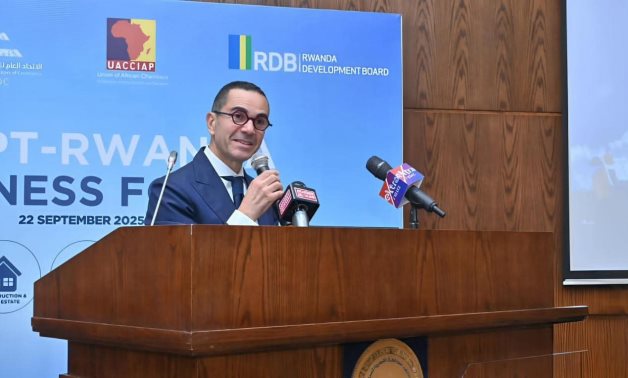




CAIRO - 22 September 2025: Egypt’s Minister of Investment and Foreign Trade, Hassan El-Khatib, announced that the country aims to secure a position among the world’s top 50 economies in trade and investment competitiveness indices within the next two years.
Speaking at the Egypt–Rwanda Business Forum, El-Khatib underscored Egypt’s achievements in recent years, pointing to extensive infrastructure development including railways, highways, energy networks, and the establishment of new cities. He also highlighted advancements in modern agriculture and smart irrigation systems, which have enhanced productivity and strengthened food security.
El-Khatib stressed that Egypt is committed to improving its business environment, with priorities including streamlined procedures, reduced bureaucratic hurdles, and faster licensing processes. These measures are designed to attract greater levels of foreign direct investment and boost competitiveness.
The minister emphasized that cooperation with Rwanda is a strategic priority, especially in sectors such as infrastructure, agriculture and agro-industrial projects, industrial development, healthcare and pharmaceuticals, education and training, knowledge transfer, as well as electricity and renewable energy. He noted that Egypt’s expertise in these fields could play a pivotal role in supporting Rwanda’s development.
Bilateral trade between Egypt and Rwanda reached $216 million in 2024, a sharp rise from $68 million in 2023. While calling this growth remarkable, El-Khatib acknowledged that trade volumes remain below their potential, affirming Egypt’s commitment to doubling trade flows in the coming years through expanded investment partnerships and wider use of joint trade agreements.
El-Khatib described the forum as an important platform for strengthening cooperation and exchanging expertise. He stressed the need to capitalize on the two countries’ shared membership in COMESA and the African Continental Free Trade Area (AfCFTA). These frameworks, he said, can boost the flow of goods, services, and investments, integrate both economies into regional value chains, and advance the African Union’s Agenda 2063.

Be Social




Comments
Leave a Comment