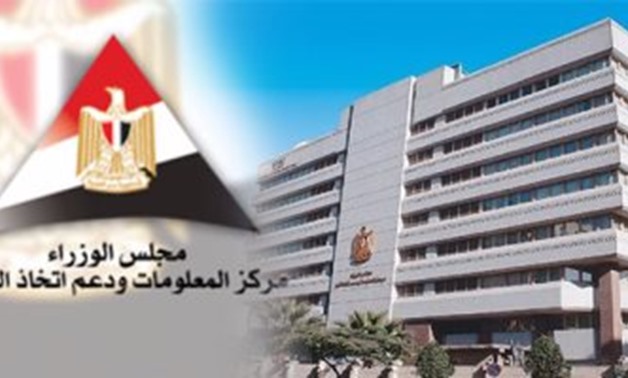




Cairo – May 8, 2025: Egypt has rolled out nearly 500 reform measures between May 2022 and December 2024 as part of a sweeping initiative to strengthen private sector involvement in the national economy, according to a comprehensive report from the Information and Decision Support Centre (IDSC).
The report, reviewed by Prime Minister Mostafa Madbouly, details progress aligned with the State Ownership Policy Document, a key strategy to shift Egypt toward a private sector-led growth model.
The reforms span six key pillars: monetary policy, competitive neutrality, industrial development, business environment enhancement, regulatory reform, and implementation of the State Ownership Policy itself.
According to Osama El-Gohary, Assistant to the Prime Minister and Head of IDSC, the initiative aims to tackle structural barriers, attract investment, boost exports, and generate employment.
Focused Reform in Business and Industry
Two sectors—investment climate improvement and industrial support—dominated the reform agenda. Together, they accounted for nearly 65 percent of all measures implemented.
A total of 189 initiatives supported investment and the broader business environment, while 134 targeted the industrial sector.
The pace of reform accelerated in 2024, with 321 measures enacted, representing 64.2 percent of the total reforms for the period. These focused on investment facilitation (121 measures), legislative and institutional reform (96), and industrial sector promotion (83), constituting 93.5 percent of all 2024 measures.
Monetary Policy and Inflation Targeting
In a notable shift, the Central Bank of Egypt (CBE) introduced 11 monetary and exchange rate reforms, including a March 2024 announcement to adopt a flexible inflation-targeting framework.
The strategy targets an inflation rate of 7 percent (±2 percent) by end-2026 and 5 percent (±2 percent) by end-2028. The move has already begun to improve investor sentiment, with net foreign direct investment reaching $46.1 billion in FY 2023/2024 and portfolio investment net inflows hitting $14.5 billion.
Boosting Competitive Neutrality
Efforts to enhance market competition resulted in 14 policy measures, such as implementing a pre-merger regulatory framework and advancing the goals of the Competition Protection Agency’s 2021–2025 strategy. Egypt’s competition watchdog received international accolades in 2024 for its “Arab Competition Authority Simulation Model,” recognized by both the World Bank and the International Competition Network.
Industrial Development and Export Growth
The government took a series of steps to ease industrial procedures, including the adoption of National Food Safety Authority certification requirements and logistics upgrades like 24/7 port operations. These changes helped create 960 new export opportunities valued at $2.3 billion.
Between July 2023 and June 2024, LE 67.5 billion in credit facilities were allocated to nearly 2,600 businesses, with 96 percent directed toward working capital—78 percent for industry and 22 percent for agriculture. In December 2024, the government launched a new LE 30 billion initiative for priority industrial sectors and reactivated a soft loan program. The result: industry accounted for 15.7 percent of new company registrations in FY 2023/2024, and industrial zones signed 218 new project contracts worth over $5.1 billion. Total exports of Egyptian goods rose 14 percent to $40.8 billion in 2024.
Investment Incentives and Regulatory Reform
The investment and business climate reforms included tax incentives and the issuance of “golden licenses” to 46 companies by March 2025. Additionally, the Small and Medium Enterprises Development Authority issued over 1,300 temporary and final licenses. An export support program injected LE 70 billion between 2019 and 2024, benefiting more than 2,500 companies.
A landmark $35 billion investment deal with the United Arab Emirates to develop Ras El-Hekma city was a major milestone in 2024. The deal is expected to unlock $150 billion in additional investment and draw 8 million tourists, with Egypt retaining a 35 percent profit share.
Private sector investment has surged from LE 213.5 billion in FY 2016/2017 to an estimated LE 700 billion in FY 2023/2024. In the second quarter of FY 2024/2025 alone, the private sector contributed LE 148.5 billion, representing 53.3 percent of total investments, a year-on-year rise of 35.4 percent.
Legal and Institutional Reform
The reform drive also extended to Egypt’s regulatory landscape, with 128 measures taken to improve the legal and institutional environment. These included a draft resolution to structure the Ministry of Investment and Foreign Trade and a newly published list of foreign-investment-regulated economic activities. A Prime Ministerial decree also formed the Industrial Ministerial Group.
Improvements in governance indicators followed: Egypt’s Regulatory Quality Index rose by 2.4 points, the Rule of Law Index improved by 1.4 points, and the Government Effectiveness Index jumped by 7.6 points in 2023.
Advancing the State Ownership Policy
As part of the formal implementation of the State Ownership Policy Document, 24 reforms were introduced, including legislation approved in May 2024 regulating state ownership and restructuring 59 economic bodies by year-end 2024.
Private Sector Making Gains
The reforms are beginning to yield measurable outcomes. In FY 2022/2023, the private sector contributed 74.8 percent of Egypt’s GDP, up from prior years. Its share of total investment rose to 37 percent in FY 2023/2024, while 81.3 percent of new jobs in 2023 were created by the private sector, compared to a 76.3 percent average between 2013 and 2022.
International Recognition
Egypt’s reform program has drawn praise from global institutions. The World Bank welcomed the CBE’s inflation-targeting strategy. StartUp Blink named Egypt’s start-up ecosystem one of the strongest in North Africa. McKinsey highlighted improvements in the country’s investment landscape, while the United Nations ESCWA acknowledged the launch of new digital platforms for registering foreign investments.

Be Social



Comments
Leave a Comment