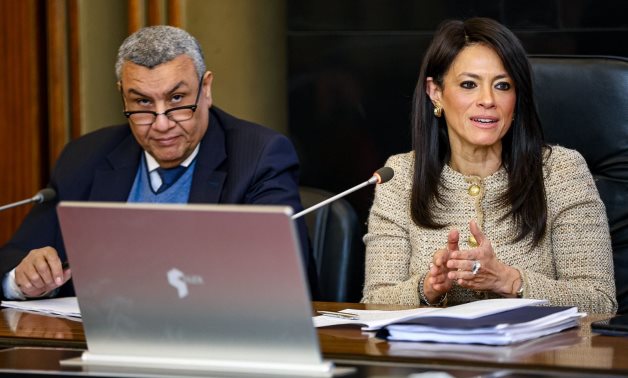
CAIRO – 29 December 2024: Egypt’s Minister of Planning, Economic Development, and International Cooperation, Rania Al-Mashat, discussed the country’s progress in green investments and sustainable infrastructure during a session with the Budget and Planning Committee of Parliament. The session focused on the implementation of the 2023/2024 economic and social development plan, future projections, and the status of economic authorities.
Al-Mashat highlighted the government's dedication to integrating environmental sustainability into its development strategy. She unveiled the “Environmental Sustainability Standards Guide,” a new initiative designed to incorporate environmental considerations into the country’s planning processes.
This move reflects Egypt's shift towards a green economy, with green projects making up 50 percent of public investments in the 2024/2025 fiscal year, up from just 15 percent in 2020/2021. In 2023/2024, green investments in transportation, including metro expansion and electric-powered transport systems, reached LE 115 billion, addressing climate change and cutting emissions.
In line with Egypt’s National Climate Strategy 2050, the ministry launched the “NWFE” program, a strategic framework focused on driving climate adaptation and supporting the transition to a green economy.
The program spans the energy, water, and food sectors, fostering sustainable development through partnerships with multilateral and bilateral development partners. It has successfully mobilized concessional financing for clean energy projects, enabling the private sector to undertake renewable energy projects with a combined capacity of 4.2 GW and attracting international funding.
Since 2020, the ministry has secured $14.5 billion in development financing for the private sector from international partners. These funds have supported sectors such as banking, logistics, energy, and green transition initiatives.
To further boost renewable energy investments, the government allocated an additional LE 7.6 billion to upgrade energy transmission and distribution infrastructure, ensuring the integration of renewable sources into the national grid. Under the NWFE program, private companies have received $3.9 billion in concessional financing for renewable energy projects, showcasing the success of Egypt’s structural reforms in attracting private investment.
The minister also emphasized key collaborations with international partners that have supported infrastructure development, local industry, and human capital growth. These partnerships have contributed to sustainable environmental projects, including renewable energy and water resource management, helping Egypt reduce carbon emissions and build resilience to climate change. Additionally, the government launched the “Hafiz” platform, providing financial and technical support to the private sector, facilitating access to development finance and advisory services.
Al-Mashat also stressed the importance of entrepreneurship in driving economic growth and creating jobs. The Ministerial Group for Entrepreneurship is working to strengthen the startup ecosystem by focusing on policy and legislative frameworks, coordinating initiatives, and connecting startups to sector-specific challenges. The group has started developing a unified charter for Egypt’s startup ecosystem, with the goal of establishing common standards and implementing short-term measures to support the growth of entrepreneurial ventures.
As part of these efforts, the government remains committed to fostering innovation and sustainable growth, leveraging public-private partnerships and international collaborations to achieve long-term development objectives. Al-Mashat reiterated the ministry’s commitment to building a competitive, knowledge-based economy that aligns with Egypt’s Vision 2030.








Comments
Leave a Comment