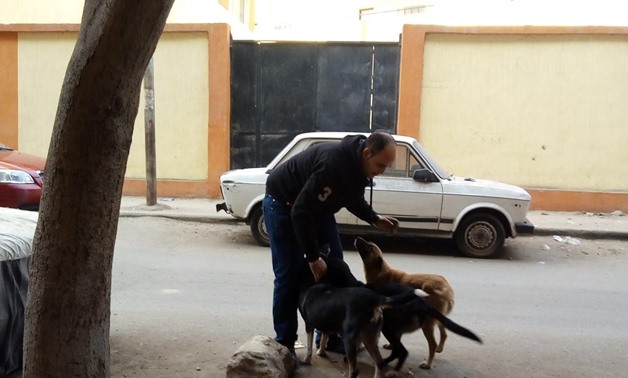
File- An Egyptian playing with stray dogs – Egypt Today/Hend Safwat




CAIRO – 17 July 2026: The Ministry of Agriculture announced the immediate implementation of a comprehensive national plan for managing stray animals as part of a unified strategy aimed at safeguarding public health and environmental security.
In line with Egypt's commitments as a Party to the Convention on Biological Diversity (CBD) and the Kunming–Montreal Global Biodiversity Framework (GBF), and in accordance with international standards issued by the World Organisation for Animal Health (WOAH), the Ministry affirmed its full commitment to the officially approved scientific and veterinary approach: the Trap-Neuter-Return (TNR) program. The program focuses on the sterilization, rabies vaccination, and return of stray animals to their original locations. According to the Ministry, TNR is the only internationally recognized medical, scientific, and environmentally sound approach to managing stray dog populations while maintaining ecological balance and addressing the harmful consequences of ineffective control practices.
In a statement, the Ministry emphasized the immediate and complete cessation of all uncoordinated or individual actions outside this unified framework. It also prohibited the use of poisons, mass culling, or the unauthorized relocation of stray animals from designated areas, warning that such actions will be subject to immediate legal action and prosecution. The Ministry noted that Egypt's environment is an interconnected ecosystem and that the use of hazardous substances poses risks to both humans and animals.
In line with the recommendations of the relevant committee, the Ministry stated that stray animals serve as a natural line of environmental defense by helping limit the spread of rodents and venomous or dangerous reptiles, whose populations have reportedly increased significantly in recent years due to climate change.
The Ministry further stated that disrupting this ecological balance could pose a direct threat to public health and environmental security in urban areas.
Addressing what it described as misconceptions and rumors, the Ministry said it relies on documented scientific studies conducted by the Academy of Scientific Research and Technology and specialized medical committees. According to the Ministry, these studies indicate that depriving stray animals of food and water can increase aggressive behavior and trigger survival instincts, with potential negative consequences for public safety. It therefore stressed the need for scientifically based and regulated interventions to restore ecological balance and manage animal behavior, alongside continued vaccination and sterilization campaigns.
The Ministry of Agriculture and Land Reclamation called on all citizens, institutions, civil society organizations, companies, and executive authorities to fully comply with the issued regulations and instructions. It reiterated that no individual decisions may be taken outside the approved national plan and warned that immediate legal action, in coordination with security and regulatory authorities, will be taken against any violations or activities intended to undermine the plan, mislead public opinion, or create disorder in Egyptian streets.
More shelters for stray dogs are set to open across Cairo governorate, as part of the governorate's plan to find scientific and humane solutions to the problem of stray dogs in the governorate.
Approximately 8 million stray dogs spread across Egypt’s streets, according to Al-Sayyed El-Quseir, Head of the Agriculture Committee in the House of Representatives and former Minister of Agriculture, on June 11, 2026. He noted, however, that this estimate could be inaccurate due to the difficulty of tracking street populations.
The phenomenon of the increasing number of stray dogs became annoying for some people, especially those who are allergic and afraid of dogs. Despite the lawmaker’s comments, the Ministry of Health’s statement in January said that about 1.4 million people have been bitten by stray dogs in only 2025.

Be Social




Comments
Leave a Comment