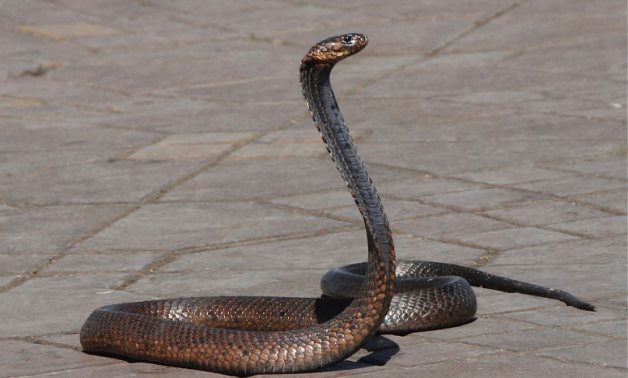
Cobra Snake - CC via wikimediacommons
CAIRO - 11 July 2026: Over the past weeks, there were reports of multiple incidents of snakes biting people in different villages and cities in Upper Egypt and Delta governorates.
Earlier July, two people- a 37-year-old woman and a 10-year-old child- were killed by venomous snakes in Al Qaraqrah village, Minya Al Qamh city, Al Sharqiyah governorate, 77.8 km from Cairo.
Egypt is home to about 36 types of snakes, of which only 9 are considered venomous and dangerous, such as the Egyptian cobra, which lives in agricultural lands and the Delta. This species is active during the summer due to rising temperatures, posing a serious threat to public health. Due to climate change and increasing temperatures, venomous snakes may leave their habitats and move to different environments in search of survival. A study published in Lancet Planetary Healthfound that areas to which snakes migrate could see significant losses by 2027, globally.
In response to this, the Ministry of Health revealed details of the national plan and updated treatment protocols for scorpion and snake bites in all governorates.
This is especially important given the noticeable rise in temperatures and increased reptile activity during the summer months, ensuring rapid medical intervention and saving the lives of those bitten.
Dr. Hossam Abdel Ghaffar, the official spokesperson for the Ministry of Health and Population, emphasized that the Ministry prioritizes the safety of citizens and is committed to implementing the latest internationally approved treatment protocols in all emergency cases.
He noted that snake and scorpion bites are treated according to a national treatment protocol developed by the Ministry's Scientific Committee, based on the latest international references and standards.
What is the protocol?
Spokesperson Abdel Ghaffar explained that the protocol relies on evaluating each case individually by identifying the type of snake or scorpion, assessing the degree of poisoning (mild, moderate, or severe), and reviewing the patient's overall health and medical history.
This ensures that the most appropriate treatment is selected for each patient based on their clinical condition.
In response to concerns raised about the unavailability of antivenom for snake and scorpion bites in some primary healthcare units and family medicine centers in villages, the official spokesperson emphasized that the issue is not related to any shortage in strategic reserves or supplies. Rather, it reflects a well-considered regulatory and medical policy aimed at protecting patients and ensuring they receive treatment in facilities fully equipped to handle any potential complications.
He pointed out that not all snake bites require antivenom, as a large percentage of cases result from non-venomous snakes, also known as "dry bites."
These cases do not lead to clinical poisoning that necessitates antivenom administration. He stressed that the decision to administer antivenom is only made after a thorough medical evaluation conducted by physicians according to the approved treatment protocol.
This comes as part of the Ministry of Health and Population's efforts to enhance the efficiency of the medical system and provide immediate care for emergency cases, and in implementation of the political leadership's directives to provide the best possible medical services to citizens, the Ministry revealed details of the national plan and updated treatment protocols for scorpion and snake bites in all governorates.
Why is the antivenom only administered in hospitals?
Dr. Hossam Abdel-Ghaffar explained that the antivenom for snake and scorpion bites is administered intravenously and may, in some cases, cause severe allergic reactions, potentially leading to anaphylaxis, a serious medical emergency requiring immediate intervention by a specialized medical team.
He added that the treatment protocol necessitates the availability of several medical resources before administering the antivenom, including:
- Conducting an allergy test for the patient before starting treatment.
- Having a medical team trained in managing anaphylaxis and allergic shock.
- Having cardiopulmonary resuscitation (CPR) equipment and necessary emergency medications readily available.
- Clinically monitoring the patient and conducting the required tests and analyses for 24 to 48 hours to ensure the patient's condition and vital bodily functions remain stable.
The official spokesperson emphasized that these specialized medical capabilities are available within the general, central, and specialized hospitals affiliated with the Ministry of Health and Population, as well as hospitals under the General Authority for Specialized Medical Centers and university hospitals.
These capabilities are not available at the same level within primary healthcare units, making hospitals the most suitable and safest place to provide treatment and follow-up care for patients.
Full compliance with WHO protocols.
Dr. Hossam Abdel Ghaffar concluded his remarks by affirming that the current Egyptian protocol is fully compliant with the recommendations of the World Health Organization (WHO), which emphasizes the necessity of restricting the use and distribution of antivenom for snake and scorpion bites to equipped hospitals.
This ensures the highest levels of safety, immediate response to any potential complications, and the preservation of patients' lives.
The Ministry of Health and Population confirmed its continued provision of antivenom in equipped hospitals throughout the country, with medical teams available around the clock to handle cases of snake and scorpion bites.








Comments
Leave a Comment