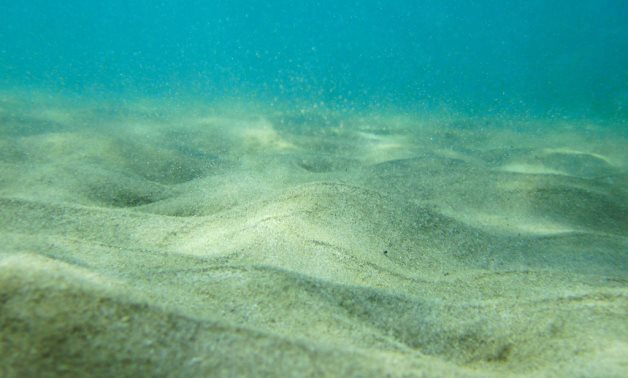
Sand seabed - CC via Public Domain Picture




CAIRO – 10 July 2026: The Egyptian government, through the Ministry of Water Resources and Irrigation, announced that it is studying proposals to introduce modern dredging technology for the first time in Egypt to pump sand from the seabed onto beaches as part of efforts to protect the Nile Delta's coastline from the impacts of climate change and sea-level rise.
The proposed technology is part of the ministry's broader strategy to adapt to climate change and enhance the sustainability of Egypt's coastal areas, the ministry said in a statement on Thursday.
Minister of Water Resources and Irrigation Hani Sweilam said coastal protection is a key component of climate adaptation, particularly in areas vulnerable to shoreline erosion, sea-level rise, and seawater intrusion into groundwater. He stressed that adopting any new protection technology or alternative method must be based on accurate data and comprehensive technical, economic, environmental, and social feasibility studies.
Sweilam directed that the study evaluate potential sand sources, their availability, and their compliance with technical specifications, as well as implementation costs, maintenance requirements, and the environmental and social impacts of using the technology. The objective, he said, is to identify the most efficient and sustainable solutions based on the characteristics of each coastal site.
According to the Shore Protection Authority (SPA), the northern coast of the Nile Delta is among the regions worldwide most vulnerable to sea-level rise caused by global warming. The phenomenon threatens the area's natural resources, including freshwater, agricultural land, livestock, and fisheries, while also exacerbating environmental challenges such as coastal erosion, shoreline retreat, and the salinization of agricultural land and groundwater in the northern Delta.
What is sand suction dredging?
Several methods are used worldwide to extract sand from the seabed and pump it onto the shoreline for beach nourishment. One of the most widely used is the Trailing Suction Hopper Dredger (TSHD), a technology commonly employed in coastal restoration and beach nourishment projects.
Dr. Mohamed Hassan Ghattas, the Chairman of the Shore Protection Authority (SPA) told Egypt Today that the technology is based on extracting sand from the seabed no more than 30 kilometers offshore, taking economic considerations into account. Transporting sand from farther offshore would significantly increase costs related to transportation, equipment, and fuel. Environmental considerations are also factored into the process to ensure that sand extraction does not harm the seabed.
He explained that wave conditions are carefully assessed before dredging begins. In some areas, strong waves can damage dredging equipment or displace pipes and machinery, making operations unsafe and ineffective.
He added that the dredger is equipped with discharge pipes at the front and can operate as close to the shoreline as possible. With a shallow draft of about three meters, the dredger can approach the beach and begin pumping sand. In relatively calm areas with low wave activity, dredgers can be positioned at a suitable distance offshore and pump the sand through pipelines to the beach.
“In order to transport and pump the sand, whether by the dredger itself or through pipelines, the sand should be mixed with water, with sand making up about 20 percent of the mixture, allowing it to be pumped through the pipes.”
Responding to a question about the potential release of CO₂ from the seabed during dredging, Ghatas assured that the process would not harm the marine environment because dredging would take place at a depth of about 16 meters rather than at depths of around 1,000 meters. “The advantage of using seabed sand is that it originates from the same natural marine environment,” he said.
“You are protecting the environment with materials from the same environment and helping it recover,” he added.
Asked about the quantity of sand planned for extraction, Ghatas said surveys offshore of the Delta indicate that the available seabed sand is promising and available in abundance “We found more than 3.5 billion cubic meters of sand, which is more than enough to address coastal erosion and raise beach levels, especially during storms,” he said.
He noted that the government is implementing several coastal protection measures, including installing concrete barriers along the shoreline and studing to carry out beach nourishment through sand pumping to prepare for worst-case scenarios associated with climate change and sea-level rise. He added that the authority has conducted a maritime survey along Egypt's Delta coast to identify sand resources and develop a strategic plan to mitigate the impacts of climate change.
“We are building a strategy for future generations, and we are looking for ways to protect the entire Delta region,” he said.

Be Social




Comments
Leave a Comment