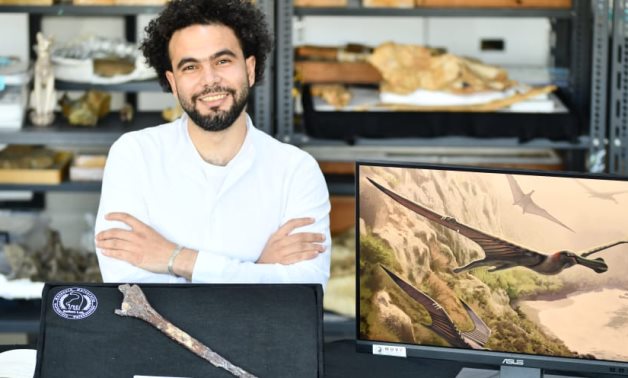




CAIRO - 1 July 2026: Mansoura University Vertebrate Paleontology Center (Sallam Lab) has documented the first definitive fossil evidence of pterosaurs—ancient flying reptiles—in Egypt, university officials announced.
The discovery, made in collaboration with the Egyptian Ministry of Environment, the Denver Museum of Nature & Science, and the Carnegie Museum of Natural History, uncovers a fossilized wing segment within the Bahariya Formation in Egypt’s Western Desert.
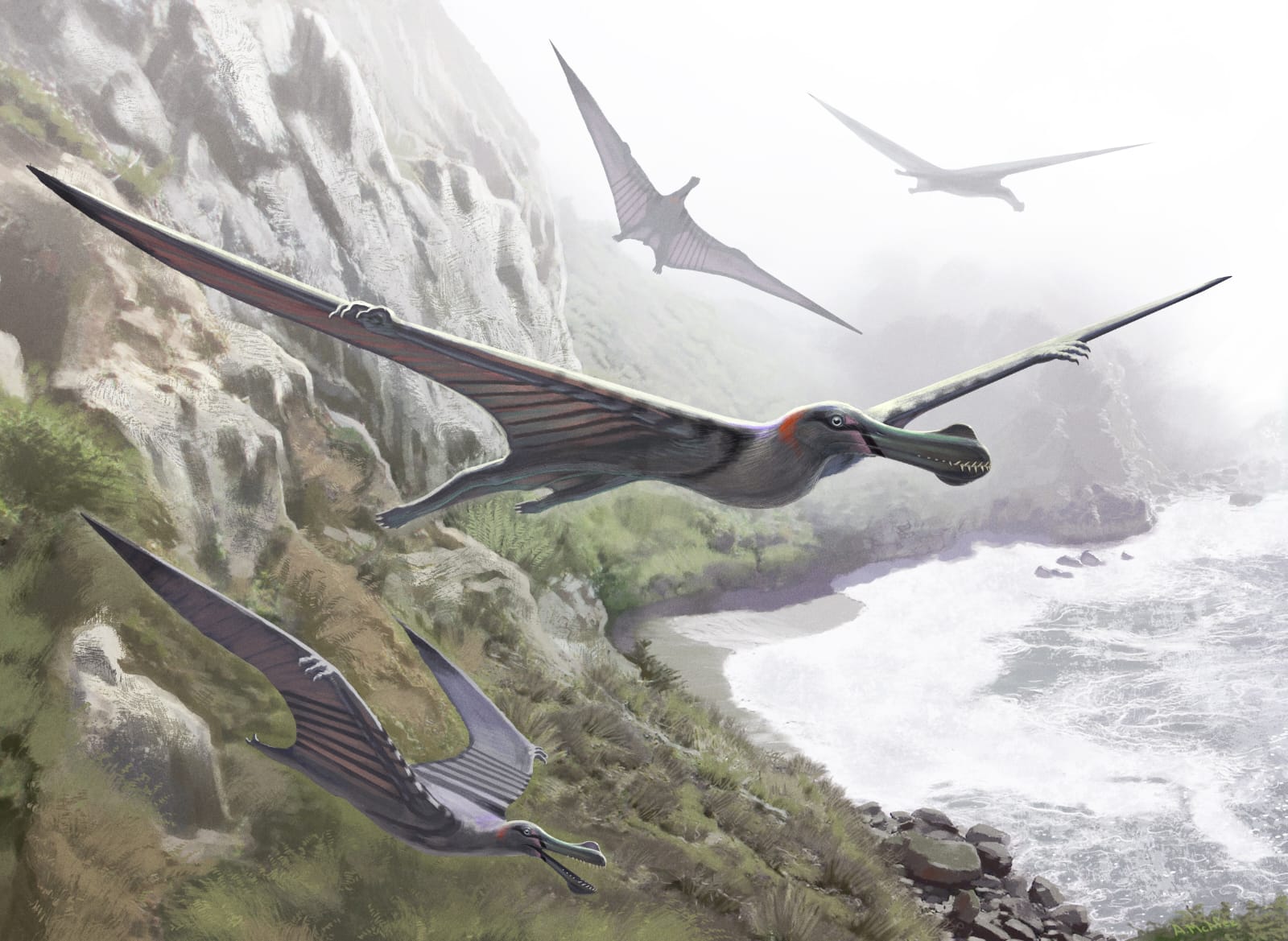
Dating back over 95 million years to the Late Cretaceous period, the find bridges a massive gap in the global evolutionary record of airborne reptiles.
Mansoura University President Sherif Khater praised the breakthrough, noting that it cements the university's standing on the global scientific map and showcases the strength of Egyptian academic infrastructure.
Dr. Tarek Ghalwash, Vice President for Postgraduate Studies and Research, added that the institution remains dedicated to fostering international partnerships that empower young Egyptian researchers to produce globally impactful discoveries.
Pterosaurs were the first vertebrates to evolve powered flight, coexisting with dinosaurs for over 150 million years before their extinction.
Anatomical analysis led by Dr. Hesham Sallam, founder of Sallam Lab, reveals that the recovered wing fragment belonged to a medium-sized pterosaur with a wingspan stretching approximately four meters.
The creature hunted over the prehistoric rivers and coastal mangroves that covered northern Africa during the Cretaceous era.
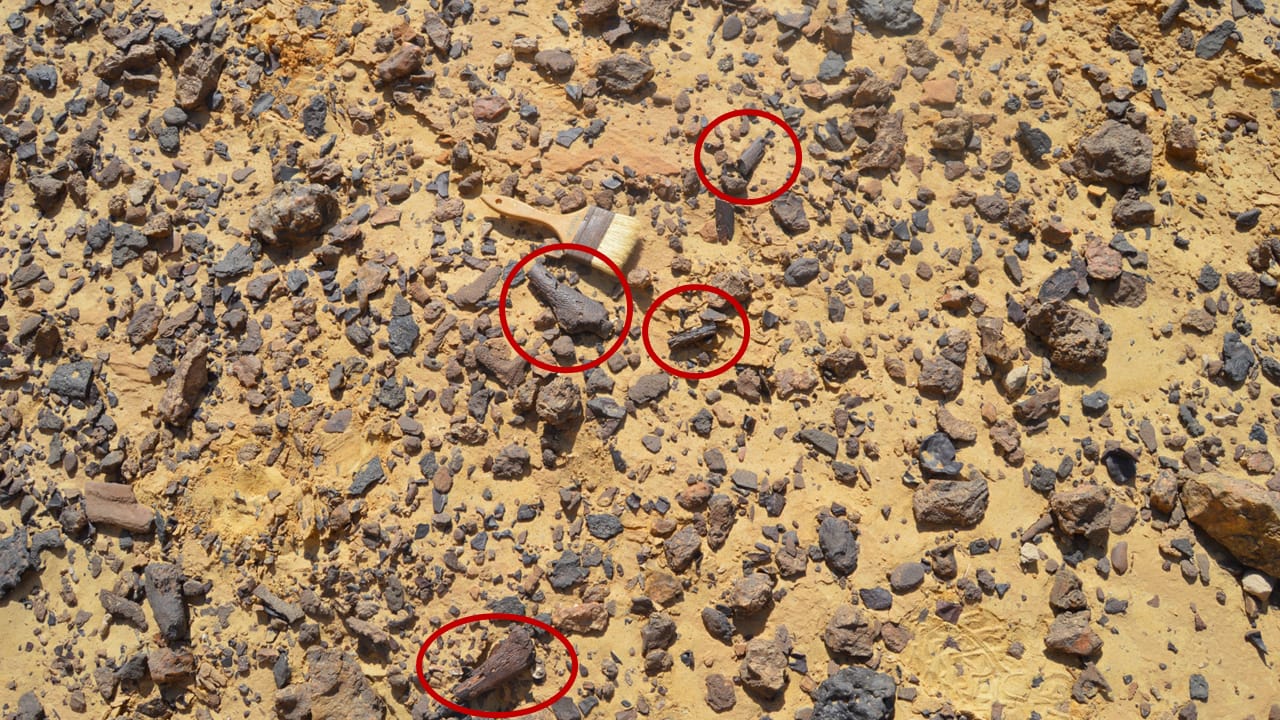
Belal Salem, the study’s lead author and a doctoral student at Ohio University, discovered the specimen during his first field expedition to the Bahariya Oasis in 2018.
Matthew Lamana, a paleontologist at the Carnegie Museum of Natural History and study co-author, emphasized that this discovery helps reconstruct the region's paleontological heritage, much of which was lost during World War II.
The Bahariya Oasis remains a premier global site for Cretaceous paleontology, famously yielding iconic species like the Spinosaurus and Paralititan.
In June, Sallam Lab uncovered 62-million-year old fish fossils in Egypt’s Eastern Desert, some four million years after the extinction of dinosaurs. The fossils illustrate how life reemerged after the disaster that ended the Age of the Dinosaurs.
Sallam Lab have also found the first fossilized ape from North Africa, namely in Egypt’s Western Desert, that lived to 17 to 18 million years ago. The findings, published in March in Science journal, are so significant as it might change our understanding that the ancestors of modern apes originated in East Africa, but rather in North Africa and then migrated into Eurasia.

Be Social




Comments
Leave a Comment