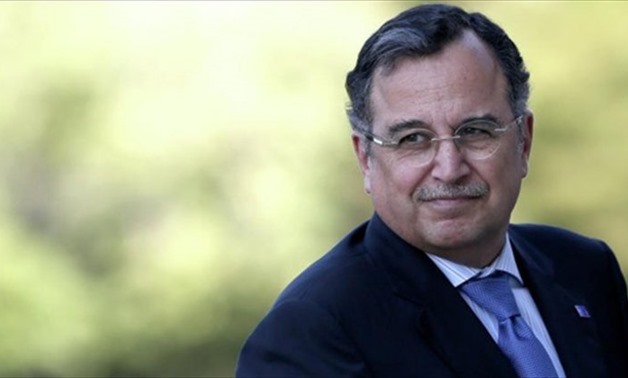




CAIRO - 23 June 2026: The Arab League Ministerial Council approved former Egyptian Foreign Minister Nabil Fahmy as the new Secretary-General of the pan-Arab organization in a Monday ministerial session in Jordan.
Fahmy will succeed Ahmed Aboul Gheit, officially assuming his diplomatic duties on July 1, 2026. The appointment reflects a unified Arab consensus to entrust the leadership of the regional body to an experienced diplomat at a time when the Middle East faces highly complex regional and international crises.
Fahmy's selection comes amid accelerating regional transitions, where long-standing conflicts intersect with shifting balances of power. This volatile environment imposes unprecedented challenges on joint Arab action, testing the Arab League's institutional capacity to keep pace with rapid political shifts and reinforce its role as a central coordinating framework.
Within this context, Fahmy emerges as one of Egypt's most prominent modern diplomats, possessing extensive practical experience in international relations alongside a strong academic background in global security analysis.
Born on January 5, 1951, Fahmy grew up within a prominent diplomatic family that directly shaped his early political consciousness. He is the son of Ismail Fahmy, the former Egyptian Foreign Minister who managed critical historical milestones in Egypt's foreign policy. This familial heritage helped Fahmy build an early understanding of global power dynamics, regional balances, and strategic interest management.
Throughout his multi-decade career, Fahmy rose steadily through the ranks of the Egyptian Foreign Ministry. He served as Egypt's Ambassador to the United States from 1999 to 2008, managing bilateral relations during a highly sensitive period marked by the September 11 attacks and subsequent shifts in U.S. foreign policy.
Following his Washington tenure, he entered academia, serving as the founding dean of the School of Global Affairs and Public Policy at the American University in Cairo from 2009 to 2013.
Fahmy returned to public service as Foreign Minister in July 2013 under Prime Minister Hazem El-Beblawi, continuing his tenure into the administration of Prime Minister Ibrahim Mahlab until 2014.
During this transitional phase, he actively reordered Egypt's foreign policy priorities, focused on diversifying international partnerships, and maintained stable ties with global powers. As he takes the helm of the Arab League, Fahmy faces immediate crises across the region, including the war in Gaza, the conflict in Sudan, and ongoing instability in Syria and Lebanon.

Be Social




Comments
Leave a Comment