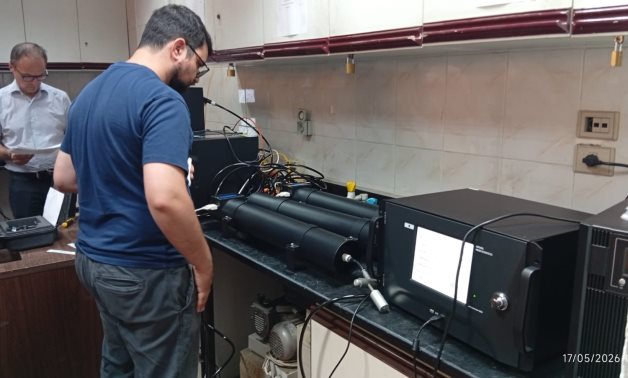
The Egyptian government is installing advanced devices to monitor black carbon, methane (CH₄), and ultra-fine particles in the environmental monitoring system- press photo




CAIRO – 18 June 2026: For the first time, the Egyptian government is installing advanced devices to monitor black carbon, methane (CH₄), and ultra-fine particles in the environmental monitoring system, announced Minister of Environment and Local Development Manal Awad in a press release on Thursday.
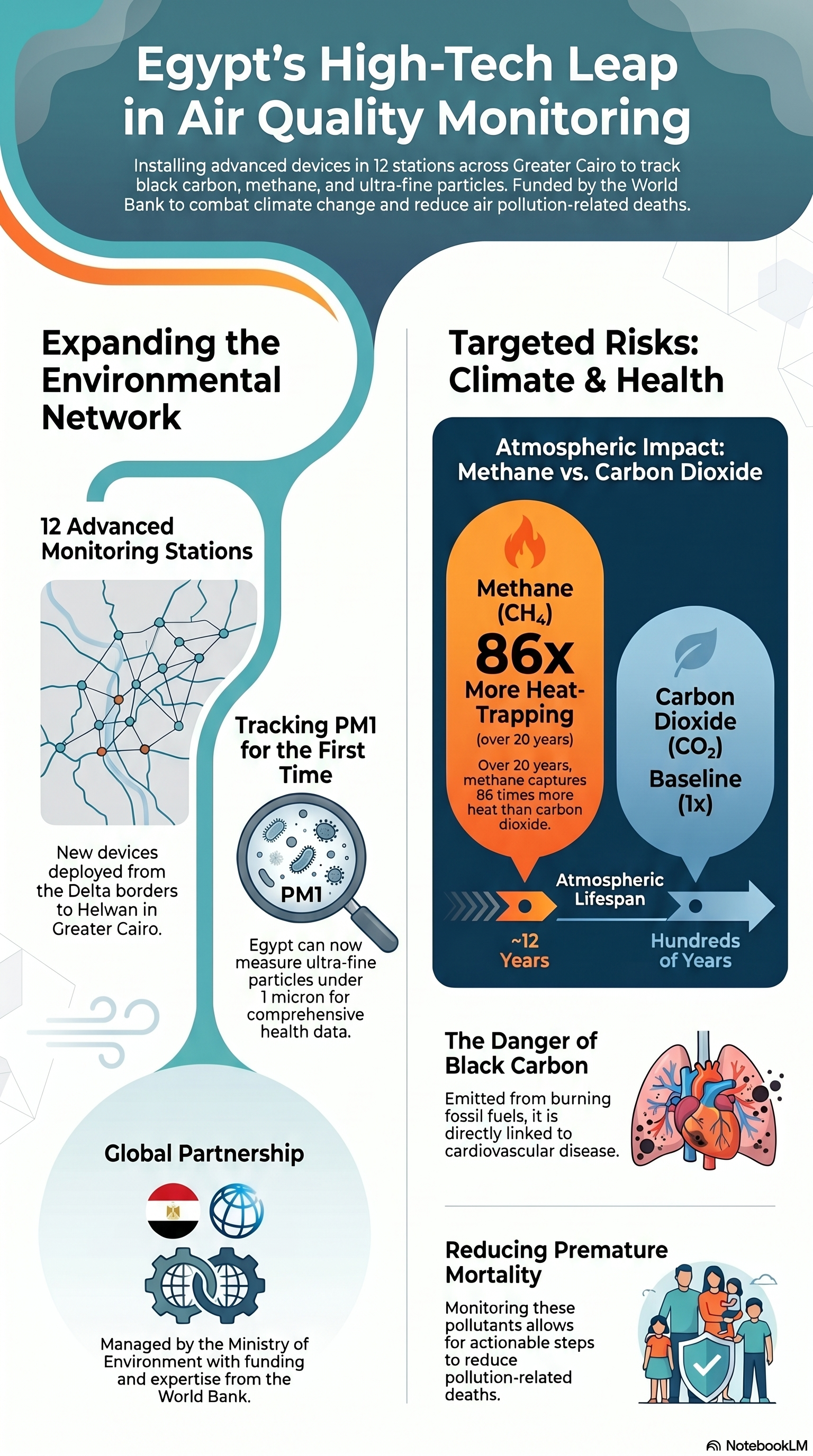
The devices will be installed in 12 stations across Egypt, under the "Air Pollution and Climate Change Management in Greater Cairo" project, she added. The monitoring stations, which belong to the Egyptian Environmental Affairs Agency (EEAA), extend from north of Cairo at the borders of the Delta to southern Helwan.
The new devices will measure the fine airborne particles like articulate matter with a diameter of 1 micron or smaller (PM1) for the first time in Egypt, in addition to measuring particles less than 2.5 micrometers (PM2.5) and less than 10 micrometers (PM10), the Minister continued. Awad noted that this provides a more comprehensive and accurate picture of air pollution levels and its health effects.
The project is being implemented by the Ministry of Local Development and Environment with funding from the World Bank, and in cooperation with a number of international and local experts and consultants specializing in the fields of air quality and climate change, according to the statement. However, the statement did not reveal the types of the devices.
The black carbon is the main component of the PM2.5 and mainly emits from incomplete burning of the fossil fuel, biofuel, and biomass. According to the World Health Organization (WHO), the black carbon is associated with cardiovascular diseases and premature death. The WHO also noted that monitoring air pollutants could help take action reducing the health-related risks.
As for the methane, the United Nations said it is “responsible for nearly one-third or about 0.5°C of the warming we are seeing today.” Over its first 20 years in the atmosphere, methane captures 86 times more heat than carbon dioxide (CO2) traps, the UN said. However, the methane can stay in the atmosphere for approximately 12 years and the carbon dioxide can stay for hundreds of years. As for its health threats, the methane contributes to the premature mortality, the UN affirmed.

Be Social




Comments
Leave a Comment