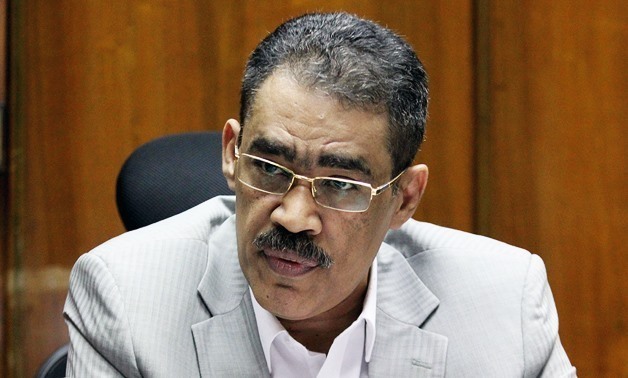
Diaa Rashwan was elected Chairman of the Syndicate of Journalists – Egypt Today




CAIRO - 8 June 2026: Minister of State for Media Diaa Rashwan said the return of privately owned newspapers to publication nearly two decades ago significantly enriched Egypt’s press and media landscape across various fields, including journalism, newspaper design and printing, media management and professional development.
Speaking during a meeting on Sunday with 23 editors-in-chief of private and party-affiliated newspapers at the ministry headquarters, Rashwan said the expansion of the private press had created wider opportunities for successive generations of journalists and contributed to the emergence of highly qualified media professionals.
The meeting was part of a series of consultations the minister is holding with stakeholders across Egypt’s media sector to discuss ways of enhancing media performance, preserving its influence and addressing challenges facing the industry.
Rashwan noted that party-affiliated newspapers had preceded private newspapers in returning to the market and played a key role in broadening the spectrum of political and media viewpoints, creating a diverse press environment that includes state-owned, private and party publications.
He stressed that differences in ownership structures had not affected newspapers’ national commitment or their dedication to serving readers and reflecting public concerns.
The minister affirmed that one of the ministry’s main responsibilities is ensuring the implementation of constitutional and legal provisions governing media work, particularly those related to freedom of expression, media freedoms and the public’s right to access accurate information through credible national media outlets.
He added that the ministry also serves as the state's communication channel with media organizations, helping facilitate access to information, encouraging officials to engage with journalists and providing timely responses to media inquiries.
During the discussions, editors-in-chief praised the initiative as an important platform for strengthening communication between the government and private and party-affiliated newspapers.
They expressed hope that such meetings would continue on a regular basis and that their recommendations would be translated into practical measures.
Editors raised several challenges facing the sector, including difficulties in obtaining information, limited responsiveness from government spokespersons, reluctance of officials to grant interviews and obstacles to journalistic coverage and photography in public places.
They also highlighted financial pressures resulting from declining circulation and advertising revenues, calling for government support, including easing outstanding obligations owed to tax and social insurance authorities and considering the establishment of a risk-management fund for journalists and private media institutions.
In response, Rashwan said the government is serious about moving forward with legislation on freedom of information and that the ministry is developing mechanisms to facilitate information flow from state institutions to media outlets.
He also welcomed proposals to establish a unified body representing private newspaper owners, similar to an industry chamber, to coordinate efforts and address common challenges.
The minister urged media organizations to uphold professional standards, verify information and rely on documented facts and data before publishing reports or opinions.
He further revealed that, in line with directives from President Abdel Fattah El Sisi, the ministry is preparing a comprehensive plan to restructure and train spokespersons and media offices across government institutions, while strengthening their engagement with journalists and media organizations.
Rashwan concluded by reaffirming the state's commitment to enabling media outlets to perform their professional role in accordance with the Constitution and the law, ensuring that the public remains informed about national and societal issues.

Be Social




Comments
Leave a Comment