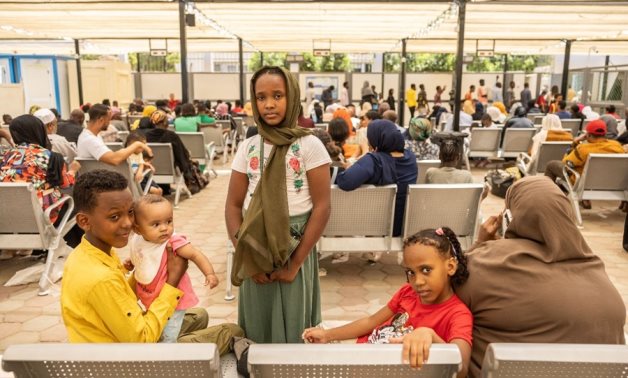
File photo: Sudanese refugee children and their mother register at UNHCR Egypt after the fleeing conflict in Sudan. UNHCR/Pedro Costa Gomes




CAIRO – 4 June 2026: Egypt has rejected a report published by The Guardian on Sudanese refugees in the country, describing it as lacking objectivity and based on partial accounts that do not reflect the full reality of its treatment of Sudanese nationals.
In a written response to the newspaper, the head of the State Information Service (SIS), Alaa Youssef, said the article titled “Poverty, racism and forced disappearances: why Sudanese war refugees are leaving Egypt for Europe” relied on limited individual testimonies and did not reflect the comprehensive picture of Egypt’s response to the Sudan crisis.
The Guardian Report
The Guardian article, which included interviews with Sudanese refugees in Cairo’s Faisal district under pseudonyms, described accounts of racism, insecurity, economic hardship and fears of arbitrary arrest.
It also cited testimonies from individuals who claimed they had been detained during police checks or struggled with housing and informal work, and suggested that worsening conditions were pushing some refugees to attempt dangerous crossings to Europe via the Mediterranean.
One interviewee quoted in the report said life in Egypt had become “hopeless” and described preparing for a second attempt to reach Europe, while another described being detained in Libya by smugglers during a previous migration attempt.
The article also cited claims of increasing deportations of Sudanese nationals since late 2025 and allegations of rights violations reported by the United Nations.
The article acknowledges that an estimated 1.3 million Sudanese refugees live in Cairo, most of whom have fled from Sudan after the outbreak of the ongoing war in April 2023.
Questioning Broad Conclusions
Egypt, however, said the report overlooked the broader humanitarian and social context, including the burden it has borne in providing protection and assistance to hundreds of thousands of people fleeing the war.
The SIS chief rejected implications of systemic discrimination or abuse.
He said the article relied on anonymous and limited accounts that could not be used to generalize about Egyptian society or state policy.
Egypt stressed that it applies its laws “equally to all foreigners without discrimination,” and that any administrative measures are based on legal procedures rather than nationality.
“Conflating the enforcement of the law with allegations of discrimination leads to inaccurate conclusions and does not reflect the nature of Egypt's policies, which are based on respect for the rule of law and equal application of the law to all,” Youssef said.
The statement said that some of the cases referenced in the report may relate to individuals failing to carry valid residence documentation.
Accommodating the Refugee Influx
Youssef also criticised the Guardian report for not providing sufficient opportunity for Egyptian authorities to respond to the allegations before publication, and called for “balanced reporting” on regional issues.
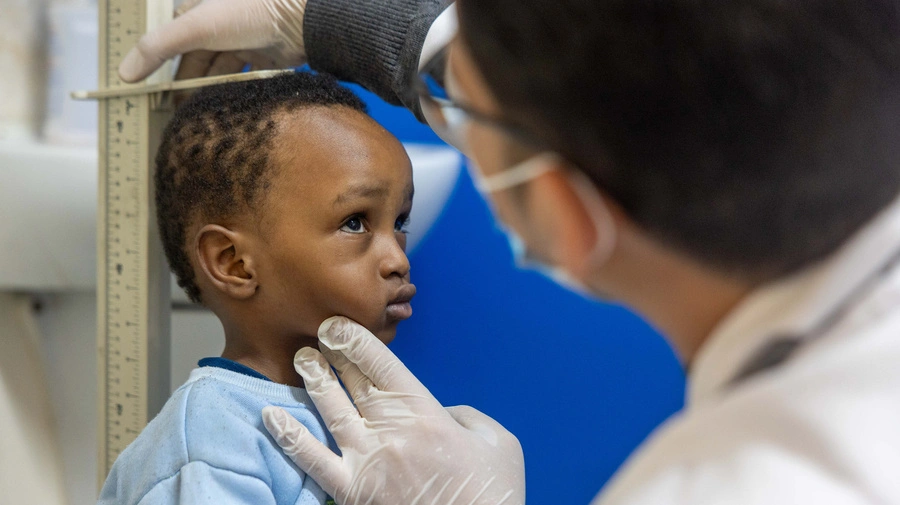
He added that the report failed to reflect the scale of efforts undertaken by Egypt to meet the educational, healthcare and security needs of Sudanese residents.
He stated that any fair assessment of Egypt’s role should take into account the scale of the economic and social burden it has carried since the outbreak of the Sudan conflict, and urged the publication of Egypt’s response in full.
The SIS chief said “millions” of Sudanese live in the country, including students, workers and investors, adding that around one million arrived after the start of the war.
Youssef stressed that the ties between Egyptians and Sudanese predate the current crisis and are built on decades of shared historical, cultural and social links.

Be Social




Comments
Leave a Comment