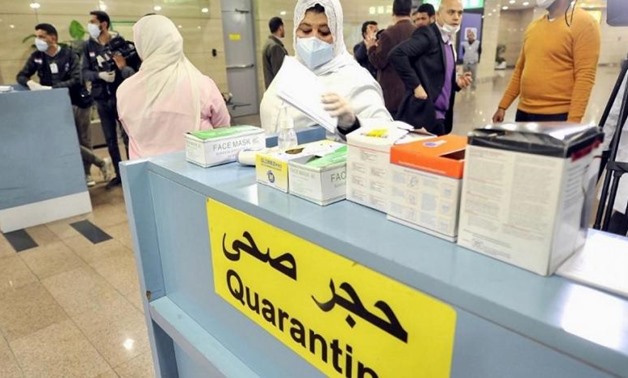
File- Egyptian Quarantine Authority employees at Cairo International Airport last month. (AFP)




CAIRO – 17 May 2026: Egypt has not recorded any cases of Ebola virus infection, Dr. Hossam Abdel Ghaffar, official spokesperson for the Ministry of Health, said in a statement on Sunday.
He added that the Ministry has raised the level of preparedness and activated preventive and precautionary measures at all air, sea, and land entry points as part of the country’s epidemiological surveillance and early response system.
Abdel Ghaffar explained that current risk assessments indicate that the likelihood of the disease spreading to Egypt remains low. He noted that the Ebola virus is not transmitted as easily as respiratory diseases, as infection requires direct and close contact with the bodily fluids of an infected person after symptoms appear. This significantly reduces the chances of international transmission when health surveillance and infection control measures are implemented in accordance with international standards.
He further clarified that the disease is not contagious during its incubation period, adding that the risk of transmission through travel remains limited when travelers comply with health and screening procedures at international ports of entry.
The spokesperson also noted that the World Health Organization considers the global risk associated with the current outbreak to be low. He explained that the elevated risk level within the African region is primarily linked to local conditions in outbreak areas and neighboring countries, rather than widespread international transmission.
The Ministry confirmed that several preventive and precautionary measures have been implemented, including:
Earlier on Sunday, the World Health Organization declared the Ebola outbreak in Democratic Republic of the Congo and Uganda a “public health emergency of international concern.”
The UN health agency stated that the outbreak, caused by the Bundibugyo strain of the Ebola virus, does not currently meet the criteria to be classified as a global pandemic emergency.

Be Social




Comments
Leave a Comment